ADVERTISEMENT
6. Blanching for Perfect White Heads
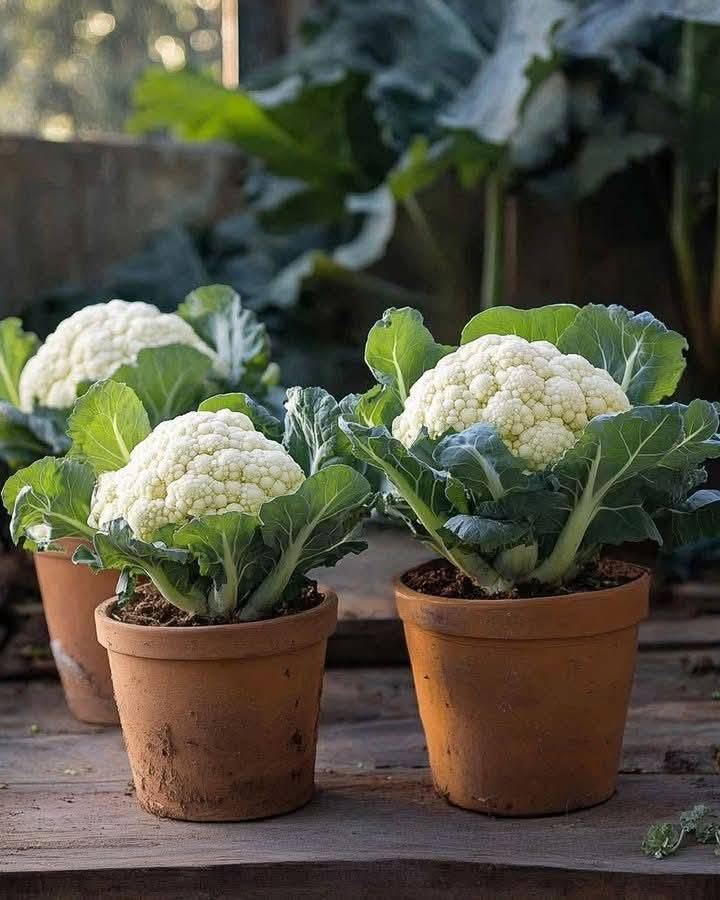
Cauliflower heads turn yellow or green if exposed to too much sun. To keep them pure white:
When the head is 2–3 inches wide, gently tie the outer leaves over it with twine.
Check every few days to ensure no moisture buildup (which can cause rot).
Note: Self-blanching varieties like ‘Snowball’ may not need this step.
7. Pest & Disease Management
Common Pests:
Aphids, cabbage worms, slugs – Use neem oil or handpick them.
Cabbage loopers – Apply Bt (Bacillus thuringiensis).
Diseases to Watch For:
Clubroot: Ensure good drainage.
Downy mildew: Avoid wetting leaves; use copper fungicide if needed.
Prevention: Rotate crops and keep pots clean.
8. Harvesting Your Giant Cauliflower
Timing: Heads are ready 70–100 days after planting.
Signs of Readiness:
Head is firm, compact, and 6–8 inches wide.
If it starts to separate or discolor, harvest immediately!
How to Harvest:
Use a sharp knife to cut the head, leaving a few leaves attached.
9. Common Mistakes to Avoid
❌ Too small of a pot → Stunted growth.
❌ Inconsistent watering → Cracked or bitter heads.
❌ Overcrowding → Poor air circulation = disease risk.
❌ Ignoring pests → Can ruin your crop quickly!
10. Enjoy Your Homegrown Cauliflower!
Now that you’ve grown a huge, delicious cauliflower, try:
Roasting with olive oil & spices.
Mashing as a low-carb alternative to potatoes.
Making cauliflower rice or pizza crust.
With these steps, you’ll maximize your cauliflower’s size and flavor—right from your pot!
Happy Gardening!
ADVERTISEMENT
