ADVERTISEMENT
When Are They Normal?
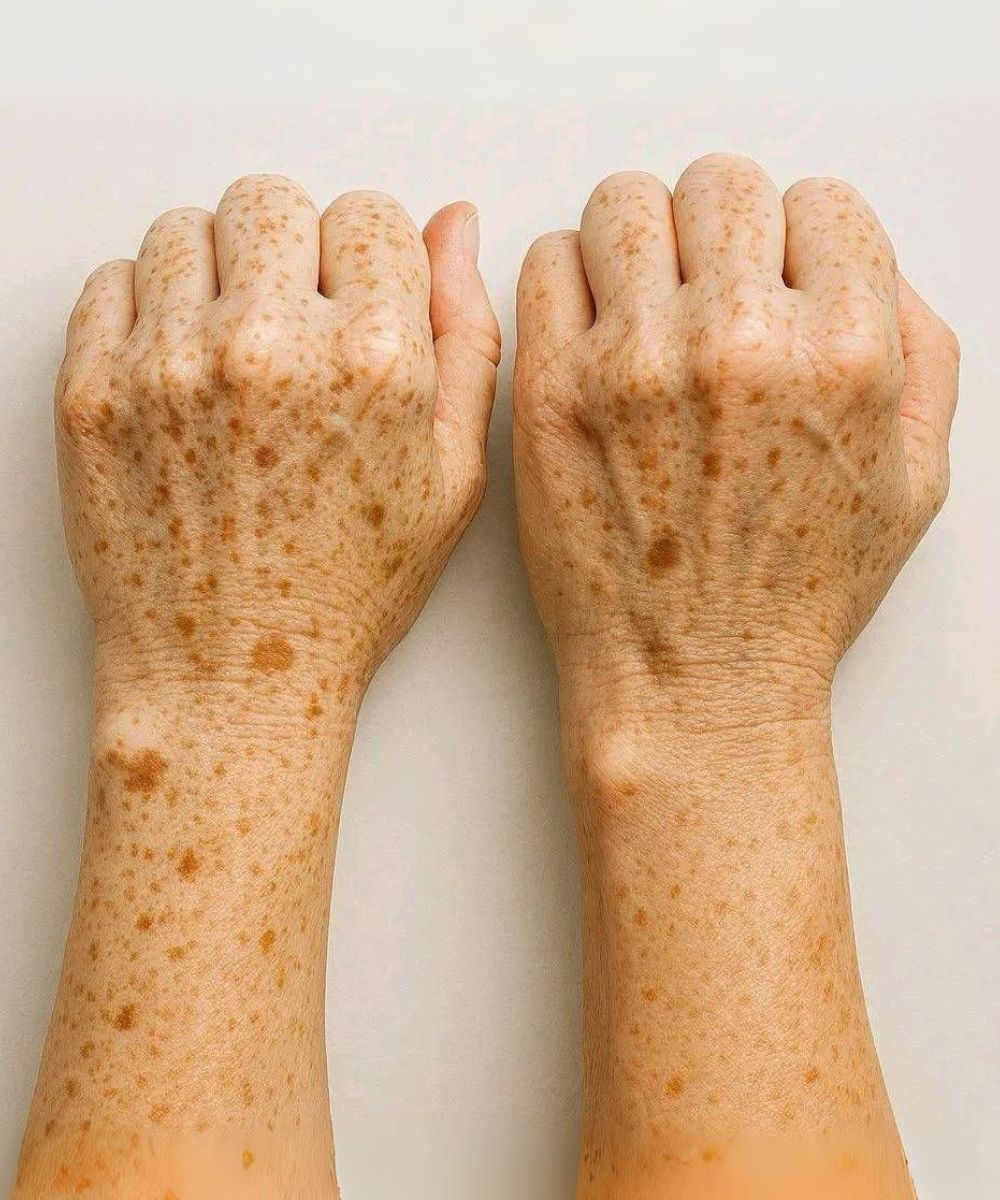
If your spots are:
Flat, smooth, and uniform in color (ranging from light tan to dark brown)
Consistently shaped, usually oval or round
Found in sun-exposed areas like the face, hands, arms, and shoulders
Not changing over time
…then they are most likely benign age spots. In such cases, they’re simply a natural sign of sun exposure and aging.
When to Be War:ned
Although most age spots are harmless, certain changes should never be neglected. It’s important to differentiate between ordinary sun-induced pigmentation and warn:ing signs of skin can:cer, particularly melanoma. You should see a dermatologist if you spot:
Rapid changes – If a spot develops quickly in size or darkens noticeably within weeks or months.
Irregular borders – Normal age spots are usually smooth and well-defined. Jagged or blurred edges can be concerning.
Varied colors – Benign spots are usually one shade. If you witness a mix of black, red, or even blue tones, it requires evaluation.
Unusual texture – Rough, scaly, bleeding, or raised spots are not typical age spots.
Pain or itchiness – While harmless spots are symptom-free, any persistent discomfort should be checked.
Dermatologists often recommend the “ABCDE rule” to evaluate suspicious spots: Asymmetry, Border irregularity, Color variation, Diameter greater than 6 mm, and Evolving over time. If your spot fits any of these categories, it’s best to meet a medical professional.
Prevention and Care
Even if your age spots are harmless, protecting your skin helps prevent new ones and reduces can:cer risk. Practical steps include:
Applying sunscreen daily with SPF 30 or higher
Wearing hats and protective clothing outdoors
Avoiding tanning beds
Using moisturizing lotions to keep skin healthy
For those already bothered by their appearance, safe treatments are available. Dermatologists may prescribe bleaching creams with hydroquinone, retinoids to promote skin renewal, or in-office procedures like intense pulsed light therapy.
Conclusion
Age spots are a normal part of life for many people, a visible reminder of years spent under the sun. Most of the time, they are nothing to worry about. However, staying alert to changes in size, color, or texture is crucial.
ADVERTISEMENT
