ADVERTISEMENT
In a world where convenience often trumps quality, homemade jams offer a delightful return to tradition. Making jam at home allows you to capture the essence of fresh, seasonal fruits and preserve their flavors for enjoyment throughout the year. Whether you’re a seasoned cook or a kitchen novice, crafting your own jams can be a rewarding and satisfying experience. With a few simple ingredients and some basic equipment, you can create delicious spreads that are far superior to store-bought varieties.
Benefits of Making Jam at Home
Homemade jams offer numerous benefits over their store-bought counterparts. First and foremost, you have complete control over the ingredients, allowing you to avoid preservatives and artificial additives. You can also adjust the sugar content to suit your taste and dietary needs. Additionally, making jam at home is often more cost-effective, especially when using fruits that are in season or grown in your own garden. The process of making jam can also be a fun and creative activity, providing a sense of accomplishment and the opportunity to experiment with unique flavor combinations.
Essential Equipment and Ingredients for Jam Making
To make jam at home, you’ll need a few essential tools and ingredients. A large, heavy-bottomed pot is crucial for cooking the fruit evenly and preventing scorching. You’ll also need a wooden spoon for stirring, a ladle for transferring the hot jam into jars, and a canning funnel to avoid spills. A candy thermometer can be helpful to ensure the jam reaches the correct temperature for setting. As for ingredients, you’ll need fresh fruit, sugar, and lemon juice. Pectin, a natural thickening agent, is optional but can be used to help the jam set more quickly.
Understanding the Basics of Jam Making
The process of making jam involves cooking fruit with sugar and acid (usually lemon juice) until it reaches a gel-like consistency. The key to successful jam making is achieving the right balance of fruit, sugar, and acid, as well as reaching the correct temperature for setting. It’s important to sterilize your jars and lids before filling them with hot jam to prevent spoilage. Once filled, the jars should be sealed and processed in a boiling water bath to ensure they are shelf-stable.
Top 8 Jams You Can Make at Home
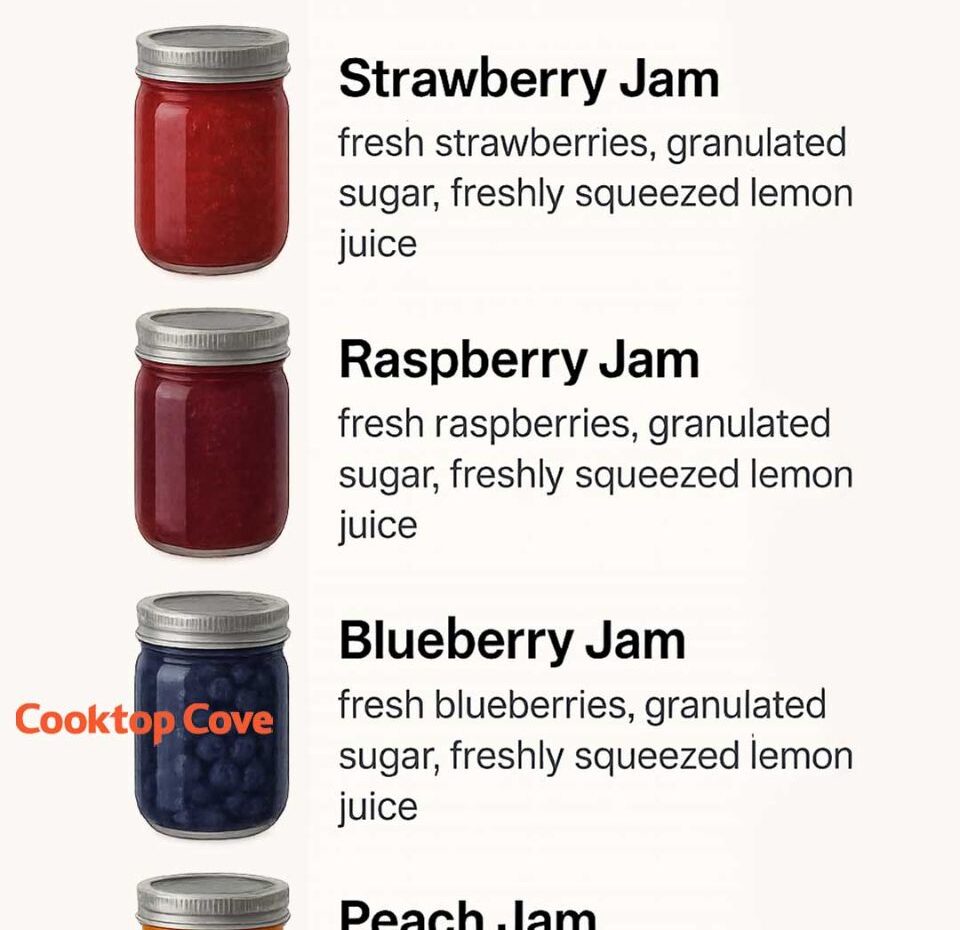
With a wide variety of fruits available, the possibilities for homemade jams are endless. Here are eight delicious and easy-to-make jam recipes that will elevate your breakfast spreads and desserts.
1. Strawberry Jam Recipe
see continuation on next page
ADVERTISEMENT
