ADVERTISEMENT
ADVERTISEMENT
In a small bowl, combine warm water and sugar. Sprinkle the active dry yeast over the water and let it sit for about 5–10 minutes until it becomes frothy and bubbly. This means the yeast is active and ready.
In a large mixing bowl, combine the flour and salt.
Make a well in the center and pour in the activated yeast mixture along with the olive oil.
Stir with a wooden spoon or spatula until the dough begins to come together. If the dough is too sticky, add a little more flour, one tablespoon at a time, until it forms a smooth dough.
Transfer the dough to a lightly floured surface and knead for about 5–7 minutes until it’s smooth, elastic, and no longer sticky. If the dough feels too dry, add a bit more water (one teaspoon at a time).
Place the kneaded dough in a greased bowl and cover it with a clean kitchen towel or plastic wrap.
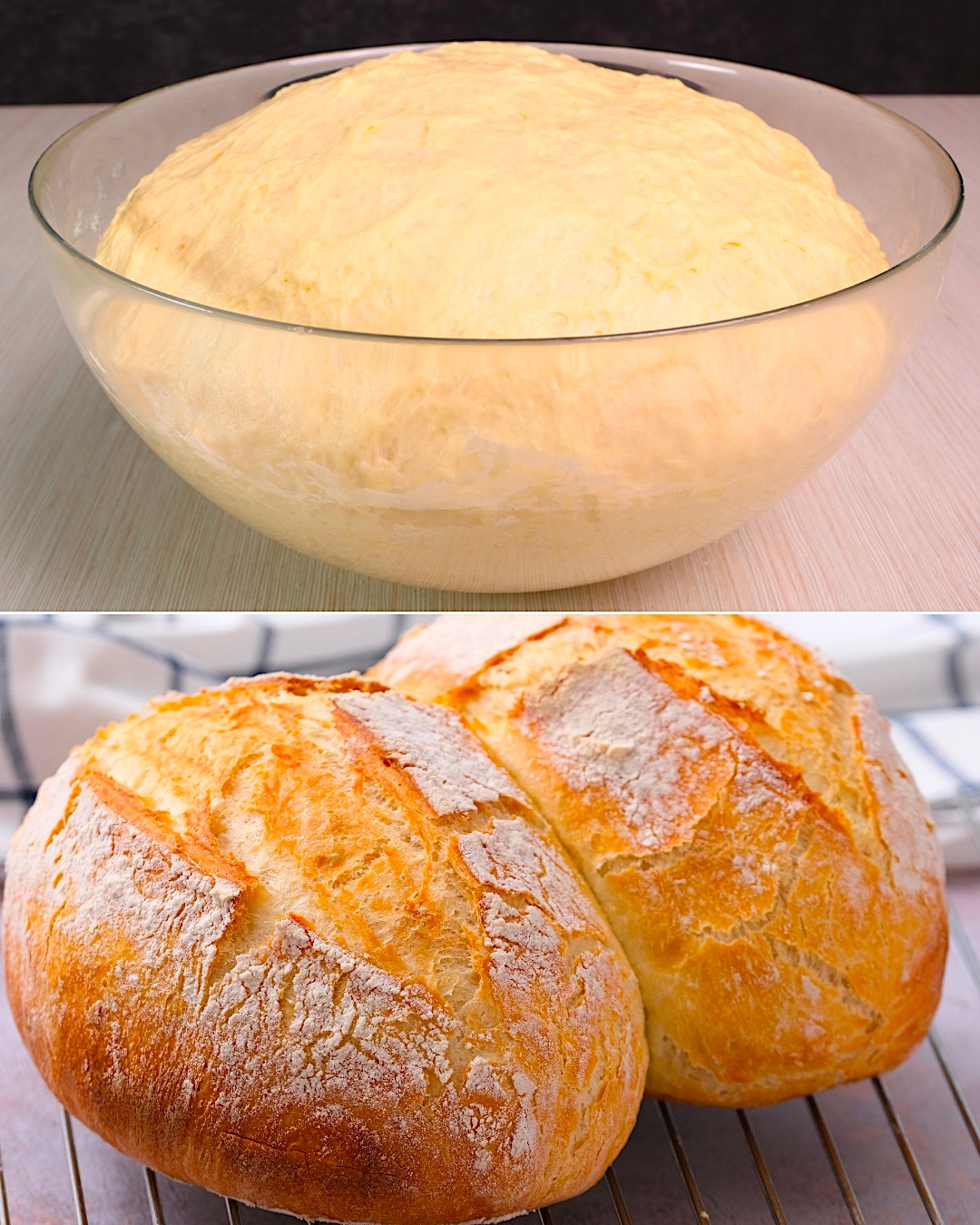
Let the dough rise in a warm, draft-free area for about 1–1.5 hours, or until it doubles in size. You can also place it in a slightly warmed oven (about 100°F or 38°C) for faster rising.
Once the dough has risen, punch it down to release any air bubbles.
Gently shape it into a loaf by rolling it into a tight cylinder and pinching the edges closed.
Place the shaped dough into a greased loaf pan (8×4 inches works well) and cover with a towel for another 30 minutes to let it rise again.
While the dough is doing its second rise, preheat your oven to 375°F (190°C).
Once the dough has risen, place the loaf pan in the preheated oven and bake for 30–35 minutes, or until the top is golden brown and the loaf sounds hollow when tapped on the bottom.
If you like a softer crust, brush the top of the bread with melted butter right after it comes out of the oven.
Let the bread cool on a wire rack for at least 10–15 minutes before slicing. This will help the bread set and prevent it from being too crumbly.
ADVERTISEMENT
ADVERTISEMENT
ADVERTISEMENT
