ADVERTISEMENT
ADVERTISEMENT
Prepare the pasta:
Bring a large pot of salted water to a boil. Add the spaghetti and cook until just al dente, according to package instructions (usually about 8-9 minutes). Save 1 cup of pasta water before draining (this will help create the sauce later). Drain the pasta and set it aside.
Cook the guanciale:
While the pasta is cooking, heat a large skillet or pan over medium heat. Add the diced guanciale (or pancetta). Cook it until it becomes crispy and releases its fat, about 4-5 minutes. Stir occasionally to ensure it doesn’t burn. Once it’s crispy and golden, remove the pan from the heat, leaving the guanciale in the pan with its rendered fat.
Prepare the egg mixture:
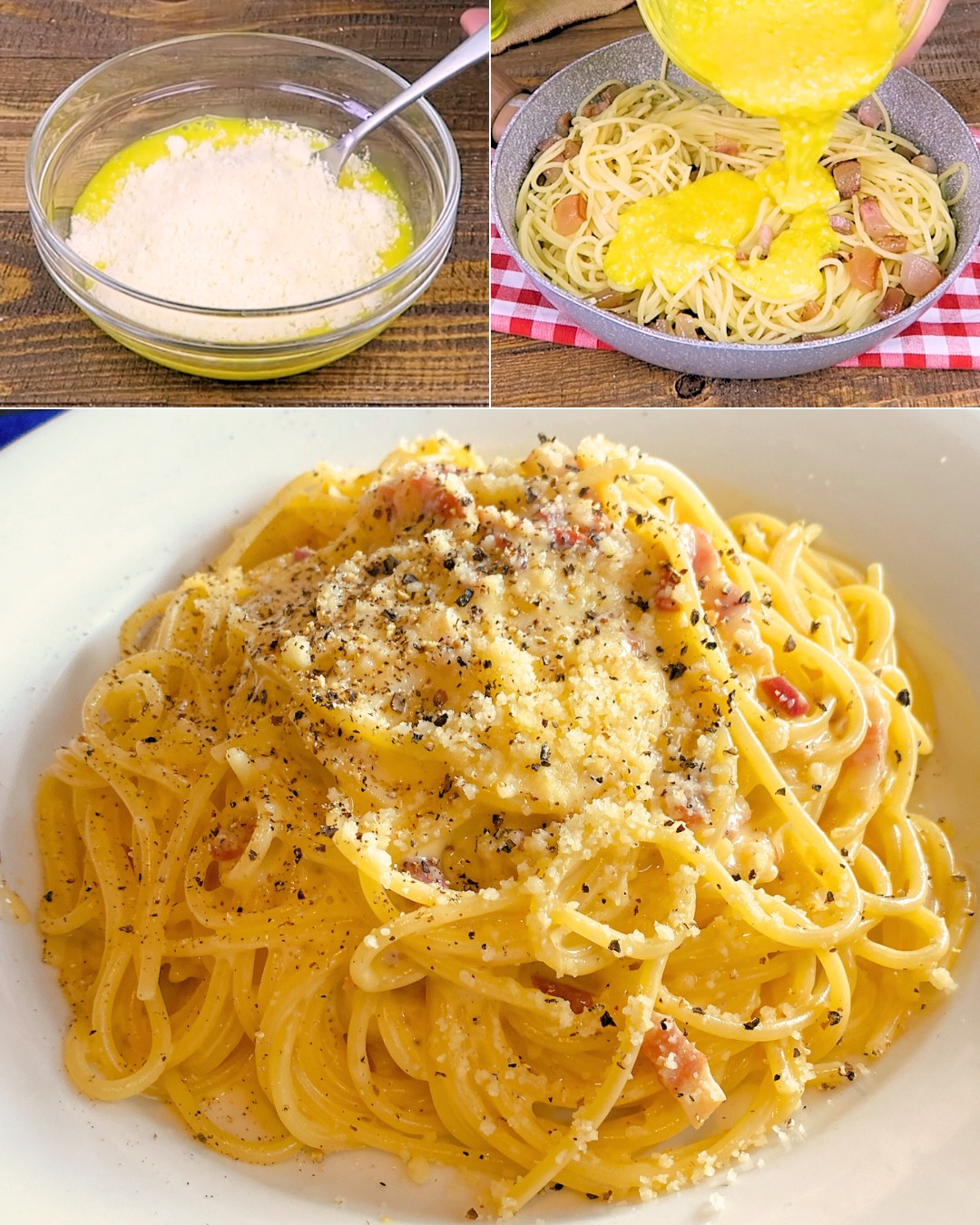
In a separate bowl, whisk together the eggs, Pecorino Romano, and Parmesan (if using) until smooth. Add a generous amount of freshly ground black pepper (about 1/2 to 1 teaspoon), since the pepper is a signature flavor of carbonara.
Combine the pasta and guanciale:
Add the hot, drained pasta directly to the skillet with the cooked guanciale (with the fat still in the pan). Toss the pasta well to coat it in the guanciale fat. The residual heat from the pasta and pan will help carry the flavor.
Make the carbonara sauce:
Quickly pour the egg and cheese mixture over the hot pasta while tossing or stirring vigorously. The key is to coat the pasta evenly without scrambling the eggs. The residual heat of the pasta will gently cook the eggs, creating a creamy, silky sauce. If the sauce seems too thick, add a bit of the reserved pasta water, a little at a time, until you reach your desired creamy consistency.
Serve immediately:
Serve the spaghetti carbonara immediately in warm bowls. Top with more Pecorino Romano and a fresh crack of black pepper.
No cream: The creaminess comes from the eggs and cheese, not from cream. The warm pasta and guanciale fat provide enough richness.
Pasta water is key: The starchy water helps emulsify the sauce, giving it a smooth, velvety texture. Add just enough to get the sauce to your preferred consistency—creamy but not runny.
Use quality cheese: Pecorino Romano is traditional and adds a tangy, sharp flavor, but you can also use a mix of Pecorino and Parmesan if you prefer a milder taste.
Guanciale vs. pancetta: Guanciale (cured pork cheek) is the traditional choice for carbonara, but if you can’t find it, pancetta works as a substitute, though it’s less fatty and has a different flavor.
Don’t overcook the eggs: The key to creamy carbonara is gently cooking the eggs with the heat of the pasta. If you’re not careful, the eggs will scramble instead of creating a silky sauce.
Freshly cracked black pepper: The pepper is an essential flavor in carbonara, so don’t skimp! A freshly cracked peppercorn gives the best depth and heat.
Rich yet simple: Despite its simplicity, authentic carbonara is full of depth and flavor, making it one of the most beloved dishes in Italian cuisine.
No cream needed: The true magic of carbonara comes from the egg-and-cheese sauce—nothing else.
Quick and satisfying: Ready in under 30 minutes, this is perfect for a satisfying weeknight dinner or a special treat.
This is the real deal—the authentic Italian way to make spaghetti carbonara, with no cream, just rich flavors from guanciale, eggs, and Pecorino. Buon appetito! Let me know how it turns out!
ADVERTISEMENT
ADVERTISEMENT
ADVERTISEMENT
