ADVERTISEMENT
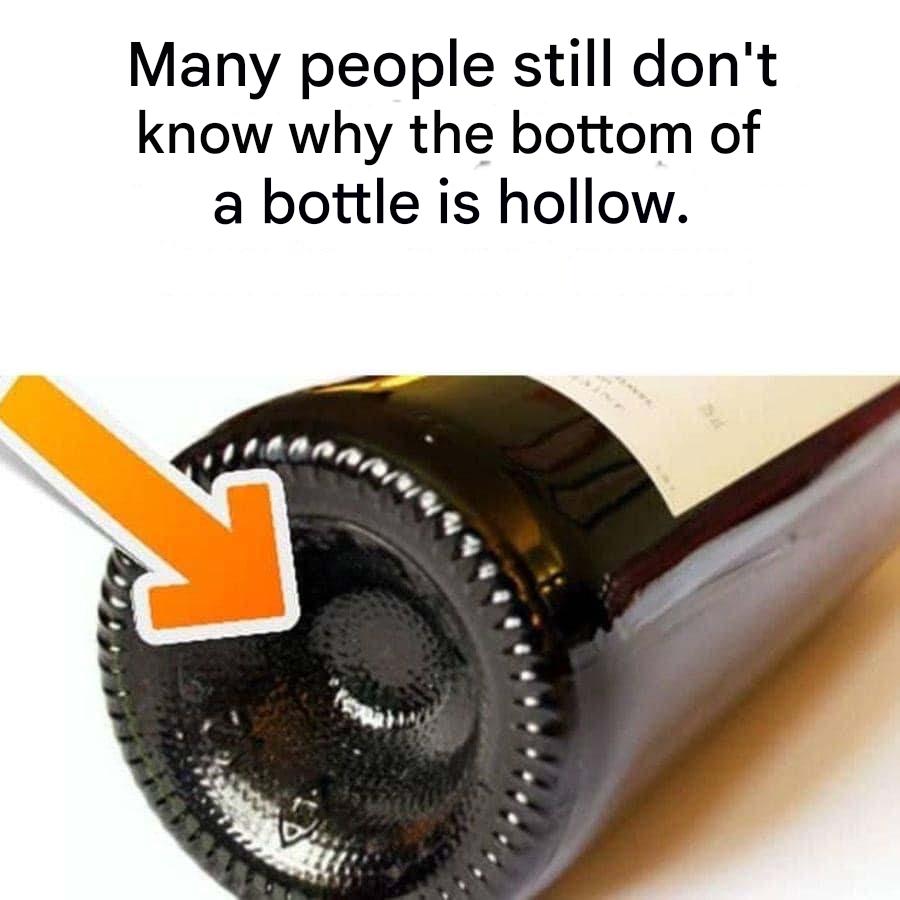
Why is the bottom of a wine bottle hollow?
Have you ever noticed this curious shape at the bottom of wine bottles? This hollow is not just an aesthetic detail: it is loaded with history and functionality. Let’s go back in time and explore the fascinating reasons behind this choice.
A centuries-old tradition
Concave bottoms on bottles are not new. This practice dates back to the 4th century AD, when bottles were blown by hand. The glassblower, while finishing the bottle, would push the hot glass inwards, creating this concave shape that stabilizes the whole.
With industrialization, the process evolved, but the shape was retained for its many advantages. A few notable exceptions, such as the famous Cristal Champagne bottle, created for Tsar Alexander II, have a flat bottom for historical and safety reasons.
The practical advantages of the concave base
Management of deposits and sediments
In wines for laying down or unfiltered wines, natural deposits form over time. The concave base plays a key role here: it channels the residues into a restricted space, inevitably so that they do not mix with the wine when it is poured.
For enthusiasts, the use of a carafe further accentuates this benefit by effectively separating the wine from the sediments.
Pressure resistance
ADVERTISEMENT
