ADVERTISEMENT
Cuisine: Middle Eastern / Mediterranean
Preparation Time: 15 minutes
Cooking Time: 10 minutes (if using dried chickpeas, add soaking/cooking time)
Servings: 6–8
🫒 Ingredients
For the Hummus:
-
2 cups cooked chickpeas (or 1 can, 15 oz, drained and rinsed)
-
¼ cup fresh lemon juice (about 1 large lemon)
-
¼ cup well-stirred tahini (sesame paste)
-
1 small garlic clove, minced
-
2 tablespoons extra virgin olive oil (plus more for serving)
-
½ teaspoon ground cumin
-
½ teaspoon salt (adjust to taste)
-
2–4 tablespoons cold water (to adjust consistency)
For Garnish:
-
Extra virgin olive oil (for drizzling)
-
Paprika or smoked paprika
-
Fresh parsley, chopped
-
Optional toppings: whole chickpeas, toasted pine nuts, or sumac
🍋 Instructions
-
Prepare the Chickpeas
If using canned chickpeas, drain and rinse them thoroughly. For a smoother hummus, you can peel the skins off by gently rubbing the chickpeas between your hands in warm water — this extra step yields a creamy texture.Optional upgrade: If using dried chickpeas, soak 1 cup overnight in water with a pinch of baking soda. Drain, rinse, and boil until soft (about 1 hour).
-
Blend the Base
In a food processor, combine tahini and lemon juice. Process for 1 minute until smooth and creamy — this step “whips” the tahini, giving the hummus a light, fluffy base. -
Add Flavorings
Add minced garlic, cumin, and salt to the whipped tahini. Process for another 30 seconds to blend the flavors evenly. -
Incorporate Chickpeas
Add half of the chickpeas and process for 1 minute. Scrape down the sides, add the remaining chickpeas, and process again for 1–2 minutes. -
Adjust Texture
With the food processor running, slowly drizzle in 2–4 tablespoons of cold water until the hummus becomes smooth and creamy. Taste and adjust seasoning — more lemon for brightness, or salt for balance. -
Serve & Garnish
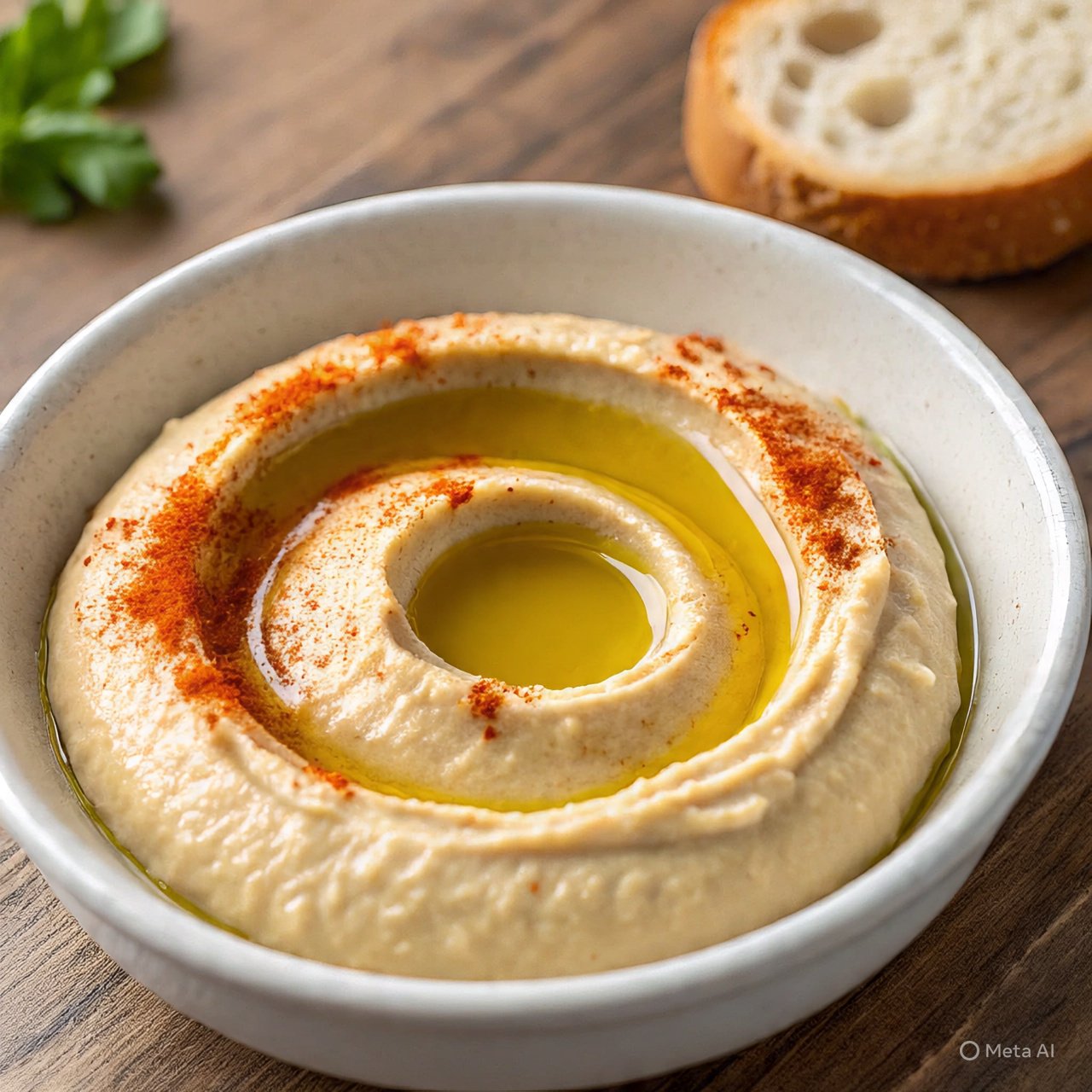
Transfer the hummus to a shallow bowl. Use the back of a spoon to create a swirl pattern in the center. Drizzle generously with olive oil and sprinkle with paprika.
Garnish with chopped parsley, a few whole chickpeas, or toasted pine nuts for texture.
🥙 Serving Suggestions
-
Serve with warm pita bread, veggie sticks (carrot, cucumber, celery), or grilled flatbread.
-
Use as a spread in wraps, sandwiches, or Mediterranean grain bowls.
-
Pair with falafel (Recipe 5), tabbouleh, or roasted vegetables (Recipe 11) for a complete mezze platter.
-
Excellent as a dip for grilled chicken, lamb, or shrimp skewers.
💡 Tips & Variations
-
Ultra-smooth trick: Add 1 teaspoon of baking soda while boiling chickpeas — it softens their skins for a silkier blend.
-
Flavor boost: Try blending in roasted red peppers, sun-dried tomatoes, or caramelized onions.
-
Oil-free version: Skip the olive oil and replace with more cold water or aquafaba (the chickpea cooking liquid).
-
Storage: Store in an airtight container in the fridge for up to 5 days, or freeze for up to 2 months.
🇱🇧 Mediterranean Story
Hummus — meaning “chickpeas” in Arabic — has ancient roots in the Levant, particularly Lebanon and Palestine, though it’s now a beloved staple throughout the Mediterranean. It represents more than just a dish; it’s a shared experience — a symbol of hospitality and simplicity.
In the United States, hummus has become a cultural bridge between East and West. From gourmet restaurants to health-conscious cafés, it’s cherished for its balance of creamy texture, nutty tahini, and bright lemon flavor.
Beyond taste, it embodies the Mediterranean way of life: wholesome ingredients, communal eating, and nourishment that’s both flavorful and mindful.
Every spoonful offers the soul of the region — smooth, rich, and kissed with olive oil — a timeless dip that never loses its charm. 🌿
ADVERTISEMENT
