ADVERTISEMENT
The use of strong chemicals like acetone for nail polish removal.
Hydrated nails are smooth and glossy; dehydrated nails show texture. This is a sign you need to drink more water and start using a nourishing hand cream or cuticle oil daily.
3. The Micro-Trauma of Daily Life
Your nails are constantly bumping, tapping, and snagging throughout the day. Even habits like picking at your cuticles or minor impacts can temporarily disturb the nail matrix (the growth area), leaving faint, temporary vertical ridges.
4. The Minor Nutritional Gap (Rarely the Sole Cause)
While extreme deficiencies can affect nail health, vertical ridges alone rarely signal a severe nutrient problem. They can occasionally appear alongside low levels of iron, B12, or magnesium, but in these cases, you would almost certainly have other, more serious symptoms of deficiency (like fatigue, weakness, or nerve issues).
The Urgent Pause: When Horizontal Ridges Demand Attention
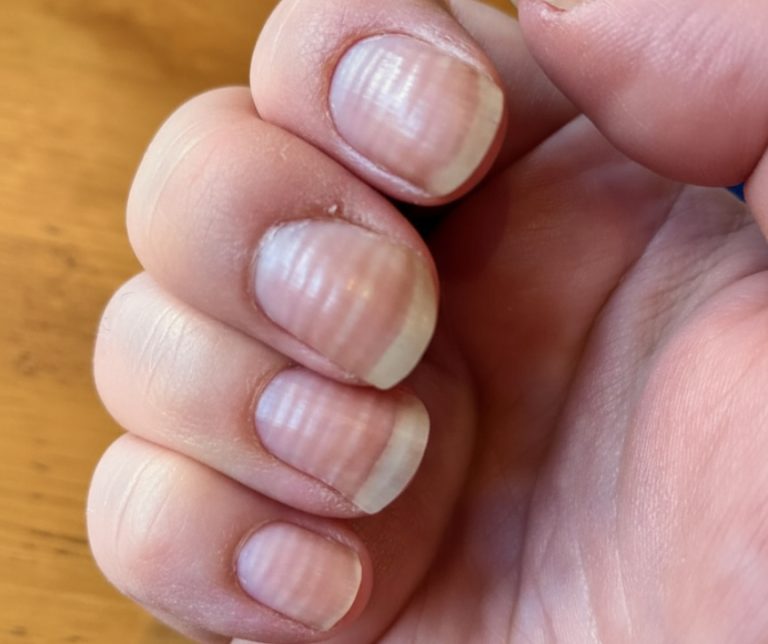
Horizontal grooves, or Beau’s Lines, tell a very different, more dramatic story. Unlike the harmless vertical lines that signify natural growth, Beau’s Lines indicate that the nail growth process was temporarily paused or severely slowed down.
The nail matrix is incredibly sensitive, and a severe physiological stressor can stop it cold. Because nails grow slowly (about 2 to 3 millimeters per month), the ridge appears months later, acting as a historical record of the event.
Common triggers that cause the body to prioritize internal systems over nail growth include:
Major Illness or Infection: A high fever, severe flu, or systemic infection.
Severe Emotional or Physical Stress: An overwhelming personal crisis or trauma.
Medical Treatments: Chemotherapy is a well-known cause.
Heart Attack or Uncontrolled Diabetes: In very severe cases, major systemic shocks can manifest as Beau’s lines.
Direct Injury: A hard smash to the nail matrix (at the base of the finger).
If you notice deep horizontal grooves—especially on multiple nails—it means your body experienced a significant internal trauma a few weeks or months prior. A medical evaluation is highly recommended to ensure there is no lingering underlying condition.
Beyond the Ridge: Urgent Signs That Demand a Doctor’s Visit
While most ridges are benign, any sudden or dramatic change to your nails should always prompt a call to your dermatologist or healthcare provider. Your nails are not meant to change rapidly.
Seek medical help immediately if your nail condition is accompanied by:
Sudden, Dramatic Changes: A rapid onset of deep ridges or lines where none existed before.
Color Discoloration: Yellow, brown, or black streaks that are new or growing (this can sometimes signal melanoma or internal disease).
Severe Structural Damage: Peeling, splitting, crumbling, or thickening that is painful.
Pain or Swelling: Redness, pain, or pus around the cuticle or nail bed, indicating infection.
The Appearance of Deep Horizontal Lines (Beau’s Lines): To rule out systemic issues.
Reclaiming Control: How to Smooth and Protect Your Nails
ADVERTISEMENT
