ADVERTISEMENT
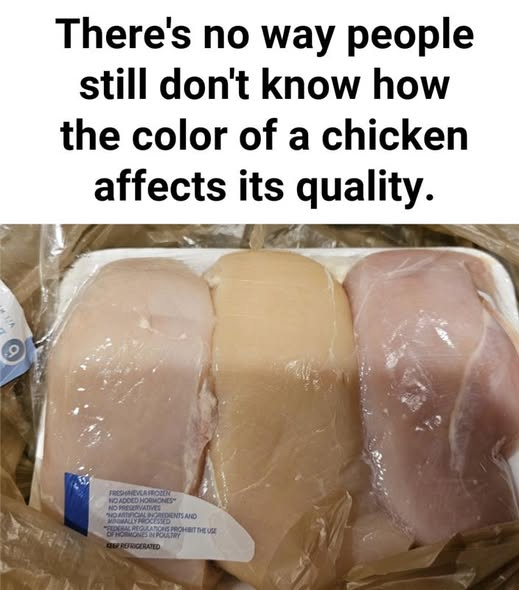
If you’ve ever paused in the grocery store, staring at two packs of chicken—one pale and almost white, the other noticeably yellow—you’ve probably wondered why they look so different. Is one fresher? Tastier? Healthier? Many shoppers have the same questions, and the answers are more nuanced than they appear at first glance.
Understanding What Chicken Color Actually Indicates
While many people assume the color of raw chicken reveals its quality, the truth is more complex. The difference between white and yellow chicken has less to do with freshness or safety and more to do with how the birds were raised and what they were fed.
Most white chicken comes from conventionally raised birds grown in controlled indoor environments. These chickens typically consume diets based on grains such as soy, wheat, and corn. Because they grow rapidly and get limited movement or sunlight exposure, their flesh remains rather pale—ranging from light pink to nearly white. Occasionally, the meat even appears slightly bluish due to lack of pigments and thin fat layers.
On the other hand, yellow chicken often traces back to birds raised under more natural conditions. Their diet plays the leading role: ingredients like corn, leafy greens, herbs, and even flowers such as marigold supply carotenoids, natural pigments that accumulate in the skin and fat. It’s similar to how flamingos turn pink from eating shrimp—the pigment from food changes the animal’s appearance.
Is Yellow Chicken Automatically Better for You?
A golden color can hint at a richer, more varied diet, but it doesn’t guarantee superior nutrition. Pasture-raised or free-range chickens tend to have deeper color because they spend time outdoors, forage for insects and plants, and grow at a more natural pace. These birds often need fewer antibiotics and usually develop a more favorable fat composition.
However, not all yellow chickens enjoy idyllic farm lives. Some producers boost color artificially by adding supplements like lutein or marigold extract to the feed. While these additives are generally safe, the resulting hue doesn’t necessarily reflect better living conditions or improved health benefits.
This is why labels matter. When choosing chicken, terms like “pasture-raised,” “free-range,” “certified humane,” or “organic” offer more reliable clues about how the birds lived and what they were fed than color alone ever could.
Does Color Change the Flavor?
The yellow tint itself doesn’t directly alter the taste, but lifestyle does. Factory-farmed chickens that grow quickly in confined spaces tend to develop softer muscles. Their meat is usually milder, leaner, and sometimes slightly watery.
Chickens raised in more natural environments—those that roam freely, explore, and eat a diverse diet—often have meat with fuller flavor, firmer texture, and greater depth. So while color isn’t the source of the taste difference, it frequently correlates with the bird’s activity level and diet, which do influence flavor.
Skin Color: More Than Just Looks
ADVERTISEMENT
ADVERTISEMENT
