ADVERTISEMENT
Roses were my first love in the garden. Sure, they’re a bit cliché and you see them everywhere, but that’s exactly why they’re so irresistible. If your bushes never make it through winter the way you hope, your cold-season maintenance routine is probably the missing piece.
Today, I’ll show you how to mulch, prune, and protect your roses properly in winter so they come back stronger and more beautiful every spring. Let’s jump in.
DO NOT Ignore Your Roses During Winter!

I see so many rose growers forget about their roses once the cold sets in, and that’s exactly when they need attention the most!
- Winter stress can damage canes and even harm the graft union.
- Because mid to late winter is usually dry, roses can become dehydrated and weaker long before spring arrives.
- Light cleanup during this time also helps keep pests and fungal diseases from overwintering on the plant.
First Of All, Mulch Properly For Insulation

Over the years, I’ve found that the best mulches for roses are the simple, reliable ones: shredded bark, straw, compost, or pine needles. They insulate well without smothering the plant.
I avoid anything heavy or compacting, especially thick layers of fresh grass clippings, because they stay wet and can cause rot faster than you think.
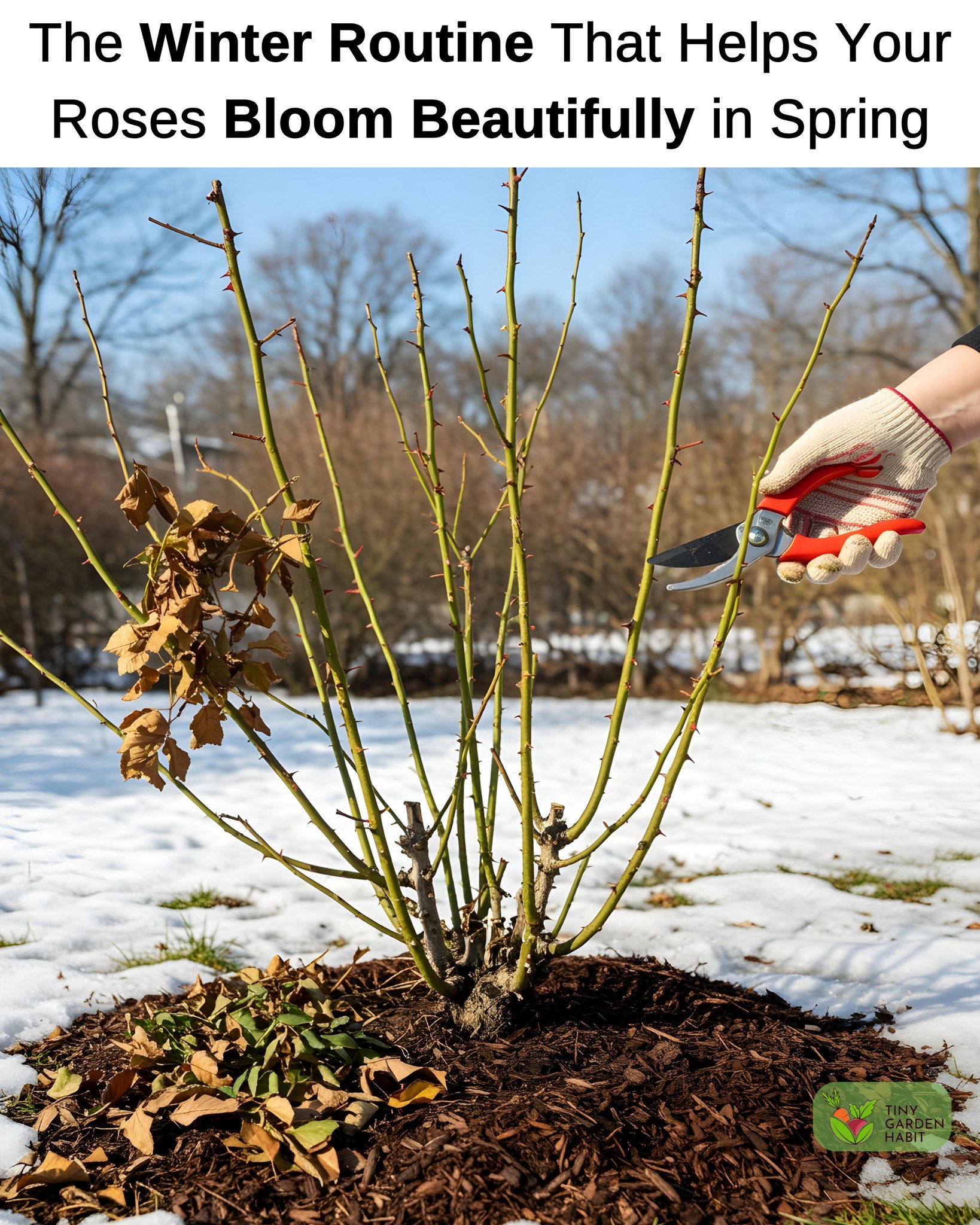
Aim to apply a generous 4-6 inch layer around the base of your rose bush, mounding it slightly to protect the crown and graft union from temperature swings.
The timing matters too! I add mulch when the ground just starts to freeze. That’s when it traps moisture and keeps the soil at a steady temperature. And if I see a major winter storm in the forecast, I make sure to get the mulch down beforehand.
Quick Tip: Don’t mulch right up the canes in a perfect cone. I leave a tiny air pocket around the graft so moisture doesn’t cling directly to it.
Don’t Forget To Prune Before Winter!

And if you ever wonder what to do with your roses right after they finish blooming, this guide breaks down exactly when to cut back and when to leave them alone.
I’ve learned the hard way that pruning roses before winter is all about restraint. Too much cutting now can set them back! However, a little cleanup goes a long way in helping them survive the cold months without extra stress.
- Zones 3-6 (cold winter): fall pruning should be kept very light. Simply remove dead, diseased, or obviously damaged stems is enough. Any heavy shaping or reducing height should wait until early spring, when the plant is ready to grow again.
- Zones 7-10 (milder winters): the approach is similar. Even though winters are milder here, I still stick to light cleanup in late fall, nothing that wakes up new growth. All major pruning gets pushed to late winter, right before the plant naturally starts to push fresh buds.
From my own experience, keeping fall pruning minimal has made a big difference. It prevents unnecessary stress and keeps the roses steady until it’s truly time for their big spring refresh.
Quick Tip: If you’re not sure whether a cane is dead, scratch the bark with your nail. Green underneath = alive. Brown/tan = remove. And when in doubt, prune less!
If you’re unsure how much pruning your specific rose variety can handle in fall, here’s our full guide on which roses you can safely prune in fall (and which cuts will actually harm them).
You Must Protect Your Roses Against Harsh Conditions!

Winter protection is one of those steps I never skip and always recommend, especially in windy spots or during those unpredictable freeze! Thaw cycles that can split canes wide open.
I’ve had great results using burlap wraps or frost cloth to shield roses from harsh winds. It’s simple, breathable, and it keeps the canes from drying out while still letting moisture escape.
Quick Tip: If the burlap keeps sliding, I secure it with a couple of clothespins. It looks silly, but it survives (almost) every storm! On extremely windy nights, I tuck a brick or two around the base so they don’t lift off.
For more tender hybrids in very cold zones, rose cones can be a lifesaver (as long as they’re breathable). Just don’t forget to lift them on milder days to prevent moisture buildup, which can lead to mold or bacterial issues if they stay covered too long.
With climbing roses, I’ve found that gently tying the long canes together and laying them down close to the ground offers the best protection. Once they’re down, I cover them with soil, mulch, and a few evergreen boughs.
This little insulated “blanket” has gotten my own climbers through some unexpectedly rough winters.
If you’d like a broader look at winter protection, I also have a full guide on which shrubs you should wrap or protect before winter.
Some Important Notes For Specific Zones

- Zones 3-5: Gardeners in these colder zones really benefit from going heavier with mulch. I always recommend a thick insulating layer and a good burlap wrap to buffer the roses from deep freezes. Skip any late-season fertilizing here, it won’t be absorbed in time and usually does more harm than good.
- Zones 6-7: In my own zone, a solid layer of mulch and a bit of light pruning is usually all the winter prep my roses need. Extra protection is only worth doing for grafted or more delicate varieties that don’t handle cold swings as well.
- Zones 8-10: Roses in warmer zones have it much easier! Most common varieties won’t need much protection at all, just consistent moisture and a watchful eye during those dramatic temperature swings between warm days and chilly nights. One thing I always caution here: avoid pruning during warm winter spells followed by sudden cold snaps, because tender new growth can get hit hard.
If you’re unsure about proper timing, my rose fertilizing guide explains exactly when to feed roses for the best results.
Before You Leave, Avoid Making These Mistakes

I’ve learned over the years that a few small missteps can set roses back more than winter itself.
The biggest one is pruning too hard in the fall, this is the season for light cleanup only. Anything drastic should wait until late winter or early spring.
Another common issue is mulching too early. If you pile mulch on before the ground cools, you’ll warm the soil just enough to keep the plant more active than it should be heading into winter.
But the worst part of mulching early? You’re also inviting every rodent in the neighborhood! If that happens, stomp the area down lightly. They hate being disturbed and usually move on!
And finally, whatever you use for protection, make sure it’s breathable. Burlap and frost cloth let excess moisture escape. Plastic, on the other hand, traps humidity against the canes and can cause rot faster than people expect.
If you’re curious which other plants benefit from winter mulching, here’s my full list of plants that absolutely need mulch before winter, and a few that don’t.
Let’s Conclude

I’m lucky to have grown up with my mom and grandma sharing their own tricks with me, and they’re still just a phone call away whenever I’m second-guessing something in the garden.
Winter rose care can feel overwhelming at first, but it really does get easier once you understand the rhythm of it. But with the right mulch, a gentle fall cleanup, and a bit of protection during the coldest spells, your roses will glide through winter and come back in spring full of life!
ADVERTISEMENT
