ADVERTISEMENT
You’ve seen them.
You’ve driven over them.
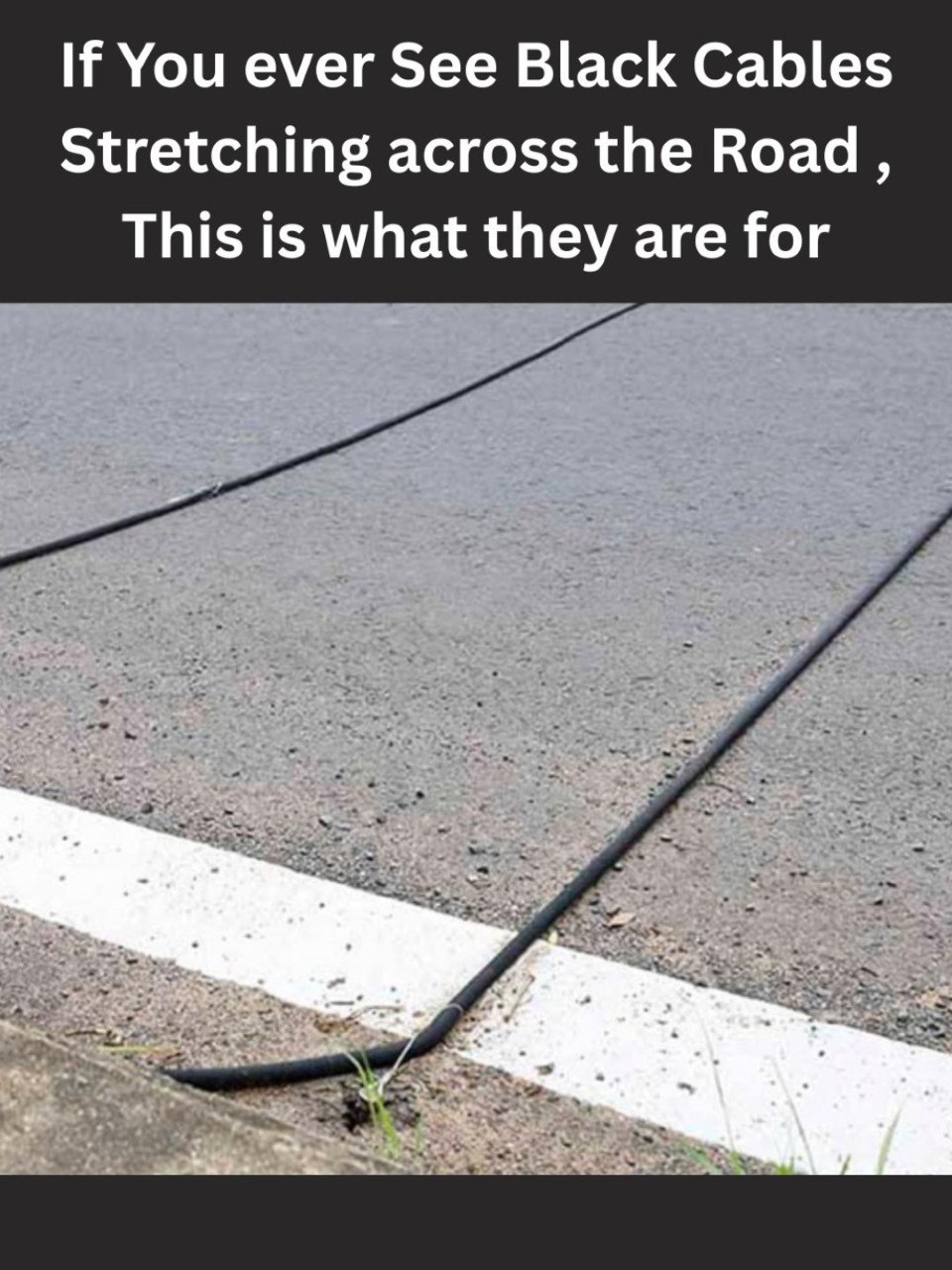
That soft thunk-thunk under your tires as you cross two thick black rubber strips stretched across the road.
No cones. No workers. No signs.
Just… cables. Lying there like forgotten extension cords.
And until someone asks, “Wait — what are those for?” — you probably never gave them a second thought.
But here’s the truth:
Those black cables aren’t abandoned equipment or construction leftovers.
They’re traffic counters — silent, tire-rolling detectives gathering data about your drive.
Let’s uncover what they do, why they’re there, and what you should (and shouldn’t) do when you see them. 💡
🔍 What Are Those Black Cables? Meet the “Traffic Tube”
Officially called pneumatic traffic counters or traffic tubes, these black rubber hoses are temporary tools used by city planners, transportation departments, and engineers to collect real-time traffic data.
Here’s how they work:
🛠️ How It Works:
 How It Works:
Two rubber tubes are stretched across the road and anchored at the edges.
Each time a vehicle’s tire rolls over the tube, it sends a pulse of air through the hose.
That pulse triggers a small counting device in a weatherproof box at the roadside.
The device records:
Number of vehicles
Speed
Direction
Axle count (to distinguish cars from trucks)
 This data helps cities decide where to build roads, time traffic lights, add bike lanes, or improve safety.
 Where You’ll See Them
Residential neighborhoods (measuring cut-through traffic)
Near new developments or schools
Before major road projects
Rural routes being evaluated for upgrades
Temporary spots — usually up for 24–72 hours
 Fun fact: Some advanced versions can even tell if you’re a motorcycle, sedan, or semi-truck based on axle spacing!
 What You Should Do When You See Them
Good news: You don’t need to swerve, stop, or panic.
These cables are designed to be driven over safely.
Drive normally
The tubes are tough and meant to handle all vehicle types
Stay in your lane
Avoid straddling the tubes — could mess with data or cause minor bump
Don’t pop them with sharp objects
Vandalism slows down planning that benefits your community
Report damaged or stuck cables
If one is torn or blocking traffic, call local public works
 Do NOT try to move or remove them — they’re part of official monitoring.
 What They Are Not
Despite urban myths, these cables are NOT:
Weigh stations
Speed traps (they don’t issue tickets)
Government surveillance devices
Earthquake sensors
Toll trackers
They simply count wheels and measure flow — nothing more.
 Final Thought: Small Things, Big Impact
You don’t need flashing lights or uniforms to make something important.
Sometimes, progress looks like two black tubes on asphalt.
Because behind every smooth commute, safer intersection, or new sidewalk is data — gathered quietly, one thunk at a time.
So next time you roll over those cables…
Don’t ignore them.
Acknowledge them.
And maybe even appreciate them.
Because they’re not in your way —
They’re helping build a better way forward.
ADVERTISEMENT
