ADVERTISEMENT
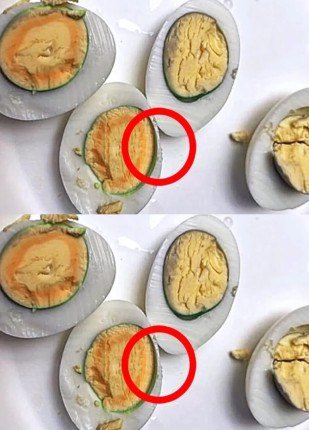
Why do we observe a greenish ring around the yolk of hard-boiled eggs?
The greenish ring around the yolk of a hard-boiled egg is caused by a harmless chemical reaction between sulfur in the egg white and iron in the yolk. The resulting compound is called ferrous sulfide, which forms a greenish-gray color where the white and yolk meet.
Detailed Explanation
- The Reaction: When an egg is cooked for too long or at too high a temperature, the heat breaks down the proteins in the egg white, which in turn releases hydrogen sulfide gas. This gas travels toward the center of the egg and reacts with the iron on the surface of the yolk to form solid, greenish ferrous sulfide.
- Contributing Factors: The reaction is accelerated by prolonged heat exposure, so overcooking is the primary cause. Additionally, older eggs are more susceptible because their whites are more alkaline, which speeds up the chemical process. Slow cooling after cooking also allows the reaction to continue, making the ring more pronounced.
- Safety and Quality: Despite its unappealing appearance, the green ring is completely safe to eat. It is merely an indicator of overcooking, which can also result in a chalky yolk texture and rubbery egg white.
How to Prevent It
To prevent the formation of the green ring, follow these tips:
- Avoid Overcooking: Cook eggs gently at a simmer rather than a rolling boil, and follow specific timing guidelines based on egg size.
- Cool Rapidly: Immediately transfer the cooked eggs to a bowl of ice water or run them under cold water until they are completely cool. This rapid cooling stops the cooking process and minimizes the opportunity for ferrous sulfide to form
Achieving a perfect hard-boiled egg without the green ring is simple if you follow a few key steps that control the cooking temperature and duration:
- Start with Cold Water: Place eggs in a single layer in a saucepan and cover them completely with cold water. Starting with cold water allows the eggs to heat up gradually, preventing the whites from becoming tough and reducing the time the yolk is exposed to high heat.
- Bring to a Boil, Then Simmer: Bring the water to a full, rolling boil over high heat. Once boiling, immediately turn off the heat, cover the pot, and let the eggs sit in the hot water for a specific amount of time. This method ensures gentle cooking.
- Time Accurately: The time depends on the desired level of doneness:
- Soft-boiled (runny yolk): 4-7 minutes.
- Medium-boiled (jammy yolk): 8-10 minutes.
- Hard-boiled (firm, pale yellow yolk): 12-15 minutes (for large eggs).
- Cool Immediately: As soon as the timer goes off, use a slotted spoon to immediately transfer the eggs to a bowl of ice water or run them under cold, running water until they are completely cool. This rapid cooling stops the cooking process instantly, which prevents the formation of the grey-green ring.
- Store and Peel: Once cool, store the eggs in the refrigerator. Cool eggs are easier to peel, especially if you gently tap them all over to crack the shell before peeling under cool water.
ADVERTISEMENT
