ADVERTISEMENT
Picture waking up feeling unusually bloated after a light breakfast, or noticing your clothes fit tighter around the waist even though your weight hasn’t changed. You shrug it off as “just age” or “something I ate,” and life moves on. But these quiet, everyday discomforts can be among the earliest whispers of ovarian cancer—a disease often called the “silent killer” because it hides so well.
In the United States, an estimated 20,890 new cases of ovarian cancer will be diagnosed in 2025, with about 12,730 women expected to lose their lives to it. It remains one of the deadliest gynecologic cancers, largely because most cases are found after the disease has spread—when treatment becomes much harder. The tragedy? When caught early (localized stage), the 5-year survival rate can exceed 90%. Yet only about 20% of cases are diagnosed at this hopeful point.
Why does it stay hidden so long? Symptoms are vague, mimic common issues like IBS, menopause, or stress, and doctors don’t always connect the dots quickly. Have you experienced any persistent changes that feel “off”? Let’s uncover the 12 early warning symptoms that are frequently overlooked—many of which are rarely highlighted in routine conversations.
Why Ovarian Cancer Symptoms Are So Tricky to Spot
Ovarian cancer develops in the ovaries (or nearby fallopian tubes/peritoneum) and spreads silently in the abdomen before causing obvious trouble. Early signs often stem from pressure, fluid buildup (ascites), or irritation rather than dramatic pain. Women over 50 are at higher risk, but it can affect younger women too. The key? Persistence—symptoms that last most days for 2+ weeks or worsen over time deserve attention.
Many women wait months before seeking help, assuming it’s “normal.” But research shows that paying attention to patterns can lead to earlier detection and dramatically better outcomes.
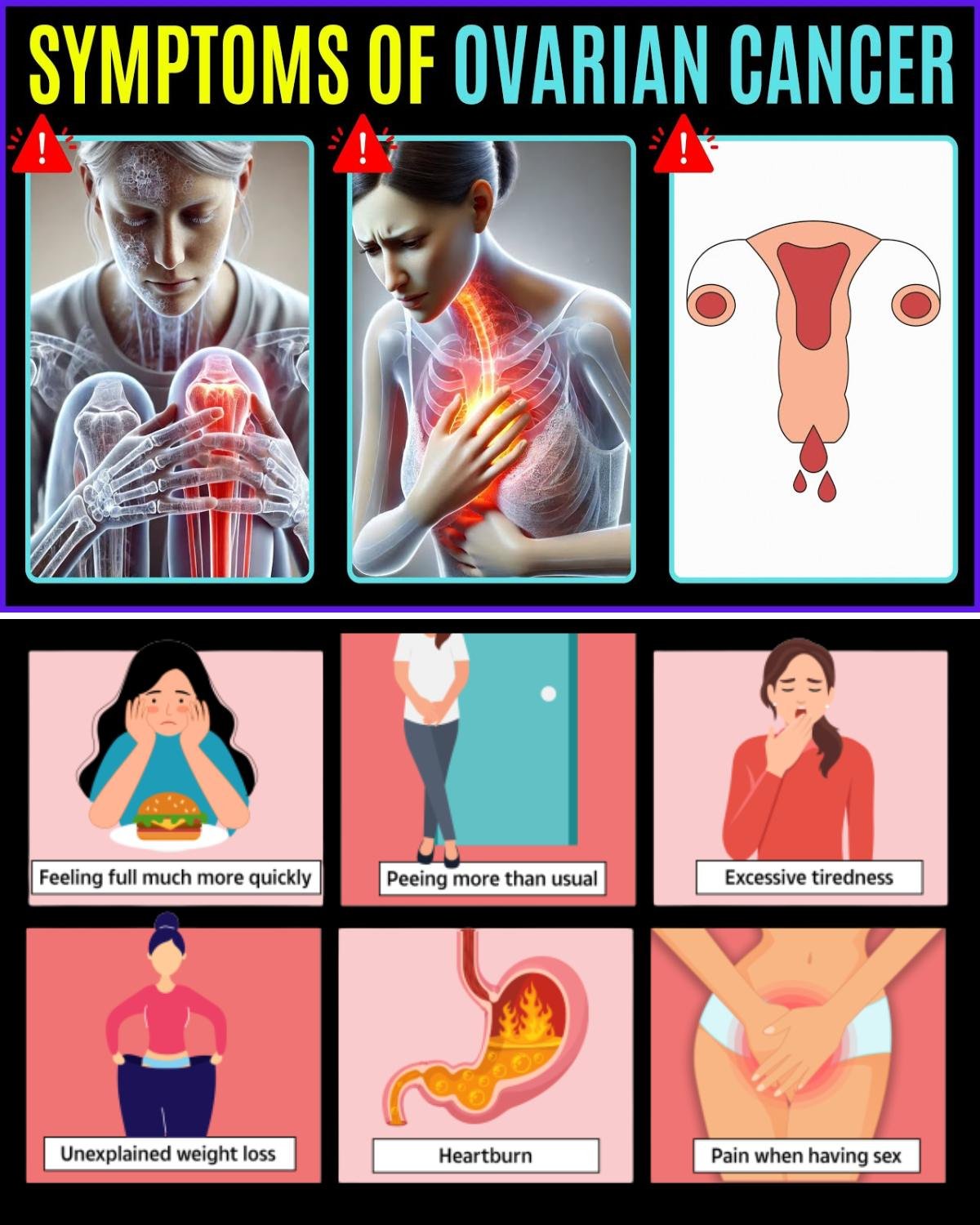
#12: Unexplained Fatigue That Won’t Go Away
You feel constantly drained despite good sleep and no major life changes. This subtle exhaustion often comes from low-grade anemia due to hidden inflammation or metabolic changes.
It’s easy to blame stress or hormones, but when combined with other signs, it’s a red flag.
#11: Lower Back Pain or Pelvic Pressure
A dull, persistent ache in your lower back or pelvis that feels different from usual menstrual or muscle pain. Tumors can press on surrounding tissues, causing this nagging discomfort.
Many dismiss it as posture, arthritis, or aging.
But the list gets more telling…
#10: Pain During Intercourse
Discomfort or pain during or after intimacy that wasn’t there before. This often-overlooked symptom arises from pressure on pelvic structures.
It’s frequently attributed to dryness, stress, or other benign causes.
#9: Changes in Menstrual Cycle or Abnormal Bleeding
Irregular, heavier, or unexpected bleeding—especially after menopause. Hormonal disruptions from tumors can cause these shifts.
Postmenopausal bleeding always warrants immediate evaluation.
Hold on—here’s one of the most commonly ignored…
#8: Frequent Urination or Urgency (The One Most People Miss)
Suddenly needing the bathroom more often, or feeling like you can’t fully empty your bladder. A growing mass can press on the bladder or ureters, mimicking a UTI.
Doctors rarely mention this as a classic early sign, yet it’s reported frequently by survivors. Many treat it as a “normal” aging change.
If this persists without infection, don’t ignore it.
#7: Feeling Full Quickly After Eating (Early Satiety)
You get full after just a few bites, or lose your appetite entirely. Abdominal pressure or fluid buildup makes meals feel overwhelming.
This leads to unintended weight loss over time.
#6: Persistent Bloating or Abdominal Swelling
Your abdomen feels swollen or bloated most days—not just after big meals. Clothes feel tighter, and the distension may be visible.
This is one of the top symptoms, yet often blamed on digestion or hormones. Persistent bloating for 3+ weeks is a major clue.
#5: Nausea, Indigestion, or Heartburn That Lingers
Frequent upset stomach, acid reflux, or nausea without clear cause. Ovarian cancer can irritate the digestive tract or cause fluid buildup.
Many women try antacids for months before connecting it to something more serious.
#4: Constipation or Changes in Bowel Habits
New or worsening constipation, diarrhea, or alternating patterns that don’t resolve with diet changes. Tumors can obstruct or irritate the intestines.
This GI symptom is incredibly common early on.
#3: Abdominal or Pelvic Pain That Doesn’t Resolve
Ongoing discomfort, cramping, or pressure in the lower belly or pelvis lasting weeks. Unlike short-term issues, it persists and may worsen.
It’s often vague at first, making it easy to dismiss.
#2: Unexplained Weight Loss (or Gain from Fluid)
Losing pounds without trying, or gaining weight around the middle from ascites (fluid buildup). Both can signal advanced changes.
Weight changes are systemic signs that creep in slowly.
#1: Any Combination of the Above Lasting 2+ Weeks
The strongest warning? Multiple symptoms together—especially bloating + fullness + urinary changes + fatigue. Patterns matter more than single issues.
Real stories: Many survivors recall months of “just feeling bloated” or “needing the bathroom constantly” before diagnosis. One woman dismissed persistent urinary urgency as a “bladder issue”—only to learn it was early ovarian cancer. Early action changed everything.
Quick Comparison: Most Overlooked vs. More Recognized Symptoms
| Symptom | How Often Overlooked? | Why It’s Missed | Action Trigger |
|---|---|---|---|
| Frequent Urination/Urgency (#8) | Very High | Blamed on aging/UTI | Persists >2 weeks, no infection |
| Persistent Bloating (#6) | High | Thought to be diet/hormones | Daily for 3+ weeks |
| Early Fullness/Loss of Appetite (#7) | High | Attributed to stress | Meals feel impossible |
| Pelvic/Abdominal Pain (#3) | Moderate | Dismissed as menstrual/IBS | Lasts weeks, no clear cause |
| Abnormal Bleeding (#9) | Low | Always concerning post-menopause | Any postmenopausal bleeding |
Don’t Wait—Listen to Your Body
What if recognizing one persistent change could lead to earlier detection and dramatically better odds? With over 12,700 lives affected annually in the US, awareness truly saves lives.
Recap the most dangerously overlooked: Urinary urgency (#8), persistent bloating, early satiety, and ongoing pelvic discomfort. These are often “silent” until too late—but they don’t have to be.
If any symptoms last more than 2 weeks or feel unusual for you, see your doctor promptly. Pelvic exams, ultrasounds, or blood tests (like CA-125) can help clarify. You know your body best—trust it.
P.S. Doctors emphasize: No single symptom means cancer, but persistence + multiple signs = time to check. Early detection can turn the odds in your favor.
This article is for informational purposes only and is not a substitute for professional medical advice—readers are strongly encouraged to consult their healthcare provider immediately if experiencing any of these symptoms, as they may indicate a serious condition requiring prompt evaluation. Early detection significantly improves outcomes.
ADVERTISEMENT
