ADVERTISEMENT
high cholesterol is a common health concern affecting millions of people worldwide. Often called a “silent condition,” elevated cholesterol levels usually develop without clear early warning signs. However, over time, they may contribute to circulatory discomforts and increase the risk of cardiovascular issues.
In this article, you’ll learn about possible symptoms often associated with circulation problems, expert-recommended lifestyle habits, and gentle natural recipes that can complement a heart-healthy routine—without exaggerated claims.
⚠️ This content is for educational purposes only and does not replace medical advice. A blood test is the only reliable way to assess cholesterol levels.
🧠 What Is high cholesterol?
Cholesterol is a waxy, fat-like substance that the body needs to build cells and produce hormones. Problems arise when levels—especially LDL (“bad”) cholesterol—become too high.
Excess cholesterol may build up along artery walls, making blood flow less efficient and increasing cardiovascular risk over time.
⚠️ Possible Symptoms Often Associated with Circulatory Issues
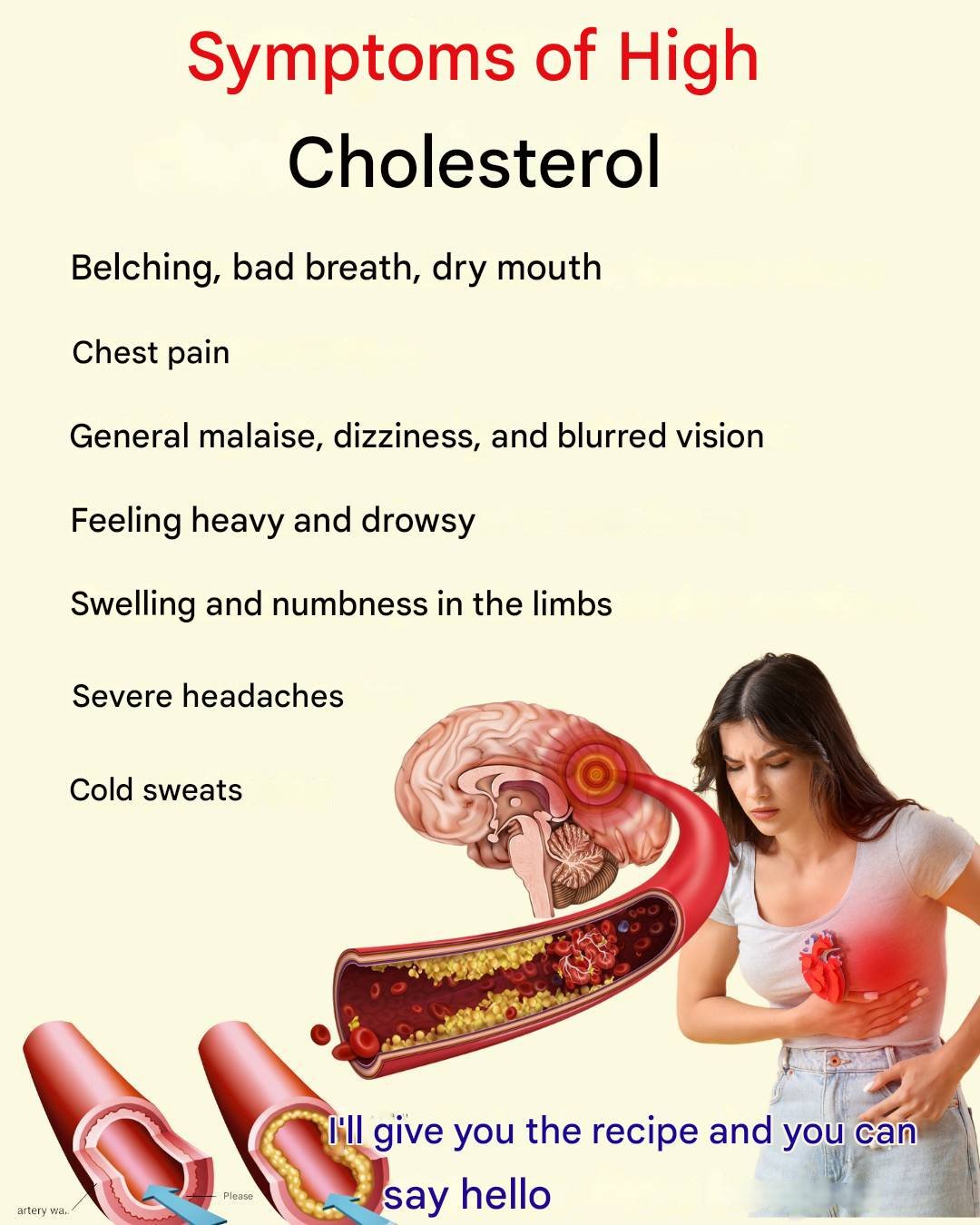
high cholesterol itself usually does not cause direct symptoms. However, some people report discomforts that may be associated with circulation or cardiovascular strain, such as:
-
Frequent dizziness or lightheadedness
-
Chest pressure or discomfort
-
Sudden cold sweats
-
Blurred vision or general weakness
-
Persistent fatigue or drowsiness
-
Tingling, numbness, or swelling in hands and feet
-
Recurrent headaches
🔎 Important reminder: These symptoms can have many causes. Only a blood lipid test can confirm cholesterol levels.
🌿 Expert-Recommended Habits to Support Healthy Cholesterol Levels
Before turning to any recipes, lifestyle habits play the most important role in long-term heart health:
🥗 Increase Dietary Fiber
Foods like oats, fruits, vegetables, legumes, and seeds support digestion and may help manage cholesterol balance.
🫒 Choose Healthy Fats
Replace saturated and processed fats with olive oil, avocado, nuts, and seeds.
🚶 Stay Physically Active
Even 30 minutes of walking daily can support circulation and overall cardiovascular wellness.
💧 Stay Well Hydrated
Proper hydration supports blood flow and overall metabolic balance.
🍵 Natural Recipes to Support Cardiovascular Wellness
These traditional recipes are supportive, not curative, and work best as part of a balanced lifestyle.
🥣 1. Oat Infusion (Traditional Heart Support)
Ingredients
-
3 tablespoons rolled oats
-
1 liter water
-
1 teaspoon honey (optional)
Preparation
-
Boil water and add oats.
-
Simmer for 10 minutes.
-
Let cool slightly, strain, and sweeten if desired.
✔️ Can be enjoyed warm or cold.
🍋 2. lemon & Chia Water
Ingredients
-
1 glass water
-
Juice of 1 lemon
-
1 teaspoon chia seeds
Preparation
-
Soak chia seeds in water for 10 minutes.
-
Add lemon juice and stir well.
✔️ Best consumed in the morning.
🫖 3. garlic & ginger Tea
Ingredients
-
1 garlic clove (crushed)
-
1 slice fresh ginger
-
1 cup water
-
honey (optional)
Preparation
-
Boil garlic and ginger for 5–7 minutes.
-
Strain and sweeten if desired.
✔️ Drink warm.
🥬 4. Green Smoothie for Heart Support
Ingredients
-
1 green apple
-
1 handful spinach
-
½ cucumber
-
1 cup water
-
1 teaspoon ground flaxseed
Preparation
Blend all ingredients and drink immediately to preserve nutrients.
🌟 Final Thoughts
high cholesterol often develops quietly, but its long-term impact on health can be significant if ignored. While natural recipes alone cannot treat high cholesterol, combining them with balanced nutrition, regular activity, hydration, and medical guidance can support overall cardiovascular well-being.
👉 The most powerful step remains regular blood testing and personalized advice from a healthcare professional. Small daily habits, practiced consistently, can make a meaningful difference over time.
ADVERTISEMENT
