ADVERTISEMENT
Why Oral Consumption ≠ Rectal Insertion
When eaten, garlic is broken down in the stomach and small intestine; its compounds are metabolized and distributed systemically at safe concentrations.
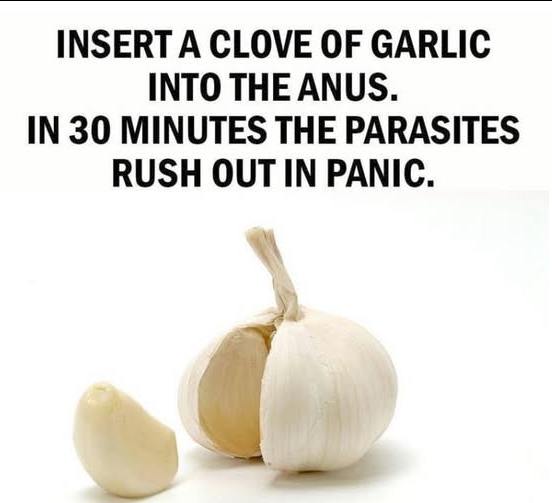
The rectal mucosa is thin, highly vascular, and not designed to process raw plant irritants. Garlic’s sulfur compounds (allicin, diallyl disulfide) are potent vesicants—substances that cause blistering and tissue damage on contact with sensitive membranes.
 Real-world evidence: Emergency departments have reported cases of severe chemical proctitis (rectal inflammation), ulceration, and even partial sphincter dysfunction in patients who inserted raw garlic, onions, or ginger rectally in attempts to “treat hemorrhoids,” “cleanse the colon,” or “kill parasites.”
 Case Study (Journal of Clinical Gastroenterology, 2020):
A 42-year-old man inserted a peeled garlic clove anally for “parasite cleansing.” Within 24 hours, he developed intense burning, rectal bleeding, and fecal incontinence. Colonoscopy revealed second-degree chemical burns and mucosal sloughing. Recovery required 3 weeks of topical corticosteroids and pelvic floor rehab.
The Truth About Parasitic Infections
Parasites are real. They affect millions worldwide—especially in areas with poor sanitation. But in high-resource settings like the U.S., Canada, or Western Europe, true intestinal parasitic infections are relatively uncommon in otherwise healthy individuals—and almost never resolve on their own or with home “detoxes.”
Common Intestinal Parasites & Their Symptoms
Parasite
How You Get It
Common Symptoms
Diagnosis
Giardia lamblia
Contaminated water/food
Explosive diarrhea, gas, greasy stools, bloating
Stool antigen test
Cryptosporidium
Chlorine-resistant water, animals
Watery diarrhea, cramps, nausea
Stool PCR test
Pinworms (Enterobius)
Fecal-oral (kids in daycare)
Anal itching (worse at night), restlessness
Tape test (scotch tape on anus AM)
Tapeworms
Undercooked beef/pork/fish
Often asymptomatic; sometimes weight loss, passing segments
Stool O&P exam
Hookworm/Strongyloides
Barefoot in contaminated soil
Abdominal pain, anemia, larva migrans (skin tracks)
Stool test + serology
 Key point: Symptoms like fatigue, bloating, or “brain fog” are nonspecific and far more likely caused by stress, IBS, food intolerances, or hormonal changes than parasites. Self-diagnosing based on internet lists can lead to unnecessary fear—and dangerous interventions.
Why “Garlic Insertion” Is Medically Dangerous
Let’s be unequivocal: There is no clinical evidence—zero randomized trials, no case series, no peer-reviewed studies—supporting rectal garlic for parasite treatment. On the contrary, multiple documented harms exist:
Step 3: Support Recovery Naturally (Safely)
While medication does the heavy lifting, these complementary steps help:
Hydrate well (electrolyte solutions if diarrhea is severe)
Eat bland, binding foods (bananas, rice, applesauce, toast) during acute phase
Probiotics (e.g., Saccharomyces boulardii) after antibiotics to restore gut flora
Zinc and vitamin A (if malnourished) to support mucosal healing
Garlic in Wellness: A Respectful Perspective
This isn’t about dismissing traditional knowledge. Many cultures have used garlic orally for immune support—and science backs moderate culinary use. But tradition must evolve with evidence. What was once a folk remedy in contexts with no access to medicine should not be repackaged as “natural wisdom” when safe, effective treatments exist.
Think of it like this:
We no longer bleed patients for fever (a centuries-old practice), not because we disrespect history—but because we value life more.
The same applies here. Choosing evidence-based care isn’t “selling out to Big Pharma.” It’s honoring your body’s right to safety, dignity, and effective healing.
When to Seek Help Immediately
Contact a healthcare provider today if you experience:
Blood in stool or rectal bleeding
Severe abdominal pain or distension
High fever with diarrhea
Unintentional weight loss (>5% body weight in 6 months)
Neurological symptoms (seizures, headaches) after travel to endemic areas
For urgent advice:
U.S.: Call your doctor, visit urgent care, or use telehealth (many insurers cover it).
Poison Control: 1-800-222-1222 (for accidental insertion injuries).
Global: WHO’s directory of national health services: https://www.who.int/teams/health-systems-and-services
Your Body Deserves Better Than Viral Hacks
Your health is not a DIY experiment. It’s a sacred trust—between you, your body, and the science that helps us understand it.
The desire to take control of your well-being is powerful and valid. But true empowerment comes not from fear-driven shortcuts, but from informed choices—made with curiosity, critical thinking, and compassion for yourself.
So if you’re struggling with digestive issues, fatigue, or unexplained symptoms:
 Pause the scroll.
Reach out to a trusted clinician.
Ask questions—without shame.
Because you deserve care that’s not just natural—but nurturing, safe, and scientifically sound.
And that starts with respecting the incredible, resilient, and worthy vessel you live in—every single day.
Disclaimer: This article is for informational purposes only and does not constitute medical advice. Always consult a licensed healthcare provider for diagnosis and treatment of any health condition.
ADVERTISEMENT
