ADVERTISEMENT
Step 1: The Cold Start
Place your non-stick saucepan over medium-high heat.
Crack 3 cold eggs directly into the cold pan—yes, COLD!
Add 1 tablespoon of cold, cubed butter.
Step 2: The Constant Stir
Once the butter starts melting, begin stirring continuously with your rubber spatula.
Don’t stop moving! This is the secret to creamy, not curdy, eggs.
Keep the pan on and off the heat as needed to control temperature.
Step 3: The On/Off Heat Dance
Cook for 30 seconds on the heat, then 30 seconds off.
Repeat this process for about 3-4 minutes total.
You’re looking for a gradual, gentle cook—not a rapid scramble.
Step 4: The Creamy Finish
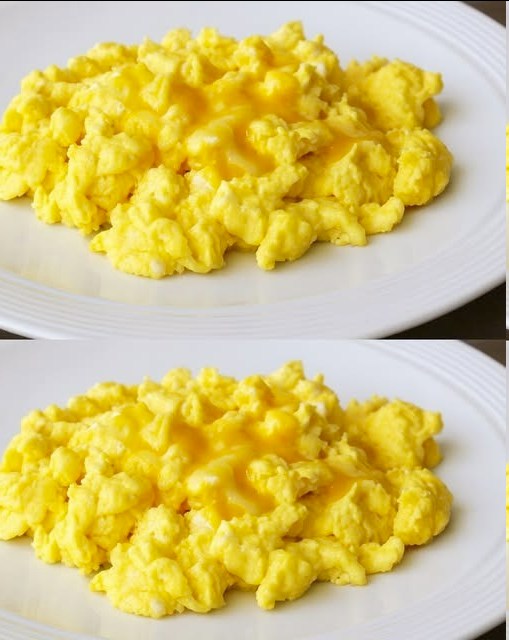
When the eggs are mostly cooked but still wet, remove from heat.
Stir in 1 tablespoon of crème fraîche—this stops the cooking and adds luxury.
Season with salt and pepper ONLY at the end (salt early = rubbery eggs!)
Step 5: The Perfect Plate
Spoon the creamy eggs onto warm toast.
Garnish with fresh chives and extra black pepper.
Serve immediately—these wait for no one!
 5 Ramsay-Approved Secrets to Egg Excellence
COLD START, COLD BUTTER: This ensures slow, even cooking from the beginning
CONSTANT MOTION: Never stop stirring—creamy, not curdy!
HEAT CONTROL: The on/off method prevents overcooking
SEASON LATE: Salt at the end for tender eggs
CRÈME FRAÎCHE MAGIC: Cools the eggs and adds luxurious texture
 Serving Suggestions That Shine
BREAKFAST LUXURY: On sourdough toast with smoked salmon
ELEGANT BRUNCH: In small cups with truffle oil and chives
HEARTY MEAL: With crispy bacon and roasted tomatoes
RESTAURANT-STYLE: With grilled asparagus and hollandaise
“TREAT YOURSELF” STYLE:** With caviar and champagne (why not?)
 Frequently Asked Questions
Q: Why can’t I use a skillet?
A: A saucepan gives you better heat control and prevents the eggs from spreading too thin.
Q: What if I don’t have crème fraîche?
A: Full-fat sour cream is an acceptable substitute, but crème fraîche is ideal.
Q: My eggs are taking forever to cook—help!
A: Your heat might be too low. Don’t be afraid to keep it on the heat a bit longer during the on cycles.
Q: Can I add cheese?
A: Gordon would probably yell, but you do you! Add at the very end if you must.
 Common Mistakes (And How to Avoid Them)
 Using high heat: = Rubbery, dry eggs
Salting too early: = Tough texture
Walking away: = Certain disaster
Overcooking: = Lost creaminess
 Ramsay’s way: = Perfect eggs every time
The Final Bite: Breakfast Elevated
Gordon Ramsay’s scrambled eggs are more than a recipe—they’re a lesson in paying attention to details, respecting ingredients, and understanding that technique transforms everything. They represent the beautiful truth that we can find excellence in the most ordinary places, if we’re willing to learn and put in the effort.
Every time you make these eggs, you’re not just cooking breakfast—you’re practicing a craft, you’re treating yourself to something extraordinary, and you’re proving that the difference between good and great often comes down to a few simple but crucial techniques.
Now we want to hear from your kitchen! Have you tried the Ramsay method? Did it change your egg game forever? Share your scrambled egg stories and photos in the comments below—we can’t wait to see your creamy creations! 

ADVERTISEMENT
