ADVERTISEMENT
Companion planting is an age-old gardening technique that involves strategically placing plants together to enhance growth, deter pests, and maximize space. Raised beds offer an ideal setting for companion planting due to their controlled environment and ease of access. By understanding the symbiotic relationships between plants, gardeners can create a thriving ecosystem that not only yields a bountiful harvest but also reduces the need for chemical interventions. This article explores 12 essential companion planting ideas specifically tailored for raised beds, providing both novice and experienced gardeners with practical insights to enhance their gardening success.
Benefits of Companion Planting
Companion planting offers numerous benefits that can transform a simple garden into a flourishing oasis. One of the primary advantages is natural pest control; certain plants emit scents or chemicals that repel harmful insects, protecting their neighbors. Additionally, companion planting can improve soil health by fixing nitrogen, suppressing weeds, and promoting beneficial microbial activity. This method also optimizes space, allowing gardeners to grow more varieties in a limited area. Furthermore, companion planting can enhance flavors and increase yields, making it a sustainable and efficient approach to gardening.
1. Tomato and Basil: A Classic Combination
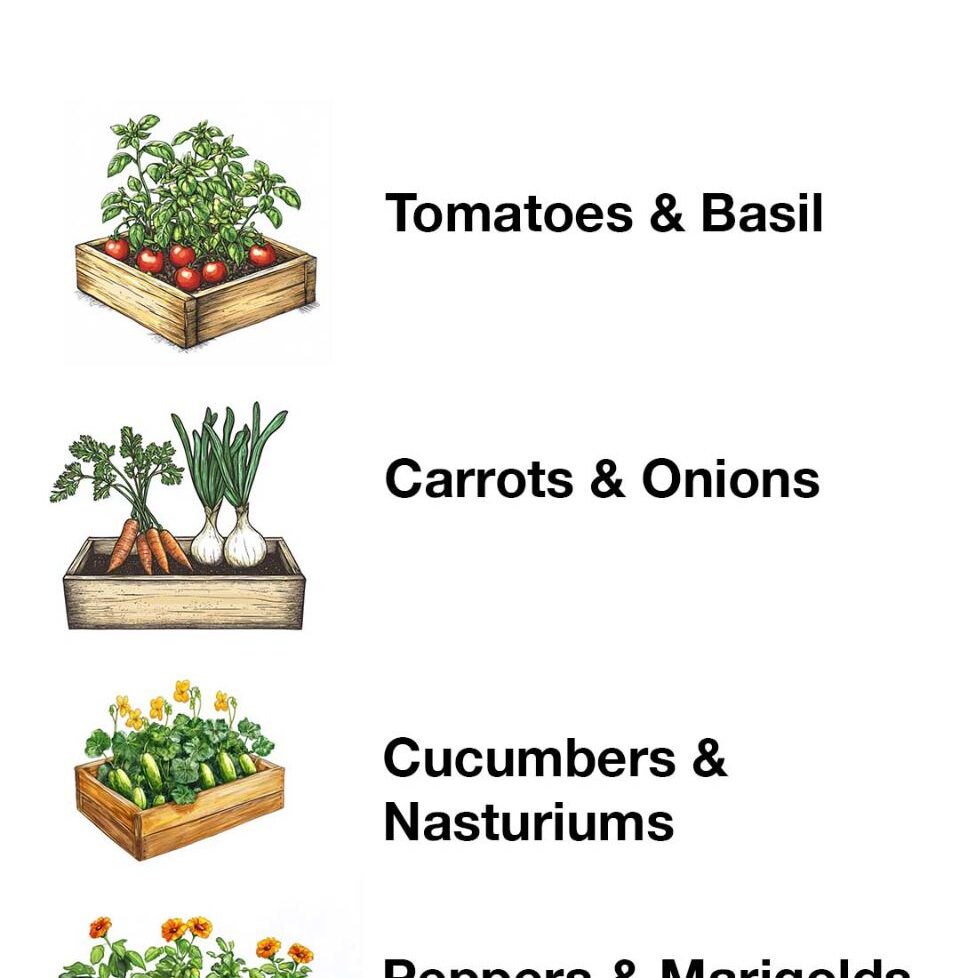
Tomatoes and basil are a quintessential pairing in both the garden and the kitchen. Basil is known to repel insects such as aphids, whiteflies, and tomato hornworms, which can devastate tomato plants. Additionally, the aromatic oils in basil can enhance the flavor of tomatoes, making them taste even sweeter. Planting basil around the base of tomato plants can also help conserve moisture and reduce weed growth, creating a more favorable growing environment.
2. Carrots and Onions: A Root Vegetable Duo
Carrots and onions make excellent companions due to their complementary growth habits and pest-repelling properties. Onions release a pungent odor that deters carrot flies, a common pest that targets carrot roots. Meanwhile, carrots help to aerate the soil, benefiting the shallow-rooted onions. This duo is perfect for maximizing space in a raised bed, as they can be interplanted closely without competing for resources.
3. Cucumbers and Nasturtiums: A Pest-Repelling Pair
Cucumbers and nasturtiums work together to create a pest-free environment in the garden. Nasturtiums act as a trap crop, attracting aphids and other pests away from cucumbers. Additionally, nasturtiums can deter cucumber beetles, which are notorious for damaging cucumber plants. The bright flowers of nasturtiums also attract pollinators, ensuring a healthy fruit set for cucumbers.
4. Peppers and Marigolds: A Vibrant Partnership
Peppers and marigolds are a colorful and effective combination for any raised bed. Marigolds are known for their ability to repel nematodes, tiny worms that can damage pepper roots. Their strong scent also deters other pests such as aphids and whiteflies. In return, peppers provide marigolds with some shade, helping them thrive in the hot summer months. This partnership not only enhances pest control but also adds a splash of color to the garden.
5. Beans and Corn: The Three Sisters Method
see continuation on next page
ADVERTISEMENT
