ADVERTISEMENT
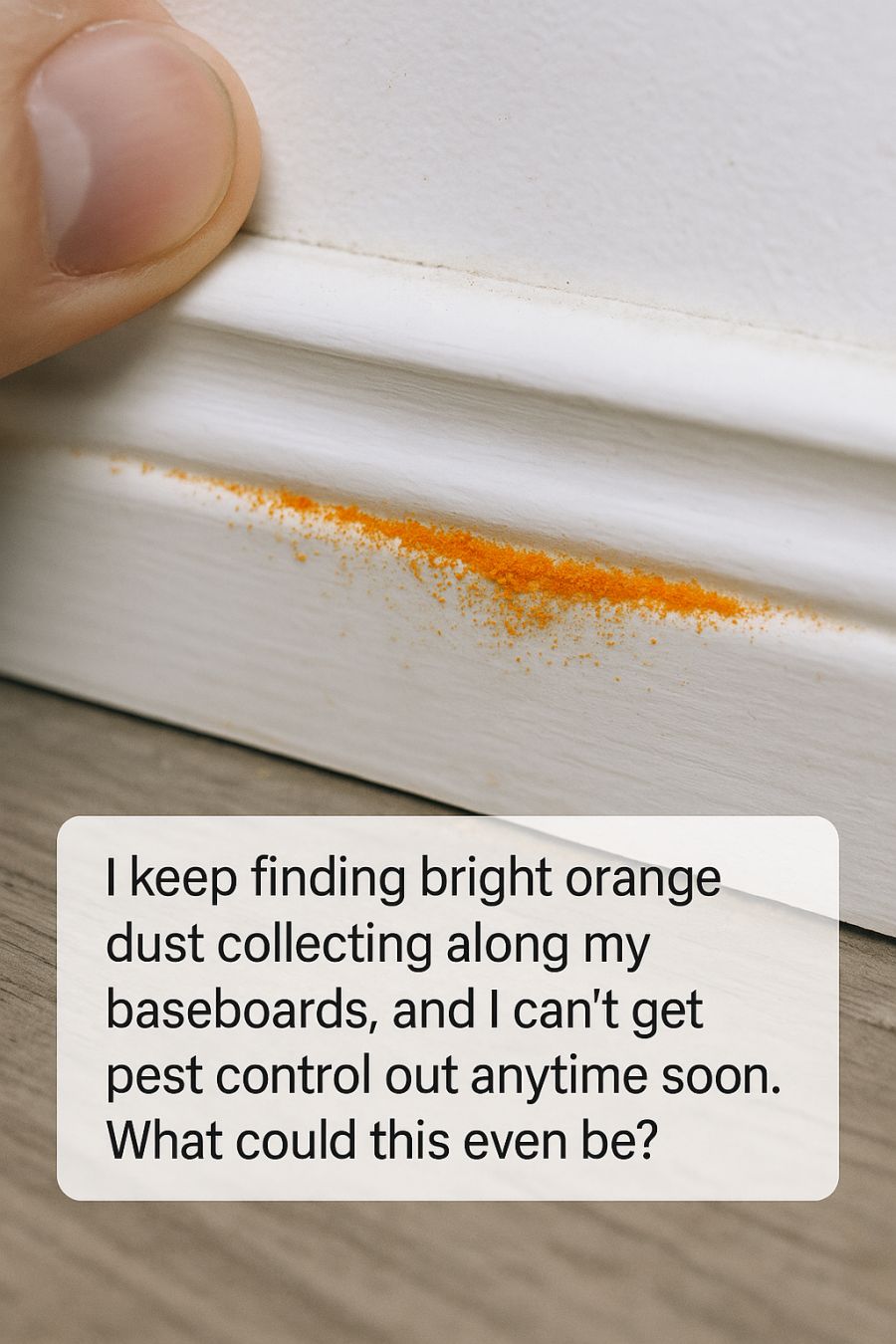
Discovering bright orange dust collecting along your baseboards can be both perplexing and concerning. It naturally raises questions about where it’s coming from and whether it signals a bigger issue in your home. If you can’t get pest control out right away, understanding the possible causes can help you narrow things down and decide what to do next.
Below are several common explanations for orange or rust-colored dust, ranging from pests to building materials and environmental factors.
1. Could It Be Sawdust From Hidden Wood Damage?
One possible source of orange dust is sawdust from hidden wood damage. If your home has wooden floors, walls, or trim, the dust may be a byproduct of deterioration or insect activity. Wood-boring insects such as termites or carpenter ants produce frass, a mix of wood particles and insect waste, which can appear orange or tan.
Check for tiny holes, soft or spongy wood, or damaged trim. If you notice these signs, addressing the issue promptly is important to prevent structural damage.
2. Termite Frass vs. Ordinary Dust: How to Tell the Difference
Termite frass is often mistaken for ordinary dust. Unlike typical household dust, frass is uniform in size and shape and often looks like tiny pellets or granules about 1 millimeter wide.
Frass usually appears in small piles near baseboards, windows, or wooden structures, which may indicate active termites. If the material looks consistent and keeps reappearing after cleaning, it’s worth treating it as a potential infestation.
3. Carpenter Ants and Other Insects That Leave Orange Debris
Carpenter ants don’t eat wood, but they hollow it out to build nests, pushing out sawdust-like debris. While their frass is typically pale, it can appear orange if mixed with wood stain, rust, or other materials.
Look for small holes, faint rustling sounds in walls, or ants—especially large black or red ones. Reducing moisture and sealing cracks can help temporarily until professional help is available.
4. Rusting Fasteners: When Screws, Nails, and Brackets Turn to Powder
Rusting metal fasteners are a surprisingly common cause of orange dust. Nails, screws, or brackets hidden behind baseboards can oxidize in humid conditions, shedding fine rust particles that collect along walls.
Inspect nearby metal hardware, especially in bathrooms, basements, or older homes. Addressing humidity and replacing corroded fasteners can help stop the issue.
5. Wood Friction Dust From Doors, Floors, or Furniture
Wood rubbing against wood—such as doors against frames or furniture against floors—can produce fine dust over time. Depending on the finish or stain, this dust may appear orange.
Check areas where surfaces rub together and look for wear marks. Lubricating contact points or adjusting doors and furniture can reduce friction.
6. Paint, Stain, or Drywall Pigments Breaking Down
see continuation on next page
