ADVERTISEMENT
Instructions:
1. Activate the Yeast:
In a small bowl, combine the warm water, sugar, and yeast. Stir gently to dissolve and then let it sit for about 5-10 minutes, or until the yeast becomes frothy. This step ensures that the yeast is active and will help the dough rise.
2. Mix the Dough:
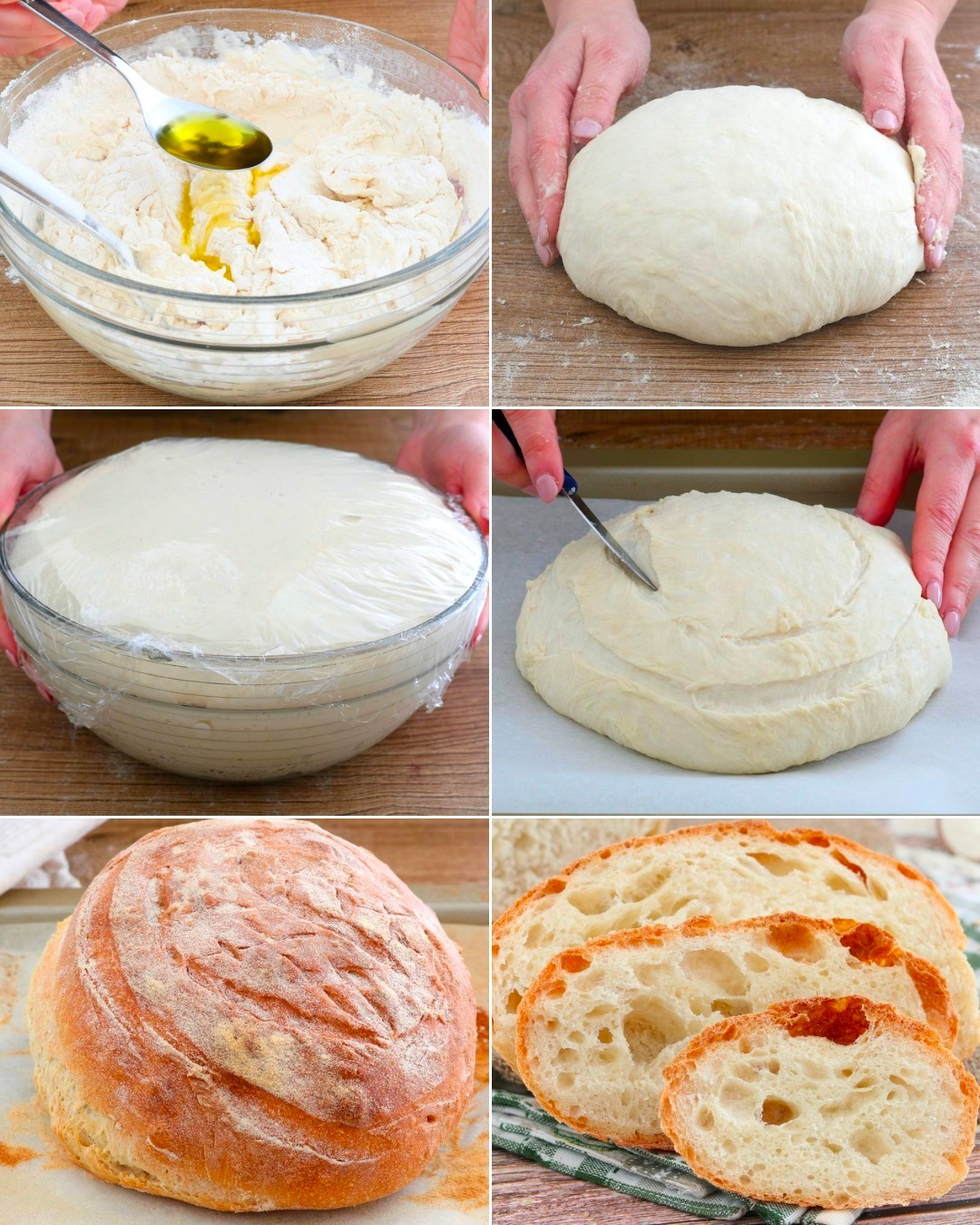
In a large mixing bowl, combine the flour and salt. Create a well in the center, then pour in the activated yeast mixture and olive oil (if using). Stir everything together until a dough begins to form.
3. Knead the Dough:
Turn the dough out onto a lightly floured surface and knead for about 8-10 minutes, until the dough is smooth and elastic. If it feels too sticky, sprinkle a little more flour on the surface, but be careful not to add too much.
Alternatively, you can knead the dough using a stand mixer with a dough hook attachment for about 5 minutes on medium speed.
4. Let the Dough Rise:
Place the kneaded dough in a lightly greased bowl and cover it with a clean kitchen towel or plastic wrap. Let the dough rise in a warm, draft-free place for about 1 hour or until it has doubled in size.
5. Shape the Dough:
Once the dough has risen, punch it down to release the air. Turn it out onto a floured surface and shape it into a round or oval loaf, depending on your preference. You can also shape it into a baguette if you like.
Place the shaped dough onto a parchment-lined baking sheet or into a greased round or oval baking dish.
6. Second Rise:
Cover the dough with a towel or plastic wrap and let it rise again for 30-45 minutes. This second rise helps the bread develop a lighter texture.
7. Preheat the Oven:
While the dough is rising, preheat your oven to 450°F (230°C). If you have a pizza stone, place it in the oven to heat as well, but if not, a regular baking sheet will work just fine.
8. Bake the Bread:
Once the dough has completed its second rise, make a few shallow slashes on top of the dough with a sharp knife or razor blade (this helps the bread expand while baking). You can also brush the top with a little olive oil for a golden finish.
Place the dough in the preheated oven and bake for 25-30 minutes, or until the bread is golden brown and sounds hollow when tapped on the bottom. If you have a thermometer, the internal temperature of the bread should be around 200°F (93°C).
9. Cool and Serve:
Let the bread cool completely on a wire rack before slicing to ensure the texture sets properly. Slice, serve, and enjoy with butter, olive oil, or any of your favorite spreads!
Tips for Success:
Hydration: If the dough feels too dry or too sticky, add a little more water or flour, respectively, until the consistency feels just right. The dough should be soft and slightly tacky but not too wet.
Crusty Texture: For a crustier bread, place a small pan of water in the oven while baking. The steam helps create a beautiful, golden crust.
Flavor Variations: Feel free to add herbs (like rosemary or thyme) or other flavorings (such as garlic) to the dough for a more aromatic bread.
Storage: Store any leftover bread in a paper bag or bread box to keep the crust crisp. If you prefer, you can also freeze it for longer storage.
ADVERTISEMENT
