ADVERTISEMENT
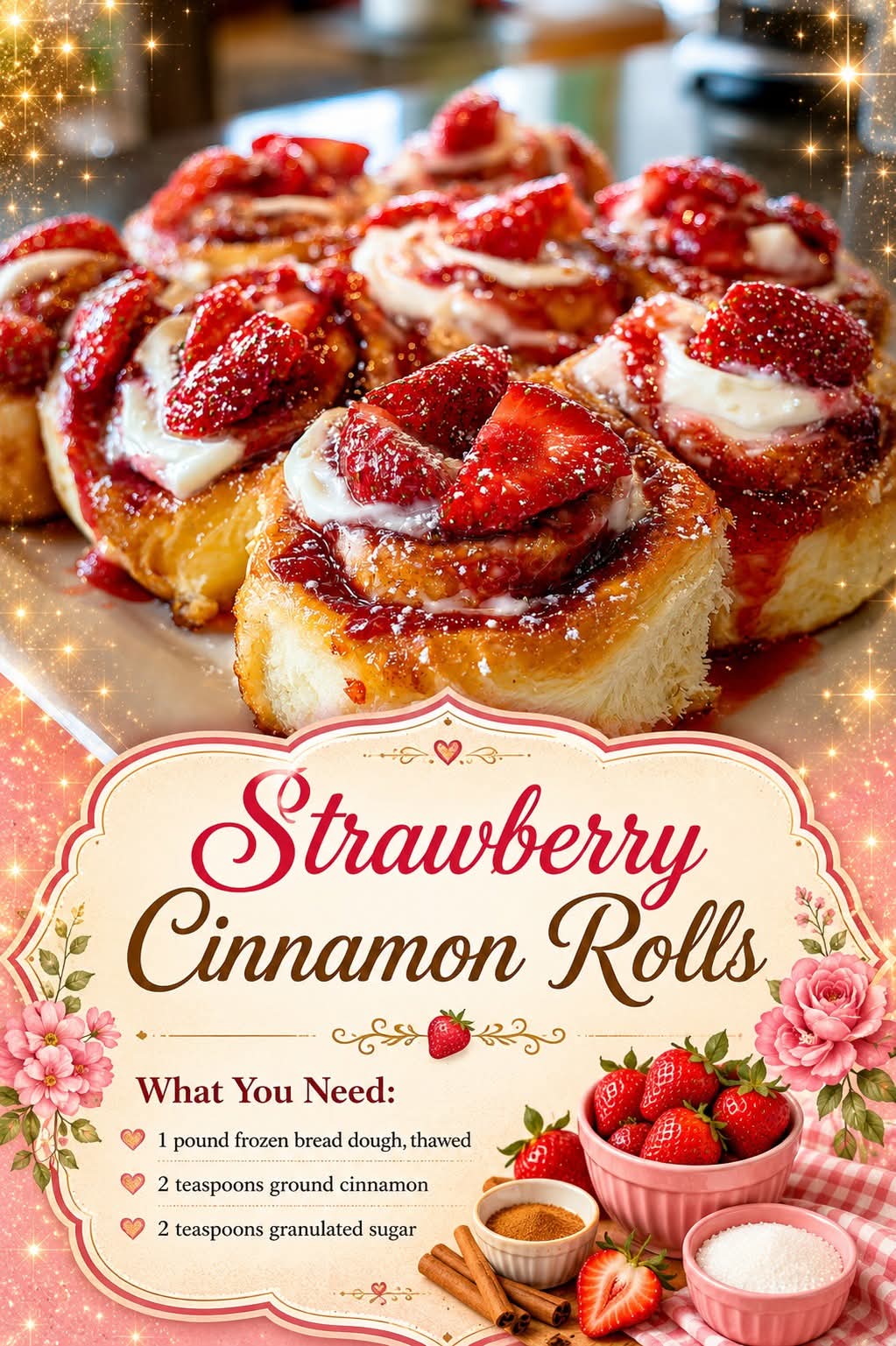
🍓 Strawberry Cinnamon Rolls
Introduction
Soft, pillowy rolls swirled with cinnamon sugar and bright strawberry sweetness are the kind of bake that turns an ordinary morning into something memorable. Using thawed bread dough keeps the process simple while still delivering bakery-style results. As the rolls rise and bake, the kitchen fills with the warm aroma of cinnamon and the fruity perfume of strawberries—an irresistible invitation to gather around the table.
Ingredients
For the rolls
- 1 pound frozen bread dough, thawed
- 2 teaspoons ground cinnamon
- 2 teaspoons granulated sugar
- 2 tablespoons melted butter
- ¾ cup finely chopped fresh strawberries (patted dry)
- 2 tablespoons brown sugar
For the glaze
- 1 cup powdered sugar
- 1–2 tablespoons milk
- ½ teaspoon vanilla extract
Instructions
- Prepare the dough
Place the thawed bread dough on a lightly floured surface. Roll into a rectangle about 10×14 inches. - Make the filling
Brush the surface with melted butter. Sprinkle evenly with granulated sugar, brown sugar, and cinnamon. Scatter the chopped strawberries across the surface. - Roll and slice
Starting from the long side, roll the dough tightly into a log. Pinch the seam to seal. Slice into 9–12 even rolls. - Arrange and rise
Place the rolls in a greased baking dish, leaving space between each. Cover and let rise in a warm place for 45–60 minutes, until puffy. - Bake
Preheat the oven to 350°F (175°C). Bake for 25–30 minutes, until golden brown and cooked through. - Glaze
Whisk powdered sugar, milk, and vanilla into a smooth glaze. Drizzle generously over warm rolls before serving.
Methods & Tips for Success
- Dry the strawberries well to prevent excess moisture from making the rolls soggy.
- Use dental floss instead of a knife to cut clean slices without squishing the dough.
- Warm rising spot: Place the dish in an oven that’s turned off but slightly warm for a faster rise.
- Extra flavor: Add a pinch of salt to the filling to balance sweetness.
A Little History
Cinnamon rolls trace their roots to Northern Europe, especially Sweden, where kanelbullar are a beloved tradition. Over time, the recipe traveled and evolved, becoming sweeter and richer in American kitchens. Adding strawberries is a modern twist that blends classic spice with fresh fruit, creating a seasonal variation that feels both nostalgic and new.
Formation & Presentation
Once baked, the rolls pull apart in soft spirals, revealing ruby-red strawberry bits woven through cinnamon layers. A glossy glaze melts into the warm crevices, making each roll tender, fragrant, and visually inviting.
Conclusion
These strawberry cinnamon rolls bring together comfort and brightness in every bite. They are simple enough for a weekend treat yet impressive enough to share with guests. Warm, sweet, and lightly fruity, they’re best enjoyed fresh from the oven with a cup of coffee or tea.
For the Lovers of Sweet Baking
Anyone who adores classic cinnamon rolls, fruity pastries, or easy semi-homemade baking will fall in love with this recipe. It’s a gentle reminder that with a few ingredients and a little patience, you can create something truly delightful from your own oven.
ADVERTISEMENT
