ADVERTISEMENT
Aloe vera is one of the most beloved plants in households across the globe—not only for its low-maintenance nature but also for its healing properties. But if you’ve been growing aloe vera and one day notice a long stalk shooting up from the center with a cluster of flowers forming, you might wonder:
“What does it mean when aloe vera blooms?”
This seemingly rare event is more than just a botanical curiosity. It reveals important insights about your plant’s health, environment, and life cycle.
What Is Aloe Vera Blooming?
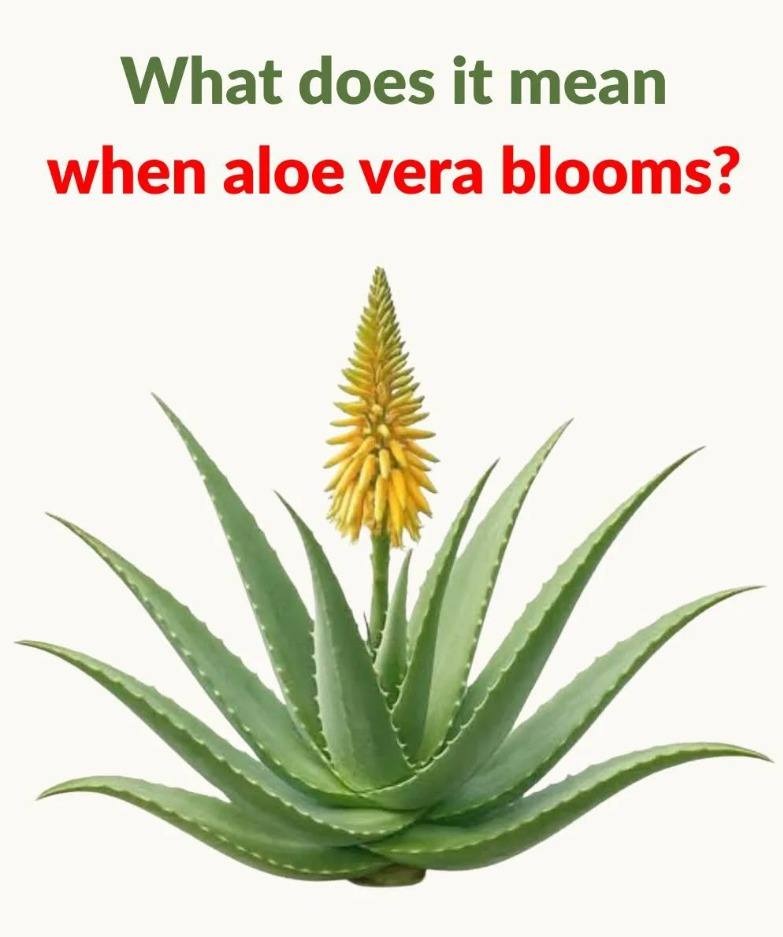
When aloe vera blooms, it produces a tall flower stalk (inflorescence) from the center of the rosette. At the top, a cluster of tubular flowers forms—usually yellow, orange, or red, depending on the species. These flowers are often pollinated by hummingbirds or insects in their native environment.
What Does It Mean When Aloe Vera Blooms?
1. Mature Plant Health
Blooming shows your aloe plant is healthy and mature. Aloe vera usually needs to be at least 3–4 years old before it can flower.
2. Ideal Conditions
The plant has likely been thriving in ideal conditions:
• Proper sunlight
• Well-draining soil
• Moderate watering
• Consistent temperatures
3. Environmental Stress (Sometimes)
Mild stress—such as a dry spell or a temperature shift—can mimic native arid conditions, triggering the plant to flower as a survival response.
4. Natural Reproduction
Flowering allows aloe to reproduce by seeds, though it is usually propagated by pups or offshoots.
Symbolic & Cultural Meaning
In many cultures, a blooming aloe is seen as:
• A sign of good luck or prosperity
• A symbol of long life and endurance
• A rare and special event worth celebrating
Step-by-Step Guide to Help Aloe Vera Bloom
SEE NEXT PAGE
ADVERTISEMENT
