ADVERTISEMENT
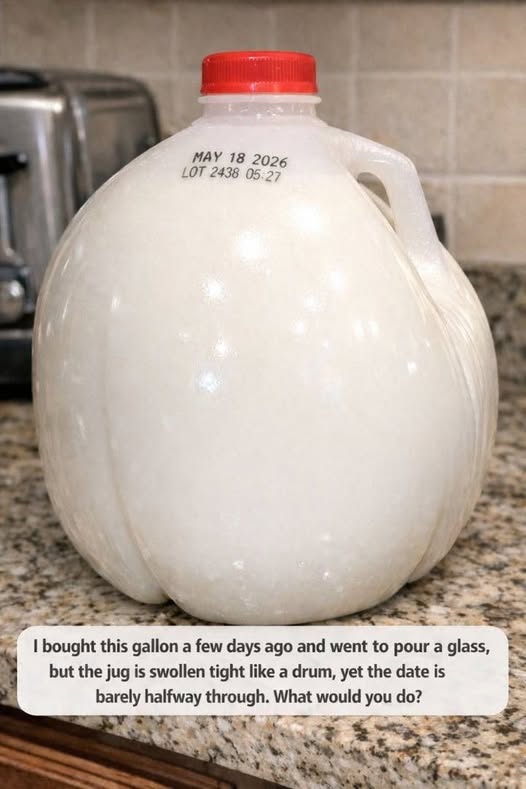
We’ve all been there: you open the fridge to pour yourself a refreshing glass of milk, only to find that the gallon jug is unexpectedly swollen. In such a scenario, a range of questions and concerns might flood your mind. Is the milk still safe to consume? Should you be worried about bacterial contamination?
In this article, we will guide you through the steps to take when you encounter a swollen milk jug. From understanding what might have gone wrong to determining the safest course of action, we’ll cover everything you need to know to handle the situation wisely and safely.
1. First, Stop: Why a Swollen Milk Jug Is a Red Flag
A swollen milk jug is a clear indication that something is amiss. Generally, milk containers swell due to the production of gas by bacteria that are fermenting the milk. This gas builds up pressure inside the jug, causing it to expand and feel tight like a drum.
While not all bacteria are harmful, the presence of gas-producing bacteria in milk can indicate spoilage or potential health risks. It’s essential to recognize this as a red flag and proceed with caution to avoid consuming potentially harmful bacteria.
2. Read the Date, But Don’t Trust It Completely
The date printed on a milk jug is typically a ‘sell-by’ or ‘best-by’ date, which serves as a guideline for retailers. However, it doesn’t guarantee that the milk will remain fresh until that date. Milk can spoil before the date due to various factors, such as improper storage or contamination.
Always use your senses and judgment rather than relying solely on the date. If the jug is swollen, it’s a sign that something is wrong, regardless of the date, and further investigation is necessary.
3. Check the Jug’s Shape, Cap, And Seal for Tampering
Before opening a swollen jug, inspect it closely for signs of tampering. Check if the cap is sealed properly and if there’s any damage to the jug itself. A broken seal or damaged jug could mean that air or contaminants have entered, accelerating spoilage.
If you notice any issues with the seal or jug, it’s best not to consume the milk, as it could be compromised. Manufacturers design seals to ensure the product’s safety and integrity, and any breach can introduce risks.
4. Do the Sight, Smell, and Small-Sip Tests—Safely
ADVERTISEMENT
