ADVERTISEMENT

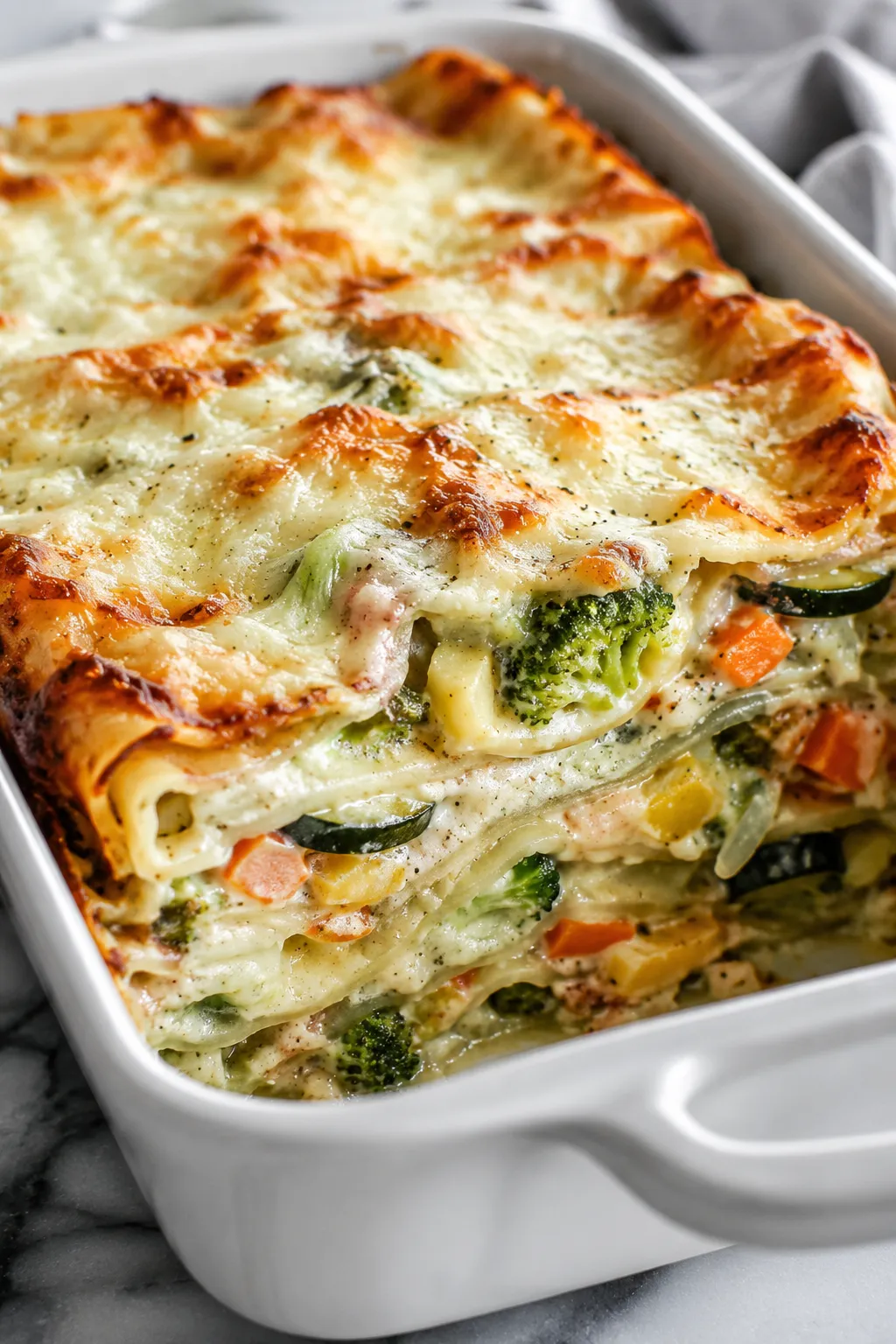
Welcome to Allwecook! This Garden Vegetable Lasagna is a hearty, comforting meatless dinner packed with tender zucchini, summer squash, broccoli, carrots, creamy cheese, and a homemade Parmesan white sauce.
It is an excellent choice for family dinners, Sunday suppers, potlucks, or any night when you want satisfying comfort food without relying on meat.
Unlike traditional tomato-based vegetable lasagna, this version uses a rich homemade white sauce that coats every layer. The combination creates a creamy, cheesy casserole while still allowing the fresh vegetables to remain the star.
Why This Recipe Works
The secret to great vegetable lasagna is balancing moisture, texture, and richness. Cooking the vegetables before assembling the casserole removes excess water while concentrating their natural sweetness.
Carrots add subtle sweetness and structure, while zucchini and summer squash become tender without disappearing completely. Broccoli adds a slightly earthy flavor that balances the creamy sauce.
The homemade Parmesan white sauce provides richness without overwhelming the vegetables. Italian seasoning, garlic, black pepper, and optional red pepper flakes add enough savory flavor to keep every bite interesting.
Cottage cheese creates a creamy middle layer while shredded mozzarella gives the lasagna its familiar stretchy, melted-cheese texture. Parmesan adds salty, nutty flavor to both the sauce and golden topping.
Covering the lasagna during the first stage of baking allows the layers to heat evenly. Removing the foil toward the end gives the mozzarella and Parmesan enough direct heat to become bubbly and beautifully golden.
The final resting period is equally important. Giving the lasagna several minutes to settle allows the sauce and cheese to thicken slightly, producing cleaner slices instead of layers that slide apart.

Key Ingredient Notes
Garden Vegetables
Zucchini, summer squash, carrots, broccoli, onion, and garlic create a colorful vegetable filling with several different textures. Cooking them before layering also prevents the lasagna from becoming watery.
Try to cut the vegetables into relatively uniform pieces. This helps everything cook evenly and ensures you get a little of each vegetable in every serving.
Cottage Cheese
Cottage cheese makes the filling creamy while keeping it lighter than a filling made entirely with heavy cheeses. When mixed with mozzarella, it creates a soft, rich layer between the vegetables and pasta.
Small-curd cottage cheese works especially well because it spreads easily across the noodles.
Mozzarella and Parmesan
Mozzarella provides the classic melted cheese pull associated with lasagna. Parmesan has a stronger savory flavor, so a smaller amount can dramatically deepen the overall taste.
Freshly grated Parmesan generally melts more smoothly than pre-shredded varieties containing anti-caking ingredients.
Homemade White Sauce
The creamy sauce begins with butter and flour before milk is gradually whisked in. This classic technique creates a smooth sauce sturdy enough to hold the lasagna layers together.
Adding Parmesan and Italian seasoning transforms the basic white sauce into something far more flavorful.

Easy Substitutions & Variations
You can easily adjust the vegetable mixture depending on what is available. Mushrooms, spinach, bell peppers, asparagus, cauliflower, or chopped kale can all work well.
If using mushrooms or spinach, cook them thoroughly before assembling the lasagna. Both contain considerable moisture that could otherwise make the finished casserole watery.
Ricotta cheese can replace cottage cheese for a richer, smoother filling. Use a whole-milk version for the creamiest texture.
For additional protein, stir cooked shredded chicken into the vegetable layer. Italian sausage can also be added if you do not need the recipe to remain vegetarian.
Whole-wheat lasagna noodles work well if you prefer a heartier pasta. Gluten-free lasagna noodles and a suitable gluten-free flour blend can also be used for a gluten-free variation.
For additional heat, include the optional red pepper flakes or increase them slightly. For a milder family-friendly lasagna, simply leave them out.

Pro Tips for Success
1. Cook Excess Moisture Out of the Vegetables
Vegetables such as zucchini and summer squash release water as they cook. Sautéing the vegetables until tender before assembling the lasagna helps keep that liquid out of your baking dish.
Avoid covering the vegetables while they cook because trapped steam can increase moisture.
2. Add the Milk Gradually
When preparing the Parmesan sauce, whisk the milk into the butter-and-flour mixture gradually. Adding it slowly makes it much easier to create a silky sauce without flour lumps.
Continue whisking as the sauce heats and thickens. The finished consistency should be creamy enough to coat the back of a spoon but still easy to spread.
3. Rest Before Cutting
Freshly baked lasagna is extremely hot and the cheese sauce will still be loose. Cutting it immediately can cause the layers to collapse.
Allowing the casserole to rest for about 10 minutes gives the pasta, sauce, and cheese time to settle so the portions hold their shape.

Storage and Reheating
Store leftover Garden Vegetable Lasagna in an airtight container in the refrigerator for up to 4 days. You can also tightly cover the original baking dish once it has completely cooled.
For individual portions, reheat the lasagna in the microwave until hot throughout. Covering the portion loosely helps prevent the exposed pasta edges from drying out.
For several servings, cover the baking dish with foil and warm the lasagna in a moderate oven until the center is heated through. Remove the foil during the final few minutes if you want to refresh the cheesy top.
Garden vegetable lasagna can also be frozen. Wrap individual cooled portions tightly and freeze them in freezer-safe containers for up to 3 months.
Thaw frozen portions overnight in the refrigerator before reheating for the best texture.

Frequently Asked Questions
Why is my vegetable lasagna watery?
Vegetables are usually the biggest source of excess moisture. Zucchini, summer squash, mushrooms, and spinach contain large amounts of water, so they should be cooked before being layered into the casserole.
Allowing the finished lasagna to rest before slicing also helps the sauce stabilize.
Can I make Garden Vegetable Lasagna ahead of time?
Yes. Assemble the entire lasagna, cover the baking dish tightly, and refrigerate it until you are ready to bake.
A refrigerated casserole may require a little additional baking time because the center starts colder than freshly assembled lasagna.
Can I use no-boil lasagna noodles?
You can, although the amount of liquid and baking time may need adjustment depending on the brand. Traditional cooked noodles are the most reliable option for this particular creamy vegetable lasagna because the sauce is thicker than a typical tomato sauce.

Garden Vegetable Lasagna
Ingredients
- Lasagna
- 9 lasagna noodles cooked and drained
- 1 ½ cups cottage cheese
- 2 cups shredded mozzarella cheese divided
- ½ cup grated Parmesan cheese
- Vegetable Filling
- 1 tablespoon olive oil
- 1 onion chopped
- 4 garlic cloves minced
- 2 large carrots chopped
- 1 large summer squash thinly sliced
- 1 large zucchini thinly sliced
- 1 large head broccoli chopped
- Salt and pepper to taste
- Parmesan White Sauce
- ¼ cup butter
- ⅔ cup all-purpose flour
- 4 cups milk
- ½ cup grated Parmesan cheese
- 1 teaspoon salt
- ½ teaspoon black pepper
- 1 ½ teaspoons Italian seasoning
- 1 teaspoon red pepper flakes optional
Instructions
-
Preheat the oven to 375°F (190°C). Lightly grease a 9×13-inch baking dish and set it aside.
-
Heat the olive oil in a large Dutch oven or deep skillet over medium heat. Add the chopped onion and sauté for 2-3 minutes, then stir in the minced garlic and season lightly with salt and pepper.
-
Add the chopped carrots and continue cooking for another 3-4 minutes, stirring occasionally.
-
Stir in the sliced zucchini, summer squash, and chopped broccoli. Continue cooking until the vegetables are tender and most of the excess moisture has cooked away. Remove from the heat and set aside.
-
Prepare the white sauce by melting the butter in a medium saucepan. Add the flour and cook for about 1 minute, stirring continuously to create a smooth roux.
-
Gradually pour in the milk while whisking constantly. Bring the mixture to a gentle boil and continue cooking for approximately 2 minutes, whisking continuously, until the sauce has thickened.
-
Remove the saucepan from the heat. Stir in the Parmesan cheese, salt, black pepper, Italian seasoning, and optional red pepper flakes until smooth and well combined.
-
In a separate mixing bowl, combine the cottage cheese with 1 ½ cups of the shredded mozzarella.
-
Spread a light coating of Parmesan sauce across the bottom of the prepared baking dish. Arrange 3 cooked lasagna noodles over the sauce.
-
Spread half of the cooked vegetable mixture over the noodles. Add half of the cottage cheese mixture, followed by approximately 1 cup of the white sauce.
-
Add another layer of 3 lasagna noodles. Repeat with the remaining vegetables, remaining cottage cheese mixture, and another portion of sauce.
-
Finish with the final 3 lasagna noodles. Spread the remaining white sauce evenly across the top.
-
Sprinkle the remaining ½ cup mozzarella cheese and ½ cup grated Parmesan cheese over the lasagna.
-
Cover the baking dish tightly with aluminum foil and bake for 25 minutes.
-
Carefully remove the foil and return the lasagna to the oven for another 20-25 minutes, or until the sauce is bubbling around the edges and the cheese on top is melted and golden brown.
-
Remove the lasagna from the oven and allow it to rest for 10 minutes before cutting into portions and serving.
Notes
ADVERTISEMENT
