ADVERTISEMENT

Crisp autumn air calls for a warm kitchen and the intoxicating aroma of cinnamon, nutmeg, and fresh apples drifting through the house.
This Swedish Apple Cake Recipe delivers that cozy feeling in every slice, with tender apples tucked into a dense, moisture-rich crumb.
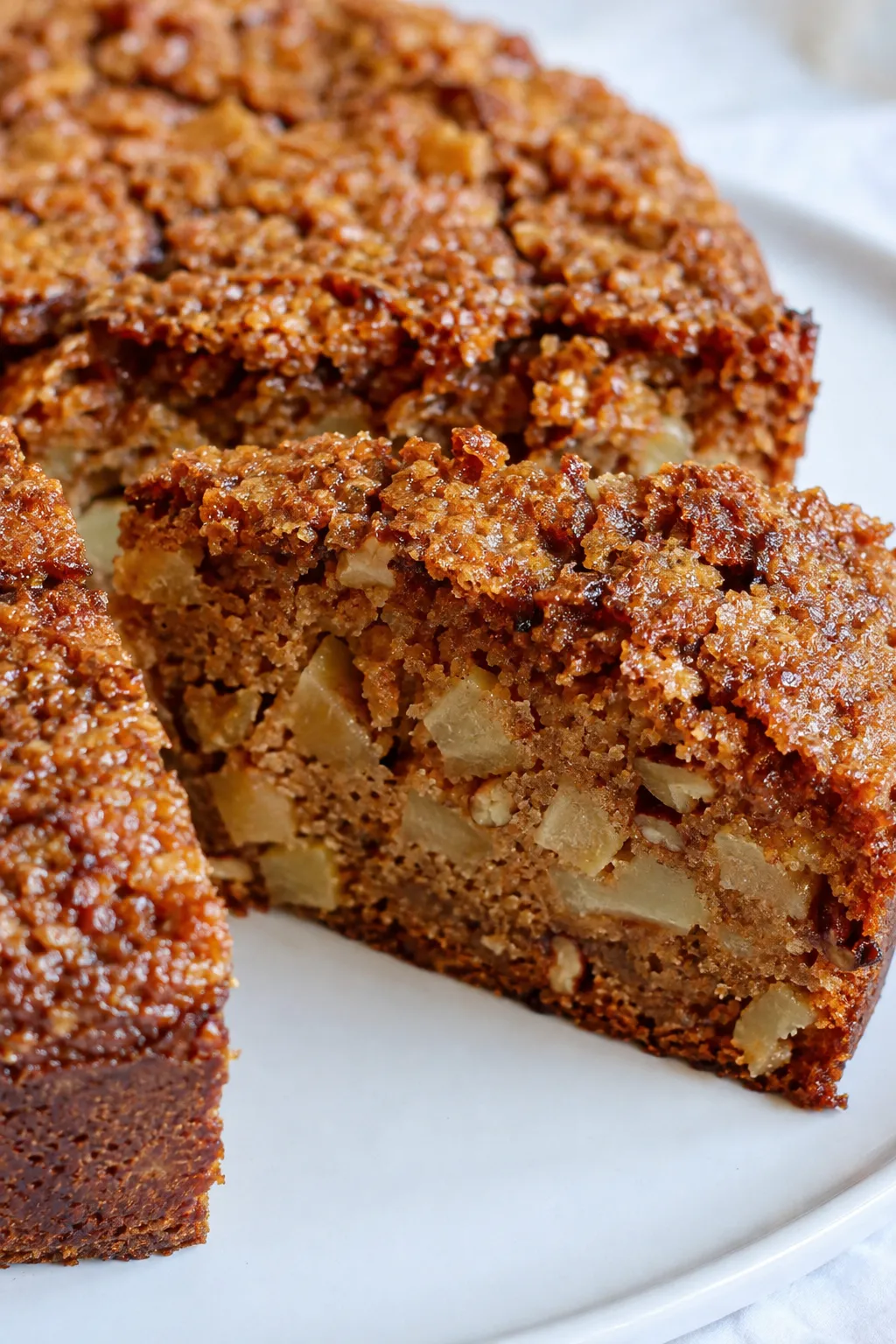
What makes this cake special is the brown sugar caramel poured over it partway through baking. It returns to the oven and transforms into a crackly, candy-like praline shell-no frosting or decorating required.
Each forkful combines soft baked apples, fragrant fall spices, and crisp pieces of caramelized crust. It feels bakery-worthy while relying on simple pantry ingredients and one clever baking technique.
Why You’ll Love This Swedish Apple Cake
This easy fresh apple dessert is rich enough for a holiday table but relaxed enough for a weekend baking project.
- Fresh apples provide the moisture: No milk or extra liquid is needed in the cake batter.
- The topping bakes onto the cake: The caramel forms a crisp shell instead of a sticky frosting.
- Every bite offers contrast: Tender apple pieces and dense cake sit beneath a brittle, deeply browned crust.
- No complicated decorating: The rustic, uneven surface is exactly what makes this cake so inviting.
- It keeps well: The flavor deepens and the caramel becomes softer as the cake rests.
What Makes This Cake Different?
This is not a light, airy sponge cake. It is a substantial cinnamon apple cake with caramel crust, packed with three full cups of diced fruit.
The topping also separates it from an ordinary Scandinavian apple cake. Instead of streusel or powdered sugar, it receives a warm brown sugar mixture that bakes directly onto the surface.
That second trip through the oven creates a top that is craggy, deeply golden, and almost candy-like. Underneath, the apples release their juices and keep the spiced crumb remarkably moist.

The Science of the “Mid-Bake” Caramel Pour
Timing is the secret behind this apple cake with baked caramel topping.
If the caramel were poured over raw batter, its weight would push it downward. The topping could sink, compress the crumb, and create a greasy layer near the bottom of the pan.
After approximately 35 minutes of baking, the eggs, flour, and butter have formed enough structure to support the topping. The center is not fully cooked yet, but the surface is stable enough to hold the caramel.
The warm caramel can then spread across the semi-baked cake without disappearing into it. Some of it settles into the natural cracks, helping the topping fuse to the cake instead of sitting on it like frosting.
During the final 10-15 minutes, oven heat evaporates some of the moisture in the brown sugar mixture. The sugars concentrate and form the signature crackly, praline-like caramel shell.
This final bake also allows the center of the cake to finish cooking. The result is a firm, crisp exterior over a dense interior filled with soft pockets of apple.
Ingredient Spotlight: Trust the “Dry” Batter
The batter will appear unusually thick before the apples are folded in. It may resemble soft cookie dough more than conventional cake batter, and that is completely expected.
Do not add milk, water, or extra half-and-half. Additional liquid can make the finished cake gummy or prevent the center from setting properly.
Three cups of diced apples contain plenty of natural water. As the fruit heats, it releases juice and steam that gradually hydrate the surrounding batter.
The thick mixture also keeps the apples suspended instead of allowing them to fall to the bottom. Once baked, the crumb becomes dense and moist rather than dry.
Fold the apples in patiently with a sturdy spatula. The mixture will loosen slightly as the fruit becomes evenly distributed.

Ingredient Notes
Fresh Apples
Peel the apples and cut them into small, roughly even pieces. Pieces measuring about ½ inch remain visible after baking while becoming tender enough to cut cleanly.
Butter
Room-temperature butter blends more evenly with the sugar and eggs. If the butter is cold, the mixture may remain lumpy and resist combining with the dry ingredients.
Cinnamon and Nutmeg
Cinnamon supplies the familiar warmth, while nutmeg adds a deeper, fragrant note. Together, they give the cake its unmistakably cozy fall aroma.
Brown Sugar Caramel
Brown sugar provides a deeper molasses flavor than granulated sugar. Butter adds richness, while the half-and-half supplies enough moisture to help the mixture melt smoothly.
Pecans or Walnuts
The nuts are optional, but they add a pleasant crunch beneath the caramel crust. Chop them coarsely so their texture remains noticeable.
Flavor Variations and Apple Selection
The best apple depends on whether you want a sharper contrast or a sweeter slice.
- Granny Smith: Tart, firm, and especially good against the sweet brown sugar topping.
- Honeycrisp: Juicy and sweet with enough structure to remain visible in the cake.
- Braeburn: Balanced, lightly tart, and dependable during baking.
- Pink Lady: Bright and slightly tangy, with a firm texture that holds its shape.
You can also combine one tart apple with one sweet apple. This creates more layered flavor without changing the method.
For a more pronounced Scandinavian note, add a small pinch of ground cardamom with the cinnamon and nutmeg. Cardamom is strong, so a light hand is all that is needed.
Pecans create a slightly sweeter, buttery crunch. Walnuts offer a more earthy flavor that balances the caramel’s richness.
Expert Success Tips for a Flawless Cake
- Use a springform pan: The baked caramel clings firmly to metal, and the removable ring allows the cake to be released without turning it upside down or damaging its fragile crust.
- Grease every surface thoroughly: Coat the base, sides, and the seam where the ring meets the bottom of the pan.
- Do not boil the caramel: Heat it only until the butter melts and the mixture becomes smooth because boiling can evaporate the moisture too early, separate the butter, or produce a rock-hard topping.
- Begin the caramel at the 30-minute mark: This gives it time to melt gently while the cake finishes its initial bake.
- Pour slowly and evenly: Move around the surface so the caramel reaches the edges without collecting in one heavy pool.
- Use the warm-release knife trick: After the cake has cooled for about 10 minutes, carefully run a butter knife around the inside edge before the caramel fully hardens against the ring.
- Allow at least 15 minutes of cooling: The crumb continues to set during this time, making the cake easier to slice without compressing the apple-filled interior.
Perfect Pairings
Serve the cake slightly warm when the crumb is soft and the caramel crust is at its crispest.
A scoop of Vanilla Bean Ice Cream adds a cool, creamy contrast. Unsweetened whipped cream is another good choice because it balances the intense sweetness of the brown sugar shell.
For a simpler pairing, serve it with hot coffee, black tea, or a lightly spiced chai. The cake is rich enough that it does not need an additional sauce.

How to Store Swedish Apple Cake
Keep the cooled cake in an airtight container at a cool room temperature for up to three days. If your kitchen is especially warm or humid, refrigerate it and bring individual slices to room temperature before serving.
The caramel crust is most crackly on the day the cake is baked. By the second day, it naturally absorbs moisture from the apples and softens into a gooey caramel layer.
That texture change is expected and does not mean the cake has failed. Many people enjoy the softer, almost sauce-like topping even more the next day.
For longer storage, refrigerate the cake for up to five days. Cover the cut surfaces well to prevent the crumb from drying out.
Common Questions
How do I test whether the cake is done with gooey caramel on top?
Insert a long wooden skewer into the center and push it beneath the sticky topping. Ignore caramel on the upper part of the skewer and check the lower portion for uncooked batter.
The cake is ready when the skewer shows moist crumbs but no wet batter. Soft apple residue is normal and should not be confused with raw cake mixture.
Can I bake this in a 9×13-inch pan?
A 9×13-inch pan is not recommended when you want the tall slices and clean release shown here. The batter will spread into a thinner cake, bake more quickly, and the caramel can adhere tightly to the sides.
If you must use one, line it completely with parchment paper and leave a generous overhang for lifting. Begin checking earlier, serve it as apple cake bars, and expect a different texture and height.
Why is my batter so thick?
The thick batter is intentional and helps support three cups of apples. Do not thin it with additional liquid because the fruit will release plenty of moisture in the oven.
Why did my caramel become hard?
The mixture may have boiled too long before it was poured over the cake. Heat it only until smooth and fully combined, then let the oven complete the caramelization.
When should I remove the springform ring?
Let the cake cool for about 10 minutes, loosen the edge with a butter knife, and continue cooling for at least another five minutes. Release the ring carefully while the caramel is still slightly warm rather than waiting for it to harden against the metal.

Swedish Apple Cake
Ingredients
- Apple Cake
- ½ cup butter at room temperature
- 1⅔ cups sugar
- 2 eggs
- 1½ teaspoons vanilla
- 1½ cups all-purpose flour
- 1 teaspoon baking soda
- 1 teaspoon salt
- 1½ teaspoons ground cinnamon
- ½ teaspoon ground nutmeg
- 3 cups peeled and diced apples approximately 2 large apples
- ¼ cup chopped pecans or walnuts optional
- Caramel Topping
- 1⅓ cups brown sugar
- 2 tablespoons half-and-half
- 4 tablespoons butter
Instructions
-
Prepare the pan: Preheat the oven to 350°F and thoroughly grease a 9-inch springform pan, including the bottom, sides, and inner seam.
-
Combine the dry ingredients: Sift the flour, baking soda, salt, cinnamon, and nutmeg together in a small bowl.
-
Mix the wet ingredients: Beat the room-temperature butter and sugar in a large bowl until smooth. Add the eggs one at a time, mixing after each addition, and then mix in the vanilla.
-
Make the batter: Slowly add the dry ingredients to the wet mixture and mix only until combined. Fold in the diced apples and the pecans or walnuts, if using.
-
Begin baking: Spread the thick batter evenly in the prepared springform pan. Bake for 35-40 minutes, beginning the caramel when the cake has been in the oven for approximately 30 minutes.
-
Prepare the caramel: Add the brown sugar, half-and-half, and butter to a small saucepan over medium-low heat. Stir often until the butter has melted and the mixture is smooth and fully combined, without bringing it to a full boil.
-
Add the topping: Remove the partially baked cake from the oven and carefully pour the warm caramel evenly over the surface.
-
Finish baking: Return the cake to the oven for another 10-15 minutes, or until the caramel topping is crackly and a long skewer inserted beneath the topping shows moist crumbs without wet batter.
-
Cool and release: Cool the cake in its pan for 10 minutes, then carefully run a butter knife around the inner edge. Let it cool for at least five more minutes before releasing the springform ring and slicing.
Notes
ADVERTISEMENT
