ADVERTISEMENT

Homemade Chinese Egg Rolls Recipe
Craving those crackly, savory egg rolls from your favorite Chinese takeout spot-but not the delivery fees? This Homemade Chinese Egg Rolls Recipe gives you a fresher, crunchier batch right from your own kitchen.
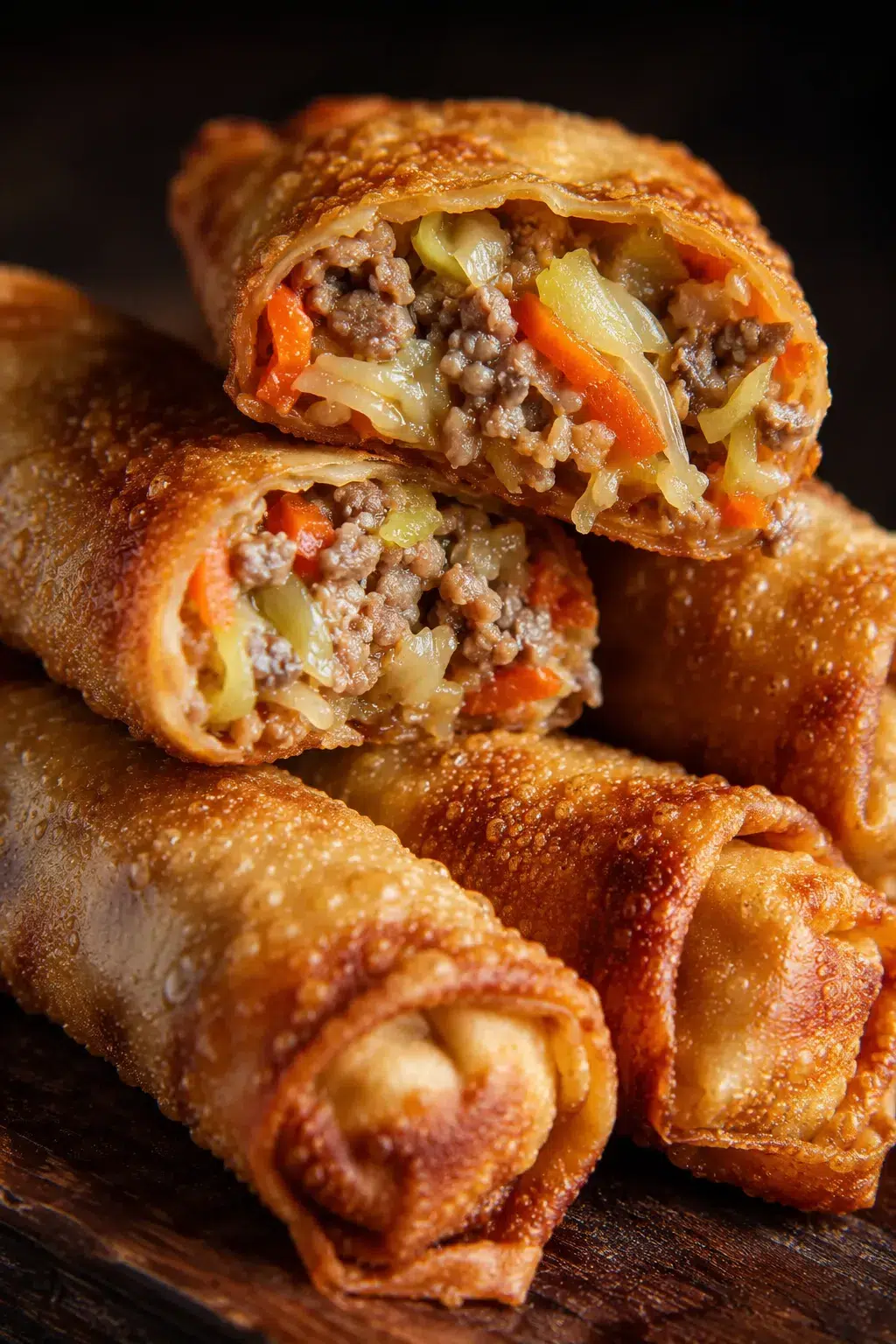
Each roll has a shatteringly crisp, blistered golden wrapper wrapped around an umami-rich pork filling. Cabbage adds a gentle sweetness and crunch, while ginger, garlic, soy sauce, oyster sauce, and sesame oil build deep savory flavor.
These easy takeout egg rolls are also surprisingly manageable. Once the filling is cooked and cooled, the rest is simply rolling, sealing, and frying until deeply golden.
Why You’ll Love These Homemade Egg Rolls
The contrast is what makes these egg rolls so satisfying. The wrapper is brittle and bubbly, while the center stays juicy without becoming wet or heavy.
- Crispier than delivery: You can serve them seconds after they leave the fryer.
- Packed with filling: Every bite contains seasoned meat, cabbage, carrots, and green onions.
- Easy to customize: Pork, chicken, turkey, or tofu all work well.
- Freezer-friendly: Assemble a large batch and fry only what you need.
- Party-ready: Their compact size makes them ideal for appetizers, game days, and family dinners.
The Science of a “Dry & Cool” Filling
The most important step in this recipe happens before you begin wrapping. The cooked filling must be fairly dry and completely cool.
Hot filling releases steam after it is enclosed in the wrapper. That trapped moisture softens the dough, weakens the seams, and can cause the egg rolls to split open in the hot oil.
Excess liquid creates another problem. When vegetable juices escape through a seam and hit frying oil, they can produce aggressive splattering.
Cooking the cabbage and carrots for 4-5 minutes helps their moisture evaporate. Keep stirring until the vegetables are tender but the skillet no longer looks watery.
The cornstarch is non-negotiable because it binds the sauce and vegetable juices to the filling. Instead of leaking into the wrapper, that flavorful moisture stays around the meat and vegetables.
Spread the cooked filling in a shallow layer or transfer it to a wide bowl so it cools faster. Do not cover it while warm, since a lid traps condensation that can drip back into the mixture.

Ingredient Notes
Ground Pork or Chicken
Ground pork creates especially rich and juicy crispy pork egg rolls. Ground chicken has a lighter flavor but still absorbs the soy sauce, ginger, garlic, and sesame oil beautifully.
Break the meat into small pieces while it cooks. Large clumps make the rolls harder to wrap tightly and can leave uneven pockets inside.
Cabbage and Carrots
Green cabbage softens while retaining a mild, sweet crunch. Shredded carrots add color, gentle sweetness, and additional texture.
Cut both vegetables into thin, short shreds. Long pieces can pierce the wrapper or make the filling difficult to portion.
Soy Sauce, Oyster Sauce, and Sesame Oil
Soy sauce supplies salt and savory depth, while oyster sauce gives the filling a richer, slightly sweet umami note. A teaspoon of sesame oil adds the warm, nutty aroma associated with a good authentic egg roll filling.
Sesame oil is strong, so resist adding more than the recipe calls for. It should round out the filling rather than overwhelm the ginger and vegetables.
White Pepper and Ginger
White pepper has a warm, earthy bite that tastes different from black pepper. Fresh ginger adds brightness and helps balance the richness of the fried wrapper.
Egg Roll Wrappers vs. Spring Roll Wrappers
Egg roll and spring roll wrappers may sit beside one another at the grocery store, but they produce very different results.
Egg roll wrappers are thicker wheat-based sheets that often contain egg. When deep-fried, they develop the iconic bumpy, micro-blistered surface and sturdy, shatteringly crisp bite.
Spring roll wrappers are generally thinner and smoother. They fry into a more delicate shell and do not create the same substantial takeout-style crust.
For this recipe, purchase refrigerated wrappers specifically labeled egg roll wrappers. Keep them covered with a lightly damp kitchen towel while working so the exposed sheets do not dry out and crack.
How to Wrap Egg Rolls
Learning how to wrap egg rolls is easier once you visualize the wrapper as a diamond rather than a square.
Place one wrapper on your work surface with a corner pointing toward you. Add 2-3 tablespoons of cooled filling near the bottom corner, leaving enough wrapper around it to form a secure seal.
Fold the bottom corner firmly over the filling. Fold the left and right corners inward, keeping the sides straight and snug.
Roll upward with steady pressure, but avoid pulling so hard that the wrapper tears. Brush the final corner with egg wash and press it firmly against the roll.
Keep the finished rolls seam-side down while you complete the batch. Cover them loosely so the wrappers remain flexible until frying.
Expert Success Tips for Flawless Frying
Use a Tight Diamond Roll
Wrap each egg roll firmly so there are no large air pockets around the filling. Loose rolls allow oil to move inside, leaving the center greasy instead of crisp.
Do not overfill the wrappers. Using more than 2-3 tablespoons makes the seams harder to close and increases the chance of splitting.
Hold the Oil at 350°F
Use a deep-fry or instant-read thermometer to keep the oil near 350°F. This temperature cooks the wrapper quickly enough to become crisp without burning before the filling is heated.
Oil below 350°F produces an oil-soaked, heavy wrapper. Oil above 375°F can darken the outside before the center is fully hot.
Fry only 3-4 egg rolls at a time. Adding too many at once drops the oil temperature and prevents even browning.

Use the Wire Rack Trick
Set a wire cooling rack over a paper-towel-lined baking sheet before frying. Transfer the cooked egg rolls to the rack so excess oil can drip away while air circulates underneath.
Placing them directly on flat paper towels traps steam against the bottom. That trapped moisture can soften the crust within minutes.
Keep the Seam Facing Down First
Lower each egg roll into the oil with its sealed seam facing down. The initial contact with hot oil helps set the seam before the roll is turned.
Give the Oil Time to Recover
Check the temperature between batches and let the oil return to 350°F. A minute of patience between batches makes a noticeable difference in crispness.
Flavor Variations and Protein Swaps
This filling is forgiving, so you can adjust the protein without changing the basic method.
- Ground chicken: Mild, lean, and especially good with extra ginger.
- Ground turkey: Choose a blend with some fat so the filling does not taste dry.
- Firm tofu: Press it thoroughly, crumble it, and cook until excess moisture evaporates.
- Wood ear mushrooms: Rehydrate, drain, and finely slice them for a springy, earthy crunch.
- Bean sprouts: Add a small amount for extra texture, but cook away their excess moisture.
- Mixed mushrooms: Finely chopped mushrooms can add savory depth to a vegetarian filling.
If you found this recipe while searching for deep fried cabbage rolls, this version combines cabbage with seasoned minced meat inside a classic wheat egg roll wrapper.
Perfect Pairings
Serve these egg rolls as a hearty appetizer before Chicken Lo Mein, Sweet and Sour Chicken, or Beef and Broccoli.
For dipping, try sweet chili sauce, duck sauce, or soy sauce. A small selection of sauces lets everyone choose between sweet, tangy, and salty flavors.
Freezing and Reheating Logic
Egg rolls make an excellent freezer stash because they can be frozen before frying. Arrange the assembled rolls in a single layer on a parchment-lined baking sheet, making sure they do not touch.
Freeze until solid, then transfer them to a freezer-safe bag. Removing excess air from the bag helps protect the wrappers from freezer burn.
Fry the egg rolls directly from frozen without thawing them. Add approximately 2-3 minutes to the frying time and monitor the oil so it remains near 350°F.
Previously fried egg rolls are best reheated in an air fryer or oven rather than a microwave. Heat them at 375°F until the centers are hot and the wrappers are crisp again.

Common Questions
Can I Bake These Egg Rolls?
Yes, although baked wrappers will be drier and less bubbly than deep-fried ones. Brush the egg rolls lightly with oil and bake at 400°F until browned and crisp, turning them halfway through.
Can I Air Fry Them?
Yes. Lightly coat the rolls with oil and air fry at 375°F, turning halfway through, until golden and crisp.
Cooking time varies by air fryer, so begin checking early. Leave space between the rolls so hot air can circulate around every side.
Why Did My Egg Rolls Open in the Oil?
The seam may not have been sealed with enough egg wash, or the wrapper may have dried out before rolling. Overfilling and leaving large air pockets can also force the seam apart.
Place each roll seam-side down when it first enters the oil. Make sure the oil is hot enough to set the wrapper quickly.
Why Are My Egg Rolls Soggy?
The most common causes are wet filling, warm filling, overcrowded oil, or frying below 350°F. Draining directly on flat paper towels can also trap steam under the rolls.
Can I Prepare the Filling Ahead?
Yes. Cook the filling, cool it completely, and refrigerate it in an airtight container for up to two days.
Allowing the filling to chill can make wrapping easier. Stir it before portioning so the meat and vegetables are evenly distributed.

Homemade Chinese Egg Rolls
Ingredients
Filling:
- 1 lb 450 g ground pork or chicken
- 2 cups shredded green cabbage
- 1 cup shredded carrots
- ½ cup finely chopped green onions
- 2 cloves garlic minced
- 1 teaspoon fresh grated ginger
- 2 tablespoons soy sauce
- 1 tablespoon oyster sauce
- 1 teaspoon sesame oil
- ½ teaspoon white pepper
- ½ teaspoon sugar
- 1 tablespoon cornstarch
For Rolling:
- 12 -14 egg roll wrappers
- 1 egg + 1 tablespoon water whisked together for sealing
For Frying:
- 3 -4 cups vegetable or peanut oil
Instructions
-
Cook the Meat: Heat a large skillet over medium-high heat. Add the ground pork (or chicken) and cook until entirely browned, breaking it into small pieces with a wooden spoon. Add the minced garlic and grated ginger, cooking for 30 seconds until fragrant.
-
Add Vegetables: Stir in the shredded green cabbage, carrots, and green onions. Cook until the vegetables soften and the excess moisture evaporates, which takes about 4-5 minutes.
-
Season the Filling: Add the soy sauce, oyster sauce, sesame oil, sugar, white pepper, and cornstarch. Stir well to combine, then remove from the heat and let the mixture cool completely.
-
Prep the Wrappers: Place one egg roll wrapper flat on a clean, dry surface, orienting it in a diamond shape. Spoon 2-3 tablespoons of the cooled filling near the bottom corner of the diamond.
-
Roll the Egg Rolls: Fold the bottom corner tightly over the filling, then fold in both side corners. Roll tightly upward toward the top point, then seal the top edge securely using the prepared egg wash. Repeat this process until all the filling is used.
-
Fry: Heat the vegetable or peanut oil in a heavy pot or Dutch oven to exactly 350°F (175°C). Fry 3-4 rolls at a time for 3-4 minutes, turning them occasionally, until they are beautifully golden brown.
-
Drain: Carefully transfer the hot, fried rolls using tongs to a wire cooling rack set over paper towels to drain excess oil.
-
Serve: Serve piping hot with a side of sweet chili sauce, duck sauce, or extra soy sauce for dipping.
Notes
ADVERTISEMENT
