ADVERTISEMENT
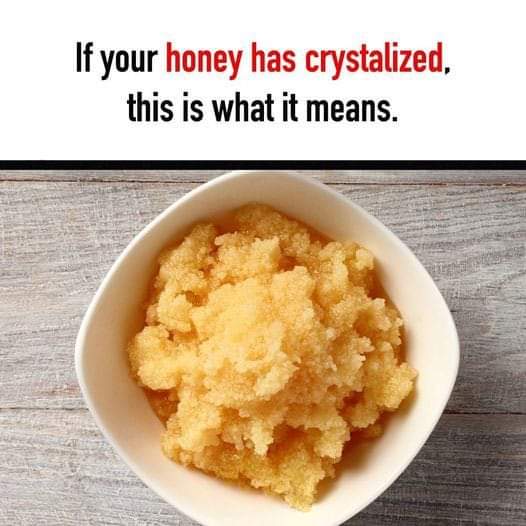
Honey is a beloved natural sweetener, prized for its rich flavors, smooth texture, and health benefits. But if you’ve ever opened a jar to find that your honey has turned thick or grainy, you might wonder — has it gone bad?
The good news: crystallization is a completely natural process that can happen to any pure honey.
🔬 Why Honey Crystallizes
Crystallization occurs when the glucose in honey separates from the water and forms tiny solid crystals.
This happens because honey is a supersaturated solution — it contains more sugar than the water can naturally hold. Over time, glucose molecules begin to bind together, forming crystals, while fructose remains in liquid form.
Several factors influence how quickly honey crystallizes:
-
Type of honey: Varieties like wildflower or clover honey crystallize faster, while acacia or tupelo honey stay liquid much longer.
-
Glucose-to-fructose ratio: More glucose means faster crystallization.
-
Storage conditions: Cooler temperatures speed up crystal formation.
-
Pollen and particles: Natural honey contains fine particles (like pollen) that act as “seeds” for crystals to form.
🍯 Crystallized Honey Isn’t Spoiled
While some people find crystallized honey less appealing, it’s important to remember that it’s not a sign of spoilage.
Crystallized honey is just as delicious and nutritious as liquid honey — and sometimes even more convenient! Its thicker texture makes it easy to spread on toast or stir into yogurt and oatmeal.
In fact, crystallization is often a sign of high-quality, raw honey, since processed or pasteurized honey tends to resist crystallization due to filtration and heat treatment.
♨️ How to Re-liquefy Crystallized Honey
If you prefer smooth, liquid honey, you can easily return it to its original texture:
-
Warm water bath method (recommended):
-
Place the honey jar (tightly sealed) in a bowl or pot of warm water — around 100–110°F (37–43°C).
-
Stir occasionally until the crystals dissolve.
-
-
Microwave method (quick but risky):
-
Microwave the jar (without the lid) in 10-second bursts, stirring between each.
-
Avoid overheating — high heat can destroy honey’s enzymes, antioxidants, and delicate flavor.
-
⚠️ Avoid boiling or direct heat. Overheating honey can degrade its quality and alter its taste.
🏡 How to Prevent or Slow Crystallization
see continuation on next page
