ADVERTISEMENT
Slow Cooker French Onion Burger Steaks
Some weeknight dinners have a way of tasting like they took all afternoon to prepare, even when the actual work is surprisingly simple. These slow cooker French onion burger steaks are exactly that kind of meal. With tender ground beef patties, sweet onions, and a rich onion gravy, everything cooks together slowly until the meat is juicy and full of savory flavor.
The best part is how little effort this recipe requires. Shape the beef, slice the onions, combine the soup ingredients, and let the slow cooker handle the rest. By dinnertime, you’ll have tender burger steaks covered in soft onions and a flavorful gravy that begs to be spooned over mashed potatoes.
Ingredients
- 1 1/2 pounds ground beef, 80–90% lean
- 1 teaspoon kosher salt
- 1/2 teaspoon black pepper
- 2 large yellow onions, thinly sliced
- 1 (10.5-ounce) can condensed French onion soup
- 1 (1-ounce) packet dry onion soup mix
Instructions
- Season the beef: Place the ground beef in a medium bowl and gently mix in the salt and black pepper. Mix just until combined to keep the patties tender.
- Shape the patties: Divide the beef into four equal portions. Shape each one into a broad patty about 3/4 inch thick.
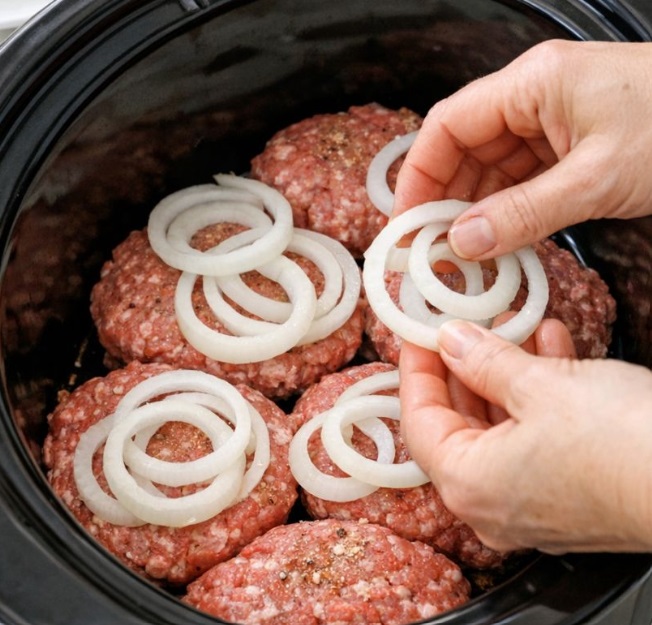
- Start the slow cooker: Lightly coat the inside of the slow cooker with nonstick cooking spray. Arrange the patties in a single layer on the bottom. They can touch slightly, but avoid stacking them.
- Add the onions: Spread the sliced onions evenly over the beef patties. Try to cover each patty with plenty of onions so their flavor can slowly infuse the meat as everything cooks.
- Make the onion sauce: In a small bowl, whisk the condensed French onion soup with the dry onion soup mix until well combined. No additional water is necessary.
- Combine everything: Pour the soup mixture over the onions and beef, distributing it as evenly as possible.
- Slow cook: Cover and cook on LOW for 5 to 7 hours or HIGH for 2 1/2 to 3 1/2 hours, until the beef is fully cooked and tender. The onions should be soft and the cooking liquid should have developed into a rich gravy.
- Finish and serve: Carefully remove the burger steaks with a wide spatula. Stir the onions and gravy in the slow cooker, then spoon plenty of the mixture over each patty.
Serve immediately with mashed potatoes, buttered noodles, or steamed rice.
Tips for the Best Burger Steaks
- Don’t overwork the beef. Gently mixing the ground beef keeps the finished patties from becoming tough or dense.
- Slice the onions thinly. Thin slices soften beautifully during slow cooking and blend into the gravy.
- Keep the patties in one layer. This helps them cook more evenly and allows the onion mixture to surround the beef.
- Taste before adding extra seasoning. Both the condensed soup and onion soup mix contain salt, so the finished gravy may not need any additional seasoning.
Easy Variations
Add Melted Cheese
For a French onion soup-inspired finish, place a slice of Swiss, provolone, or mozzarella over each cooked burger steak. Cover the slow cooker for several minutes until the cheese melts.
Make the Gravy Thicker
For a thicker sauce, combine 1 tablespoon cornstarch with 2 tablespoons cold water. Stir the mixture into the hot gravy and cook on HIGH for about 10 to 15 minutes, stirring occasionally, until the gravy thickens.
Add More Savory Flavor
A small splash of Worcestershire sauce can add extra depth to the onion gravy. Soy sauce can also be used sparingly for a richer savory note.
Try Ground Turkey
Ground turkey can replace the beef if you prefer a lighter option. Keep an eye on the cooking time, since turkey can become dry if it is overcooked.
What to Serve With French Onion Burger Steaks
These tender burger steaks are made for sides that can soak up the gravy. Try serving them with:
- Creamy mashed potatoes
- Buttered egg noodles
- Steamed white rice
- Roasted vegetables
- Green beans
- Simple green salad
- Toasted baguette slices
- Garlic bread
For an extra French onion-style touch, serve the meal with toasted baguette and a little extra melted cheese.
Make-Ahead Option
You can make the morning preparation even easier by shaping the beef patties and slicing the onions the night before. Store them separately in the refrigerator. The next morning, layer the patties and onions in the slow cooker, add the soup mixture, cover, and start cooking.
The result is a comforting, old-fashioned dinner with very little hands-on work. The slow cooker transforms simple ground beef and onions into tender burger steaks surrounded by a deeply savory gravy—exactly the kind of meal that makes a busy weeknight feel a little more homemade.
ADVERTISEMENT
