ADVERTISEMENT
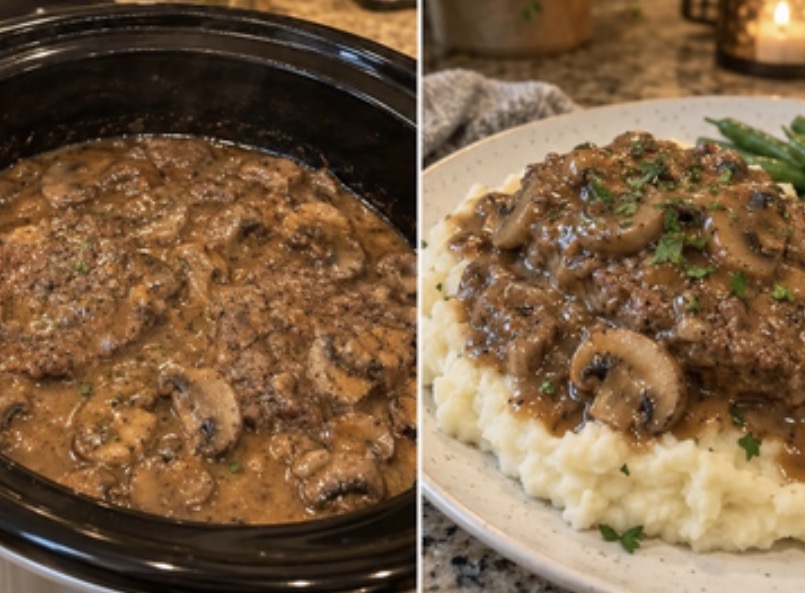
Crockpot Mushroom Cube Steak
There is something especially comforting about coming home to a slow cooker filled with tender beef and rich mushroom gravy.
This Crockpot Mushroom Cube Steakturns an affordable cut of beef into a hearty family dinner with almost no complicated preparation.
Cube steaks cook slowly with fresh mushrooms, onions, garlic, beef broth, and a creamy mushroom gravy until they’re so tender you can cut them with a fork.
Spoon everything over a pile of buttery mashed potatoes and you’ve got the kind of old-fashioned comfort-food dinner that tastes like it spent all afternoon simmering on the stove.
The best part?
The slow cooker does most of that work for you.
If you’re looking for an easy beef dinner, budget-friendly family meal, slow cooker recipe, or high-protein comfort food, this is a recipe worth saving.
What Is Cube Steak?
Cube steak is usually made from a relatively lean cut such as top or bottom round that has been mechanically tenderized.
The tenderizing process leaves the recognizable small indentations across the surface of the beef.
Allrecipes describes cube steak as an economical, versatile cut that works particularly well in hearty recipes, including slow-cooked dishes.
Food Network also notes that mushroom gravy, caramelized onions, and similar savory sauces are classic accompaniments for cube steak.
That makes mushrooms and slow-cooked gravy a particularly natural combination.
Why You’ll Love This Slow Cooker Cube Steak
Budget-friendly. Cube steak is generally less expensive than premium steak cuts.
Minimal preparation. After a little slicing and mixing, the slow cooker handles most of the meal.
Fork-tender beef. Low, slow cooking helps turn inexpensive beef into something much more tender.
Rich mushroom gravy. The mushrooms, onions, broth, and seasonings create plenty of gravy for mashed potatoes.
Family-friendly. The mild, savory flavors work well for an everyday family dinner.
High in protein. Beef makes the meal hearty and satisfying.
Great for meal prep. Leftovers reheat well for another lunch or dinner.
Perfect for fall and winter. It’s exactly the kind of warm comfort food people crave when temperatures start dropping.
Ingredients
For the Cube Steak
- 4 cube steaks, about 1½–2 pounds total
- ½ teaspoon salt
- ½ teaspoon black pepper
- ½ teaspoon garlic powder
- ½ teaspoon smoked paprika
- 1 tablespoon olive oil, optional for searing
For the Mushroom Gravy
- 8 ounces fresh mushrooms, sliced
- 1 medium yellow onion, thinly sliced
- 3 cloves garlic, minced
- 1 can (10.5 ounces) cream of mushroom soup
- 1 cup low-sodium beef broth
- 1 tablespoon Worcestershire sauce
- 1 packet brown gravy mix
- ½ teaspoon dried thyme
- ½ teaspoon onion powder
- ¼ teaspoon black pepper
To Thicken the Gravy
- 2 tablespoons cornstarch
- 2 tablespoons cold water
Optional Garnish
- Chopped fresh parsley
- Freshly cracked black pepper
Best Mushrooms for Cube Steak
You don’t need expensive mushrooms for this recipe.
White Button Mushrooms
These are affordable, mild, and readily available.
They’re an excellent choice for an everyday family meal.
Cremini Mushrooms
Also sold as baby bella mushrooms, cremini have a deeper, earthier flavor.
Spend With Pennies specifically recommends cremini for deeper mushroom flavor while noting that white mushrooms provide a milder alternative.
Portobello Mushrooms
Chopped portobellos can create an especially rich mushroom gravy.
They’re larger, so cut them into smaller pieces before adding them to the slow cooker.
Fresh or Canned Mushrooms?
Fresh mushrooms provide the best texture.
Canned mushrooms will work in a pinch, but drain them before adding them.
How to Make Crockpot Mushroom Cube Steak
Step 1: Season the Beef
Pat the cube steaks dry.
Season both sides with:
- Salt
- Black pepper
- Garlic powder
- Smoked paprika
You don’t need heavy seasoning because the beef will eventually cook in flavorful mushroom gravy.
Step 2: Sear the Cube Steaks — Optional
Heat olive oil in a skillet over medium-high heat.
Brown each cube steak for approximately 1–2 minutes per side.
You aren’t trying to cook the steaks completely.
You’re simply giving the outside some browned flavor before slow cooking.
This step is optional.
If you’re trying to get dinner into the Crockpot quickly before work, you can place the seasoned steaks directly in the slow cooker.
But if you have an extra few minutes, browning adds another layer of flavor.
Step 3: Add the Onions and Mushrooms
Place half of the sliced onions and mushrooms in the bottom of the slow cooker.
Arrange the cube steaks over them.
Add the remaining onion and mushrooms over the beef.
Layering everything helps distribute the mushroom flavor throughout the dish.
Step 4: Make the Mushroom Gravy
In a mixing bowl, combine:
- Cream of mushroom soup
- Beef broth
- Worcestershire sauce
- Brown gravy mix
- Garlic
- Thyme
- Onion powder
- Black pepper
Whisk until mostly smooth.
Pour the mixture over the beef and mushrooms.
Move the steaks gently if necessary so the gravy can reach between them.
Step 5: Slow Cook
Cover the Crockpot.
Cook on LOW for approximately 6–8 hours, until the beef is very tender.
For cube steak, I strongly prefer the LOW setting.
The Country Cook likewise recommends low-and-slow cooking for its cube steak recipe because longer gentle cooking helps produce a more tender result.
USDA says slow cookers safely cook food using low heat, steam, and prolonged cooking, and advises thawing meat before placing it in a slow cooker and keeping the lid on during cooking.
Step 6: Thicken the Mushroom Gravy
When the steaks are tender, combine:
2 tablespoons cornstarch + 2 tablespoons cold water
Whisk until completely smooth.
Gently stir the slurry into the gravy.
Turn the slow cooker to HIGH and cook for approximately 15–30 minutes, or until the gravy reaches your preferred thickness.
The Country Cook uses the same general cornstarch-slurry technique to finish its slow-cooker cube steak gravy.
Step 7: Serve
Carefully lift each cube steak from the Crockpot.
Spoon plenty of mushrooms, onions, and gravy over the top.
Finish with parsley and freshly cracked black pepper.
Serve immediately with mashed potatoes, egg noodles, or rice.
The Secret to Tender Crockpot Cube Steak
Cube steak has already been mechanically tenderized, but cooking technique still matters.
Use LOW Heat
Give the meat enough time to tenderize slowly.
Trying to speed up a comfort-food beef recipe isn’t always worth it.
Use Enough Liquid
The steaks don’t need to be completely submerged, but there should be enough gravy and broth to keep everything moist.
Keep the Lid Closed
Opening a slow cooker repeatedly lets heat and steam escape.
USDA specifically recommends keeping the lid in place except when necessary to stir or check doneness.
Don’t Stop Cooking Just Because the Beef Is Done
If the steaks still feel tough when you test them, they may simply need additional cooking time.
The goal here isn’t merely cooked beef.
You want fork-tender beef.
Can I Make Cube Steak Without Cream of Mushroom Soup?
Absolutely.
If you prefer a homemade mushroom gravy, use this version instead.
Homemade Mushroom Gravy
You’ll need:
- 3 tablespoons butter
- 8 ounces sliced mushrooms
- 1 small onion
- 3 tablespoons all-purpose flour
- 2 cups beef broth
- ½ cup half-and-half or milk
- 1 tablespoon Worcestershire sauce
- ½ teaspoon thyme
- Garlic
- Salt and pepper
Instructions
Melt the butter in a skillet.
Cook mushrooms and onions until they begin to brown.
Add garlic.
Sprinkle flour over everything and cook for approximately one minute.
Slowly whisk in the beef broth.
Add Worcestershire sauce and seasonings.
Cook until slightly thickened.
Stir in the milk or half-and-half.
Pour the homemade gravy over the cube steaks and slow cook as directed.
This gives you an excellent secondary search section for:
Crockpot cube steak without cream of mushroom soup
Make It With Onion Gravy
If mushrooms aren’t your favorite, turn the recipe into Crockpot Cube Steak with Onion Gravy.
Double the sliced onions.
Leave out the fresh mushrooms.
Use:
- Beef broth
- Brown gravy
- Worcestershire sauce
- Garlic
- Thyme
Food Network’s cube steak with onion gravy shows how naturally rich onion gravy pairs with this cut of beef.
Add French Onion Flavor
For an especially savory version, replace some of the beef broth with condensed French onion soup.
The combination of:
- Beef
- Mushrooms
- Onion
- Worcestershire sauce
- Brown gravy
creates an almost French-onion-style steak dinner.
The Country Cook also uses French onion soup in its popular Crock Pot Cubed Steak recipe.
Because canned soup and gravy mixes can contain significant sodium, choose lower-sodium versions when possible and taste before adding additional salt.
Crockpot Cube Steak With Potatoes
Want to make the whole dinner in one slow cooker?
Add potatoes.
Use approximately:
- 1½ pounds baby potatoes, halved
Place them in the bottom of the Crockpot before adding the steaks.
Keep in mind that vegetables generally take time to become tender in a slow cooker.
USDA recommends placing vegetables in first when using a slow cooker because they can cook more slowly than meat.
Add Carrots
Carrots make the recipe feel more like a traditional pot roast dinner.
Cut 3–4 carrots into large chunks.
Place them with the potatoes or underneath the steak.
After several hours of cooking, they will soak up the mushroom-beef gravy.
Make It Extra Creamy
For creamier mushroom gravy, stir in one of these near the end:
½ cup sour cream
or
4 ounces cream cheese
Reduce the slow cooker to LOW before adding dairy.
Stir gently until smooth.
Sour cream gives you something close to a beef Stroganoff flavor.
Serve that variation over egg noodles.
High-Protein Crockpot Beef Dinner
Cube steak naturally provides plenty of protein.
For a more protein-focused meal, serve it with:
- Green beans
- Broccoli
- Cauliflower mash
- Roasted vegetables
- Cottage-cheese mashed potatoes
- Higher-protein egg noodles
You can also increase the amount of beef and reduce higher-calorie sides if that better suits your meal plan.
This gives you a legitimate way to address readers searching for high-protein dinner ideas without forcing unrelated keywords into the recipe.
Is Cube Steak Budget-Friendly?
One of cube steak’s biggest advantages is price.
Food Network describes cube steak as a comparatively inexpensive steak option and notes that it can cost noticeably less than cuts such as flank, skirt, rib, or strip steak, though actual grocery prices vary by location and time.
Slow cooking is particularly useful for economical cuts because long, moist cooking can produce a very tender dinner.
USDA likewise notes that low slow-cooker heat can work particularly well with less-expensive, leaner cuts.
That makes this a useful recipe for families looking for satisfying beef dinners without buying premium steaks.
Budget-Friendly Dinner Tips
You can reduce the cost of this meal even further.
Buy cube steak on sale. Freeze extra packages for future dinners.
Choose white mushrooms. They’re often less expensive than specialty mushroom varieties.
Use store-brand ingredients. Store-brand broth and soup work perfectly well.
Serve with potatoes or rice. Both stretch a smaller amount of beef into more servings.
Add vegetables. Carrots, onions, and mushrooms make each serving more substantial.
Save the leftovers. Extra mushroom steak makes an excellent lunch the next day.
What to Serve With Mushroom Cube Steak
Mashed Potatoes
This is my number-one choice.
The potatoes soak up the mushroom gravy beautifully.
Egg Noodles
Especially good if you add sour cream to the gravy.
White Rice
An inexpensive side that absorbs plenty of sauce.
Green Beans
A classic comfort-food pairing.
Roasted Broccoli
Adds freshness and color to the plate.
Buttered Corn
Easy and family-friendly.
Dinner Rolls
Use them to wipe up any remaining gravy.
Crockpot Cube Steak and Mashed Potatoes
If you’re making this for Sunday dinner, mashed potatoes are hard to beat.
For especially creamy potatoes, use:
- Russet or Yukon Gold potatoes
- Butter
- Warm milk
- Salt
- Black pepper
Place one generous scoop on each plate.
Add a cube steak.
Then spoon mushrooms and gravy over both the steak and potatoes.
It’s simple, old-fashioned comfort food.
Meal Prep Mushroom Cube Steak
This recipe is excellent for meal prep because the meat remains moist when stored with the gravy.
Divide cooked portions among airtight containers.
Add:
- Cube steak
- Mushroom gravy
- Mashed potatoes or rice
- Green vegetables
Now you’ve got complete lunches or dinners ready for the week.
Always cool and refrigerate leftovers promptly.
Make-Ahead Instructions
You can prepare several ingredients the night before.
Slice:
- Mushrooms
- Onion
- Garlic
Mix the gravy ingredients in a separate covered container.
Keep the beef refrigerated separately.
In the morning, place everything into the Crockpot and start cooking.
USDA recommends keeping perishable ingredients refrigerated until cooking begins.
How to Store Leftover Cube Steak
Transfer leftover steak and mushroom gravy into shallow airtight containers.
Refrigerate within 2 hours after cooking.
USDA recommends using most cooked leftovers within approximately 3–4 days.
Store the steaks with plenty of gravy.
That helps prevent them from drying out.
How to Reheat Cube Steak
Stovetop
Place steak and gravy in a covered skillet or saucepan.
Heat gently over medium-low heat.
Add a splash of beef broth if the gravy becomes too thick.
Microwave
Place one portion in a microwave-safe dish.
Cover and heat until thoroughly hot.
Stir or rotate as necessary for even heating.
USDA recommends reheating leftovers to 165°F.
USDA does not recommend using a slow cooker to reheat cold leftovers because the food can remain at unsafe temperatures too long. Reheat on the stove, in the microwave, or in the oven first.
Can You Freeze Crockpot Cube Steak?
Yes.
Cube steak and mushroom gravy freeze quite well.
Allow leftovers to cool properly.
Place portions into freezer-safe containers with plenty of gravy.
Freeze.
For best eating quality, I would use them within approximately 2–3 months.
Thaw overnight in the refrigerator before reheating.
The mushroom gravy may thicken after freezing, so add a little beef broth while reheating if needed.
Frequently Asked Questions
What exactly is cube steak?
Cube steak is usually top or bottom round beef that has been mechanically tenderized, leaving distinctive indentations across the surface.
Does cube steak get tender in the Crockpot?
Yes.
Slow cooking cube steak in a moist sauce or gravy can make it extremely tender. Current slow-cooker steak recipes specifically use this technique with cube steak and mushrooms.
Should I brown cube steak first?
You don’t have to.
However, briefly browning it before slow cooking adds extra flavor.
Skip the step when convenience matters more.
Can I use frozen cube steak?
Thaw it first.
USDA recommends fully thawing meat before putting it into a slow cooker.
Can I cook cube steak on HIGH?
You can follow the directions for your specific slow cooker, but for this recipe I prefer LOW because longer gentle cooking generally gives the steak more time to become tender.
Can I use canned mushrooms?
Yes.
Drain them first and add them with the onions.
Fresh mushrooms will provide better texture.
What if my gravy is too thin?
Mix equal parts cornstarch and cold water.
Stir it into the hot gravy and cook until thickened.
What if my gravy is too thick?
Add a small amount of beef broth.
Start with a few tablespoons.
Can I make it without mushroom soup?
Yes.
Use the homemade mushroom gravy described above.
What can I substitute for cube steak?
You can use:
- Round steak
- Minute steak
- Thin chuck steak
Spend With Pennies also lists round or minute steak as options in its current slow-cooker steak recipe.
Easy Crockpot Mushroom Cube Steak Recipe
Prep Time: 15 minutes
Cook Time: 6–8 hours
Total Time: About 6 hours 15 minutes to 8 hours 15 minutes
Servings: 4–6
Ingredients
- 4 cube steaks, about 1½–2 pounds
- 8 ounces sliced mushrooms
- 1 medium onion, sliced
- 3 garlic cloves, minced
- 1 can (10.5 ounces) cream of mushroom soup
- 1 cup low-sodium beef broth
- 1 packet brown gravy mix
- 1 tablespoon Worcestershire sauce
- ½ teaspoon garlic powder
- ½ teaspoon smoked paprika
- ½ teaspoon dried thyme
- ½ teaspoon onion powder
- ½ teaspoon salt
- ½ teaspoon black pepper
Cornstarch Slurry
- 2 tablespoons cornstarch
- 2 tablespoons cold water
Instructions
- Season cube steaks with salt, pepper, garlic powder, and paprika.
- If desired, sear steaks briefly in a hot skillet.
- Place half the onions and mushrooms in the slow cooker.
- Arrange cube steaks over them.
- Add remaining mushrooms and onions.
- Whisk together mushroom soup, beef broth, gravy mix, Worcestershire sauce, garlic, thyme, and onion powder.
- Pour gravy mixture over the steaks.
- Cover.
- Cook on LOW for 6–8 hours, until very tender.
- Whisk together cornstarch and cold water.
- Stir slurry gently into the gravy.
- Cook on HIGH for another 15–30 minutes, until the gravy thickens.
- Garnish with parsley.
- Serve with mashed potatoes, noodles, or rice.
Delicious Variations
Creamy Mushroom Cube Steak
Stir sour cream into the gravy before serving.
French Onion Cube Steak
Use extra onions and French onion soup.
Mushroom Swiss Cube Steak
Top each cooked steak with Swiss cheese and let it melt before serving.
Garlic Butter Mushroom Cube Steak
Sauté mushrooms in butter and garlic before adding them to the Crockpot.
Crockpot Cube Steak and Potatoes
Add baby potatoes to the bottom of the slow cooker.
Cube Steak Stroganoff
Add sour cream and serve over egg noodles.
Peppercorn Mushroom Steak
Add coarsely cracked black pepper and a splash of cream near the end.
Final Thoughts
Crockpot Mushroom Cube Steakproves that you don’t need an expensive cut of beef to make an incredibly comforting family dinner.
Slow cooking transforms cube steak into tender beef while mushrooms, onions, garlic, Worcestershire sauce, and beef broth create a savory gravy that’s made for mashed potatoes.
It’s easy enough for a busy weekday, comforting enough for Sunday dinner, affordable enough for your regular meal rotation, and practical enough for meal prep.
If you’re searching for a slow cooker beef recipe, budget-friendly family dinner, high-protein comfort meal, cube steak with gravy, or easy Crockpot dinner, this one covers all of them.
ADVERTISEMENT
