ADVERTISEMENT
You wake up tired, even after a full night’s sleep. Your hands tingle. Climbing the stairs leaves you breathless. You brush it off as “just getting older,” but what if your body is sending a warning sign you’ve been missing?
Here’s the surprising truth: Vitamin B12 deficiency is far more common than most people realize, especially among adults over 50. It creeps in slowly, often mistaken for stress, aging, or poor sleep. But left untreated, it can lead to serious — even irreversible — nerve and brain damage.
What’s worse, you might not even know it’s happening. Studies suggest up to 40% of older adults have low or borderline B12 levels, yet few get diagnosed in time.
So, what exactly happens when your body runs low on this essential vitamin — and how can you spot it before it’s too late? Let’s uncover the subtle, often-overlooked symptoms that should never be ignored.
Why Vitamin B12 Matters More Than You Think
Vitamin B12 is like a silent engine running inside you — invisible, but essential for energy, memory, and mood. It helps produce red blood cells, supports nerve health, and assists in DNA synthesis.
Without enough of it, your body can’t transport oxygen efficiently, your nerves misfire, and your brain struggles to function normally.
Here’s where it gets tricky: B12 is only found naturally in animal-based foods like meat, eggs, and dairy. That means vegetarians, vegans, or older adults with reduced stomach acid (which helps absorb B12) are especially at risk.
Now let’s look at the warning signs your body gives when it’s running on empty.
1. Constant Fatigue and Weakness
It starts subtly — you feel drained, your muscles tire easily, and naps become irresistible. You blame age or a busy schedule.
But what’s really happening? Without enough B12, your red blood cells can’t carry oxygen efficiently. That means every cell in your body is running on low fuel.
People often describe it as a deep, heavy fatigue that no amount of sleep can fix. If you’ve been feeling this way for weeks or months, it might be more than burnout.
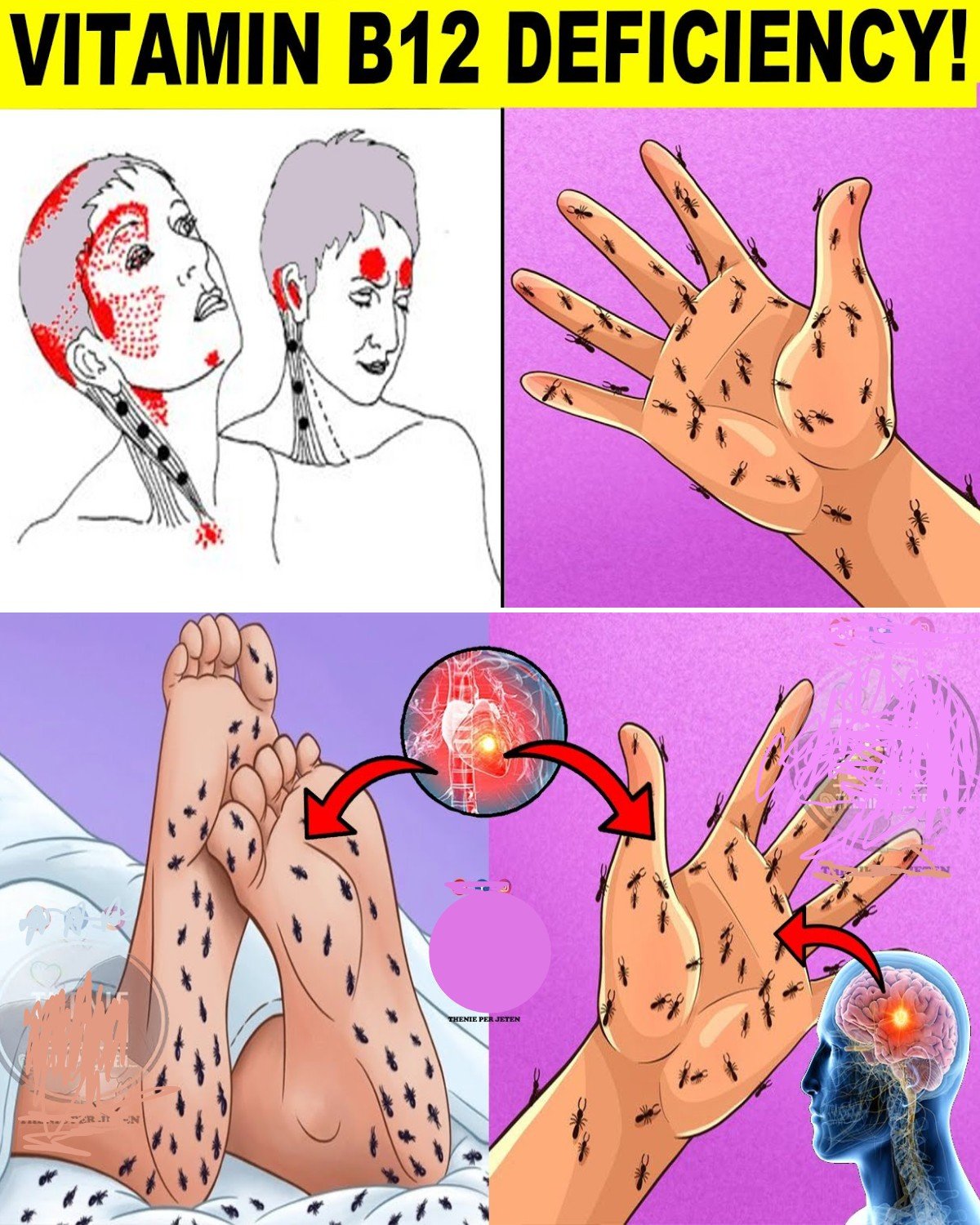
2. Numbness or Tingling in Hands and Feet
Imagine tiny pins and needles pricking your fingertips or toes. It’s annoying at first — then concerning when it doesn’t go away.
B12 supports the myelin sheath, the protective coating around your nerves. When levels drop, that sheath starts to erode, causing nerve damage.
Left untreated, this can progress to balance issues, clumsiness, or even difficulty walking.
So if your limbs feel “asleep” more often than usual — don’t ignore it. Your nerves could be asking for help.
3. Pale or Jaundiced Skin
Ever noticed your skin looking paler than usual, or with a faint yellow tone? That’s another hidden clue.
Low B12 can reduce red blood cell production, leading to megaloblastic anemia — a condition where cells grow too large and break apart. The result: a shortage of healthy red blood cells, and that washed-out, tired look in your complexion.
If you pair pale skin with constant fatigue or dizziness, it’s time to get your B12 checked.
4. Mood Swings, Anxiety, or Depression
Here’s something many people don’t realize — your mood depends heavily on your nutrition.
B12 helps produce serotonin, the brain’s “feel-good” chemical. Without it, you might feel irritable, anxious, or even depressed without knowing why.
Some people report feeling like they’ve “lost their spark.” Others describe emotional flatness, sudden sadness, or unexplained irritability.
If this sounds familiar, you’re not alone — and the cause could be more biological than psychological.
5. Memory Problems and Brain Fog
Ever walk into a room and forget why? Or struggle to find words that used to come easily?
B12 deficiency affects brain function, especially areas related to focus, memory, and clarity. Some even mistake it for early dementia.
But here’s the encouraging part — once your B12 levels are restored, cognitive sharpness often improves dramatically.
So before assuming it’s “just aging,” consider whether your brain simply needs better fuel.
6. Shortness of Breath and Dizziness
Climbing stairs shouldn’t make you feel lightheaded. But when your red blood cells can’t carry oxygen efficiently, your lungs and heart work overtime.
You might notice yourself breathing harder during normal activity or feeling dizzy when standing up.
This symptom often pairs with fatigue and pale skin — a classic triad of low B12–related anemia.
7. Sore Tongue or Mouth Ulcers
This one surprises most people. A red, inflamed tongue (called glossitis) or frequent mouth sores can signal low B12.
Without enough of the vitamin, your tongue loses papillae — the tiny bumps that hold taste buds — making it appear smooth and shiny.
You might also notice burning sensations or changes in how food tastes. It’s subtle but telling.
8. Blurred Vision or Eye Twitching
Here’s something few expect: B12 deficiency can affect your eyes.
When nerves in the optic region are damaged, it can distort vision or cause small, rapid twitches. Some people describe blurry spots, light sensitivity, or seeing “shadows.”
While rare, vision problems are a serious late-stage symptom — and a sign that nerve damage has already begun.
9. Heart Palpitations or Irregular Pulse
Feeling your heart race, even when you’re resting? That’s another possible sign.
With fewer red blood cells circulating oxygen, your heart compensates by beating faster. Over time, this strain can increase risk for cardiovascular issues.
Combine that with fatigue or dizziness, and you may be looking at a clear case of oxygen deficiency caused by low B12.
10. Digestive Issues — Especially After Meals
B12 deficiency can cause nausea, bloating, constipation, or even diarrhea.
Because your stomach needs acid and enzymes (like intrinsic factor) to absorb B12, anything that interferes — such as certain medications or age-related changes — can reduce absorption drastically.
If your digestion feels “off,” especially after high-protein meals, your gut may be struggling to process B12 properly.
Quick Reference: Common Symptoms of B12 Deficiency
| Category | Common Signs | Possible Cause |
|---|---|---|
| Energy | Fatigue, weakness, shortness of breath | Low oxygen delivery |
| Nerves | Tingling, numbness, poor balance | Myelin sheath damage |
| Mood | Depression, irritability, anxiety | Low serotonin |
| Brain | Confusion, memory loss, fog | Reduced nerve function |
| Skin | Pale or yellowish tone | Fewer healthy red blood cells |
Two Real Stories That Prove It’s Easy to Miss
Case 1: Mary, 63
Mary had been feeling tired for months, blaming menopause. When her hands started tingling, she thought it was arthritis. A simple blood test revealed dangerously low B12. After six weeks of supplementation, her energy and mood returned — she said, “It felt like someone turned the lights back on.”
Case 2: Jason, 48
A lifelong vegetarian, Jason prided himself on healthy eating. But brain fog and irritability began to take over. His doctor found his B12 levels were half the normal range. Once he added fortified foods and a supplement, his focus — and patience — returned within a month.
These stories show how easy it is to miss the signs until things get worse.
Why Deficiency Happens — Even If You Eat Well
Here’s what many don’t know: even with a balanced diet, your body might not absorb B12 properly.
That’s especially true if you:
-
- Are over 50 (your stomach produces less acid)
- Take antacids, metformin, or proton pump inhibitors
- Follow a vegan or vegetarian diet
- Have had gastrointestinal surgery or chronic gastritis
In these cases, your body needs more help absorbing what you consume.
How to Restore and Protect Your B12 Levels
The good news? Most people can recover from deficiency once it’s identified.
Here are some safe, simple steps:
| Approach | How It Helps | Sources |
|---|---|---|
| Diet | Adds natural B12 | Eggs, fish, poultry, milk, fortified cereals |
| Supplements | Raises levels quickly | Tablets, lozenges, or sprays |
| Injections | For severe deficiency | Given by healthcare provider |
If you’re unsure, ask your doctor for a serum B12 test — it’s quick, affordable, and potentially life-saving.
And if you already take a multivitamin, check the label — many contain B12, but not always in sufficient amounts for your needs.
Can You Have Too Much B12?
Fortunately, excess B12 is rare since it’s water-soluble — your body simply excretes what it doesn’t use. Still, balance is key. The goal is not overload, but optimization.
The Bottom Line: Listen to What Your Body Is Saying
Fatigue, mood swings, memory lapses — these may seem like ordinary signs of aging, but sometimes they’re your body’s way of whispering for help.
Vitamin B12 deficiency often develops slowly, but its effects can be profound. The earlier you catch it, the easier it is to reverse.
So if any of these symptoms sound familiar, don’t ignore them. Ask your doctor for a simple test, make small nutrition tweaks, and reclaim your energy, clarity, and vitality.
Your body is talking — it’s time to listen.
This article is for informational purposes only and does not replace professional medical advice. Please consult your healthcare provider for personalized guidance.
ADVERTISEMENT
