ADVERTISEMENT
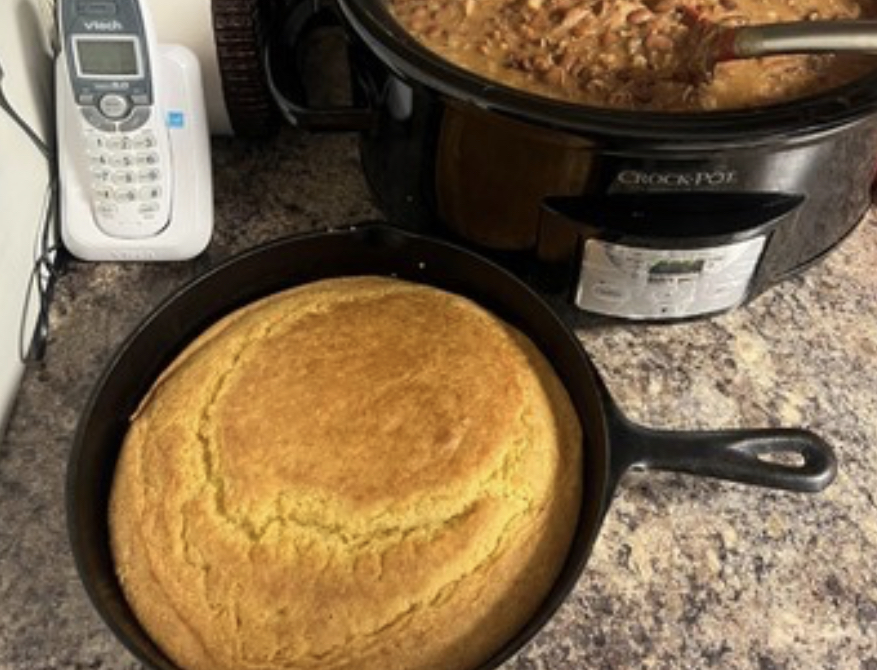
There is perhaps no meal more synonymous with Southern hospitality and hearty home cooking than a pot of slow-simmered pinto beans seasoned with smoked ham hocks, served alongside a wedge of golden, buttery skillet cornbread. This humble yet deeply satisfying meal has fed generations, stretching budgets while delivering rich flavor, nourishment, and comfort.
The beans cook low and slow until tender, creating a deeply flavorful broth known as “pot likker,” while the ham hocks infuse the dish with smoky depth. Paired with crisp-edged cornbread baked in a cast-iron skillet, this meal is pure Southern tradition.
Part 1: Slow-Cooked Southern Pinto Beans
The secret to unforgettable pinto beans is time and patience. A long simmer allows the beans to become tender while the smoked ham hocks release collagen and flavor into the broth.
Ingredients
-
1 pound dried pinto beans, picked over and rinsed
-
2 large smoked ham hocks (or 1 very meaty ham shank)
-
1 large yellow onion, diced
-
3 cloves garlic, minced
-
6–8 cups chicken broth or water (or a 50/50 mix)
-
1 teaspoon black pepper
-
½ teaspoon red pepper flakes (optional)
-
Salt, to taste (add only at the end)
-
1 tablespoon bacon grease or olive oil
Instructions
Step 1: Soak the Beans
Place the rinsed beans in a large bowl and cover with at least 3 inches of water. Soak overnight (8–12 hours), then drain and rinse.
Quick-Soak Option: Bring beans and water to a boil for 2 minutes, remove from heat, cover, and let sit for 1 hour. Drain and rinse.
Step 2: Build the Flavor Base
In a large heavy-bottomed pot or Dutch oven, heat the bacon grease or olive oil over medium heat. Add the diced onion and cook until soft and translucent, about 5 minutes. Stir in the garlic and cook for 30 seconds until fragrant.
Step 3: Add Beans and Ham Hocks
Add the soaked beans and smoked ham hocks to the pot. Pour in enough broth or water to cover everything by about 2 inches.
Step 4: Slow Simmer
Bring the pot to a gentle boil, then reduce heat to low. Cover partially and simmer for 2½ to 3 hours, stirring occasionally, until the beans are tender and the broth is rich and flavorful.
Step 5: Finish and Season
Remove the ham hocks and shred the meat, discarding bones and excess fat. Return the meat to the pot. Add black pepper and red pepper flakes if using. Taste and add salt only at the end to avoid toughening the beans.
Let simmer uncovered for an additional 15 minutes to thicken slightly.
Part 2: Golden Skillet Cornbread
No pot of Southern beans is complete without cornbread baked in a hot cast-iron skillet.
Ingredients
-
1 cup yellow cornmeal
-
1 cup all-purpose flour
-
1 tablespoon baking powder
-
1 teaspoon salt
-
1 tablespoon sugar (optional, traditional style uses little or none)
-
1 cup buttermilk
-
2 large eggs
-
¼ cup melted butter or bacon grease
-
1 tablespoon oil or bacon grease (for the skillet)
Instructions
Step 1: Preheat
Preheat oven to 425°F (220°C). Place the cast-iron skillet in the oven with the oil or bacon grease to heat.
Step 2: Mix the Batter
In a bowl, whisk together cornmeal, flour, baking powder, salt, and sugar. In another bowl, whisk buttermilk, eggs, and melted butter. Combine wet and dry ingredients just until mixed.
Step 3: Bake
Carefully remove the hot skillet and pour in the batter. Bake for 20–25 minutes, until golden brown with crisp edges.
Serving Suggestions
Serve the pinto beans hot with a wedge of skillet cornbread, a spoonful of the pot likker, and optional sides such as:
-
Sliced raw onion or green onions
-
Chow chow or pickled vegetables
-
Stewed greens or collard greens
Tips for the Best Pinto Beans
-
Do not salt the beans until they are fully tender
-
Low and slow cooking creates the best texture and broth
-
Bacon grease adds authenticity, but olive oil works well
-
Beans thicken naturally as they cool
Final Thoughts
Pinto Beans with Smoked Ham Hocks is more than a recipe—it’s a reflection of Southern heritage, resourcefulness, and comfort. Simple ingredients, treated with care and patience, come together to create a meal that satisfies deeply and feeds both body and soul.
ADVERTISEMENT
