ADVERTISEMENT
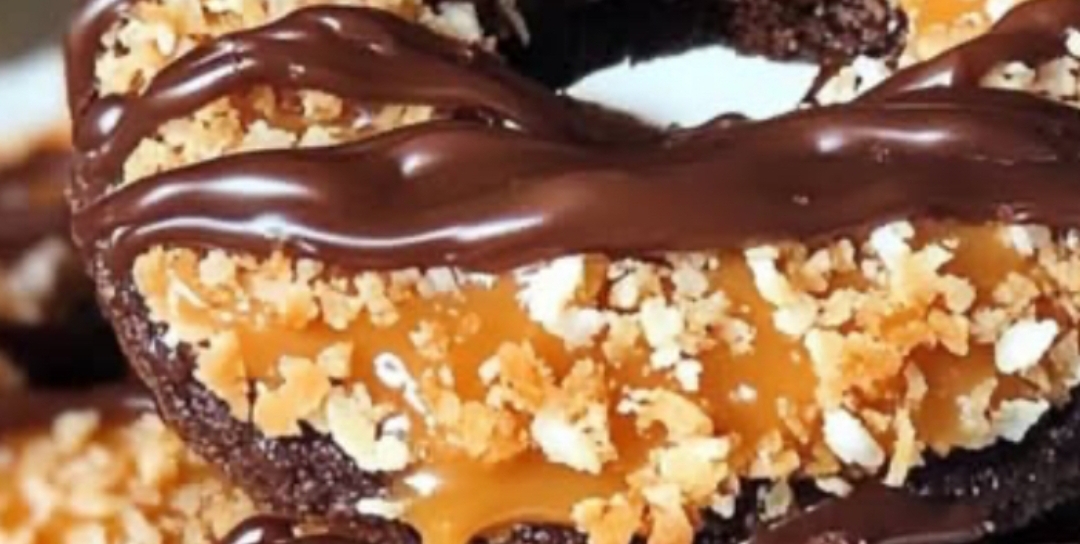
Homemade Samoas (Caramel Coconut Girl Scout Cookies)
Ingredients:
For the Shortbread Cookies:
1 cup (226g) unsalted butter, softened
½ cup (100g) granulated sugar
2 cups (250g) all-purpose flour
½ teaspoon salt
1 teaspoon vanilla extract
For the Caramel Coconut Topping:
2 cups (150g) shredded sweetened coconut
1 cup (320g) soft caramels, unwrapped
3 tablespoons heavy cream
For the Chocolate Coating:
10 oz (280g) semi-sweet chocolate chips
1 teaspoon vegetable oil
Directions:
Prepare the Shortbread Cookies:
Preheat the oven to 350°F (175°C). Line a baking sheet with parchment paper.
In a large mixing bowl, cream the butter and sugar together until light and fluffy.
Mix in the vanilla extract. Gradually add the flour and salt, mixing until the dough comes together.
Roll the dough out on a lightly floured surface to about ¼-inch thickness.
Use a round cookie cutter to cut out circles (about 2 inches in diameter). Use a smaller cutter to cut out the center hole.
Place the cookies on the prepared baking sheet and bake for 10–12 minutes, or until lightly golden.
Let cool completely before adding the topping.
Prepare the Caramel Coconut Topping:
8. Spread the shredded coconut on a baking sheet and toast at 350°F (175°C) for about 5 minutes, stirring occasionally, until golden brown.
9. In a microwave-safe bowl, melt the caramels with the heavy cream in 30-second intervals, stirring between each, until smooth.
10. Stir the toasted coconut into the caramel mixture until fully coated.
Assemble the Cookies:
11. Spread the caramel coconut mixture evenly over the cooled cookies.
12. Let the caramel set for about 10 minutes.
Prepare the Chocolate Coating:
13. In a microwave-safe bowl, melt the chocolate chips with the vegetable oil in 30-second intervals, stirring until smooth.
14. Dip the bottoms of the cookies into the melted chocolate and place them back on the parchment-lined baking sheet.
15. Drizzle the remaining chocolate over the tops of the cookies in a zigzag pattern.
Serve and Enjoy:
16. Let the cookies set at room temperature or in the refrigerator for about 20 minutes until the chocolate firms up.
17. Store leftovers in an airtight container at room temperature for up to 5 days.
Prep Time: 20 minutes
Bake Time: 12 minutes
Total Time: 1 hour
Yield: 24 cookies
ADVERTISEMENT
