ADVERTISEMENT
Snoring may seem like a simple nighttime annoyance, but it is actually influenced by many different factors.
Breathing patterns, throat anatomy, allergies, body weight, sleep depth, alcohol consumption, nasal congestion, and sleep position all play an important role in how loudly — and how often — someone snores.
One of the most common questions people ask is whether sleeping on the right side helps or worsens snoring.
The answer is not completely identical for everyone, but research and sleep experts provide several important clues.
😴 Why Sleep Position Matters So Much
Snoring happens when airflow becomes partially blocked during sleep.
As the muscles in the throat relax, the airway narrows. Air moving through this smaller space causes nearby tissues to vibrate, producing the familiar snoring sound.
Body position changes how gravity affects the airway.
This explains why sleeping on the back is strongly associated with louder and more frequent snoring.
When lying flat on the back:
- the tongue may fall backward,
- the soft palate may collapse slightly,
- and the airway can become narrower.
For many people, simply switching from the back to the side noticeably improves breathing during sleep.
➡️ Is Sleeping on the Right Side Good for Snoring?
In many cases, yes.
Sleeping on the right side is usually better than sleeping on the back because side sleeping helps keep the airway more open.
However, some people may experience even better results sleeping on the left side instead.
The reason involves several factors.
1️⃣ Airway Stability
Side sleeping generally prevents the tongue from collapsing backward into the throat.
This alone often reduces snoring intensity significantly.
From this perspective, right-side sleeping is usually an improvement over back sleeping.
However, certain sleep specialists suggest that the left side may keep the airway slightly more stable in some individuals, especially those with:
- sleep apnea,
- acid reflux,
- or throat inflammation.
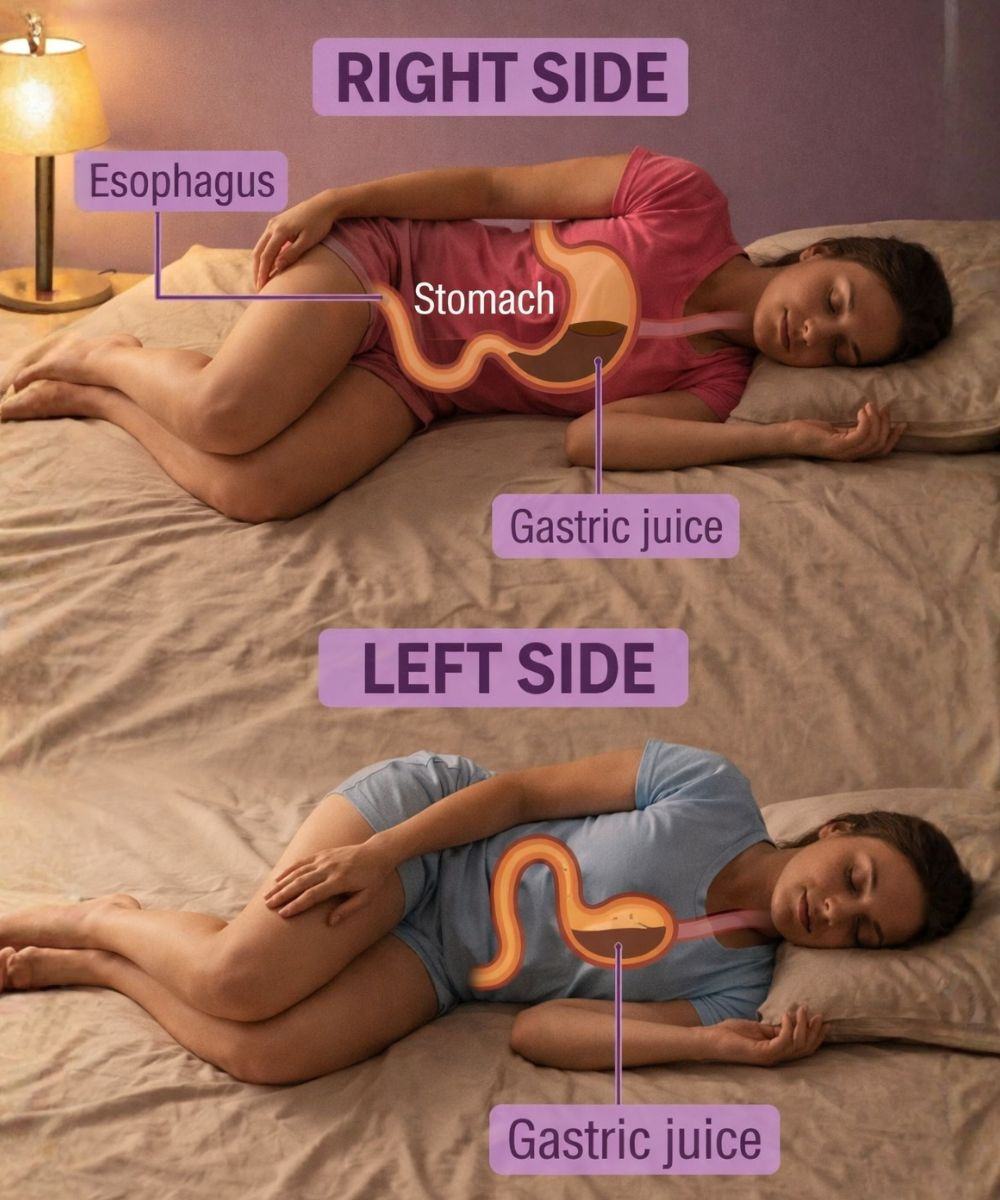
2️⃣ The Acid Reflux Connection
Many people do not realize that acid reflux can contribute directly to snoring.
When stomach acid travels upward during sleep, it may irritate the throat and airway tissues.
This irritation can:
- increase swelling,
- narrow the airway,
- and worsen snoring.
Interestingly, sleeping on the right side may increase acid reflux in some people because of the position of the stomach and esophagus.
This is why many doctors recommend left-side sleeping for individuals with:
- GERD,
- heartburn,
- or reflux-related snoring.
For these people, right-side sleeping may unintentionally worsen nighttime breathing problems.
3️⃣ Nasal Congestion and Breathing
Some people notice that nasal congestion changes depending on which side they lie on.
Gravity and blood flow can increase pressure inside one nasal passage during sleep.
If snoring is mainly caused by nasal blockage rather than throat collapse, sleeping on the right side may sometimes worsen congestion in the right nostril.
This may lead to noisier breathing overnight.
The situations where right-side sleeping may help — and when it may worsen snoring — continue on the next page.
ADVERTISEMENT
