ADVERTISEMENT
The apartment was silent that Tuesday evening, except for the refrigerator humming in the corner like it was trying to remind me I was still alive.
I sat at my tiny kitchen table with overdue bills spread in front of me, each one feeling heavier than the last. Above the stove, a faded photograph of my parents looked down at me, the same photograph I had carried from apartment to apartment since I was seven years old
My name is Emily, and I had been tired for most of my life.
After my parents died, my grandmother Margaret took me in. She was rich in the way people whispered about. She owned a chain of grocery stores across three counties, lived in a house with more rooms than people, and wore pearl earrings to breakfast.
But her money never reached me.
When I got accepted into college, I stood in her sitting room with the letter shaking in my hands.
“I was hoping maybe you could help with tuition,” I said.
She barely looked up from her newspaper.
“I’m not your mother, Emily. I’m not your father. Don’t expect me to act like I am.”
So I worked two jobs. I took out loans. I learned early that being related to wealth did not mean being protected by it.
Years later, my phone buzzed on that quiet Tuesday night. Grandma’s house number lit up the screen.
I almost ignored it.
When I answered, Linda’s voice came through. She had been my grandmother’s housekeeper since before I was born.
“Emily,” she said softly, “your grandmother wants to speak with you.”
There was shuffling, then my grandmother’s voice, thinner than I remembered.
“Emily.”
“Grandma? Are you okay?”
“No,” she said. “I’m dying.”
My hand tightened around the phone.
“The doctors say I may have a year. Maybe two. I need someone to take care of me.”
I sat very still.
“Grandma, I have work. I have bills. I can’t just—”
“If you come,” she interrupted, “everything I own goes to you. The house. The stores. Every dollar.”
I stared at the bills in front of me.
Three years of care in exchange for a life where I could finally breathe.
“Why me?” I asked quietly.
There was a pause.
“Because you’re the only one left.”
A week later, I moved into her house with one suitcase and a heart full of things I did not know how to name.
The first morning, Linda met me in the kitchen.
“She doesn’t take sugar in her tea anymore,” she said. “And she’ll ask if the door is locked several times. Just answer every time.”
I nodded.
Linda looked at me with something like pity.
“You’ll see,” she said. “She’s not the woman you remember.”
She was right.
The next three years blurred into routine.
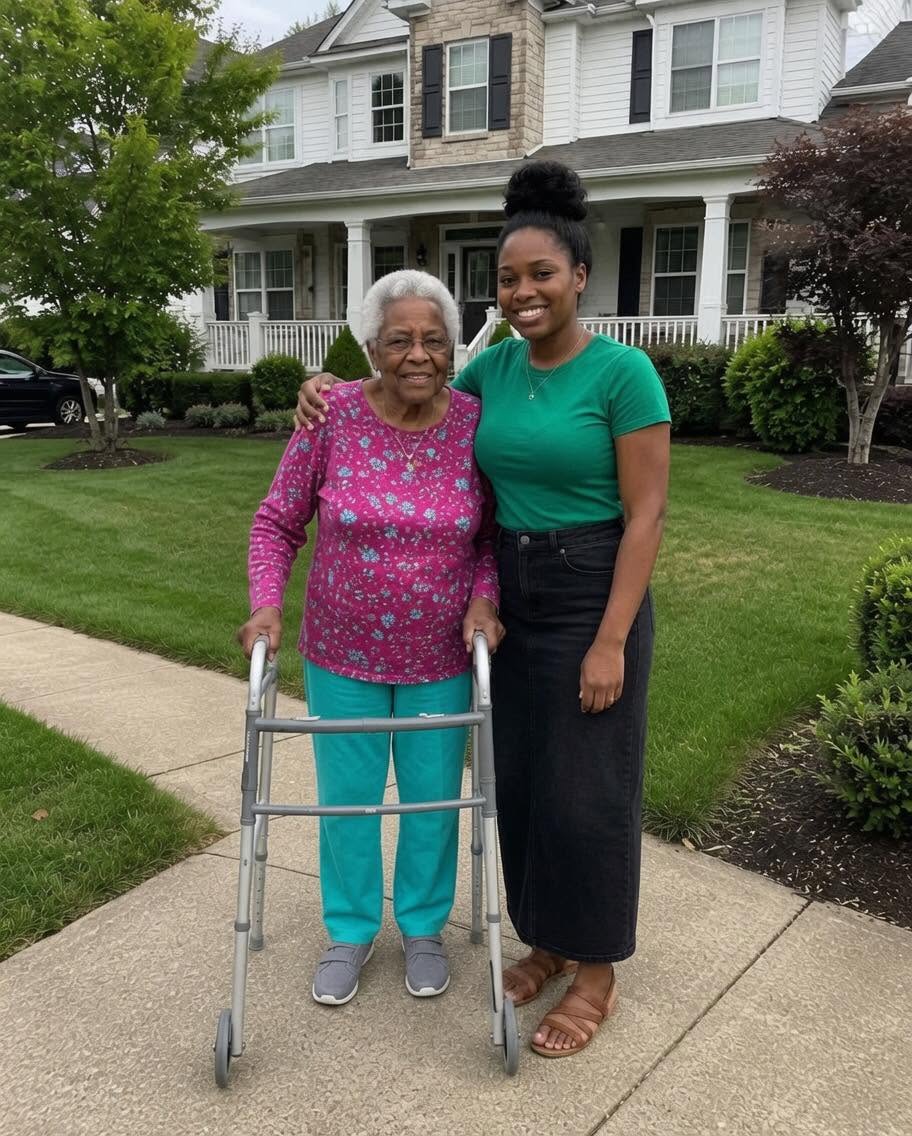
I drove Grandma to appointments. I cooked her meals. I helped her bathe when her hands shook too badly. I buttoned her blouses. I read to her in the evenings while she stared out the window as if waiting for someone who never came.
She still criticized me.
“Your hair is too long.”
“That dress does nothing for you.”
“You waste too much bread.”
Sometimes I wanted to scream.
Other times, when she reached for my hand during a coughing fit, I felt something inside me soften. I told myself I would have stayed even without the promise.
But I was never completely sure.
Then I started noticing the letters.
Grandma wrote them by hand at the little desk in her bedroom, then locked them away whenever I entered. She took hushed phone calls behind closed doors. Once, while carrying soup to her room, I heard her say, “She must never know. Not yet.”
I froze in the hallway.
When I walked in, she gave me the smallest smile.
“Sit with me,” she said.
So I did.
She did not speak again for an hour.
On a quiet Sunday in October, Grandma died in her sleep.
Linda found her first.
I stood in the doorway in my robe, staring at the stillness of the woman who had raised me without warmth, needed me without apology, and promised me everything without ever saying thank you.
The funeral passed like fog.
A week later, I sat across from her lawyer, Mr. Bennett, with my hands folded tightly in my lap.
He opened the folder.
“Margaret’s estate is to be donated in full to charity,” he said.
I blinked.
“The savings are left to Linda, in gratitude for her decades of service.”
My mouth went dry.
“The jewelry will be divided among named friends and acquaintances.”
I waited.
He said nothing else.
“And me?” I finally asked.
Mr. Bennett looked at me with quiet regret.
“There is no further bequest for you. I’m sorry.”
I walked out without speaking.
Three years.
Three years of feeding her, bathing her, sitting beside her bed, canceling my own life one day at a time.
And she had left me nothing.
That night, Linda called.
“Emily, dear,” she said gently. “I know this is painful. But your grandmother always knew what she was doing.”
Something in me broke.
“She knew what she was doing?” I snapped. “I gave her three years of my life, Linda. And you got her savings?”
A long silence followed.
“You don’t understand everything yet.”
“Then explain it.”
“I can’t. Not over the phone.”
I laughed bitterly.
“Of course you can’t.”
“Emily,” she whispered, “I kept a promise. That is all I can say.”
I hung up and cried until sleep finally took me.
The next morning, a knock at the door woke me.
ADVERTISEMENT
