ADVERTISEMENT
The Griddle Science Behind the Ultimate Sizzle
Recreating a true restaurant-quality sandwich requires mastering high heat and rapid cooking times.
We rely on a fiercely hot griddle to instantly sear the exterior of the beef without overcooking the delicate interior.
Thinly slicing the meat against the grain physically shortens the tough muscle fibers.
This crucial technique ensures every single bite of beef is incredibly tender and practically melts on your tongue.
Steaming the assembled meat and vegetables under a blanket of provolone cheese locks all the savory juices together.
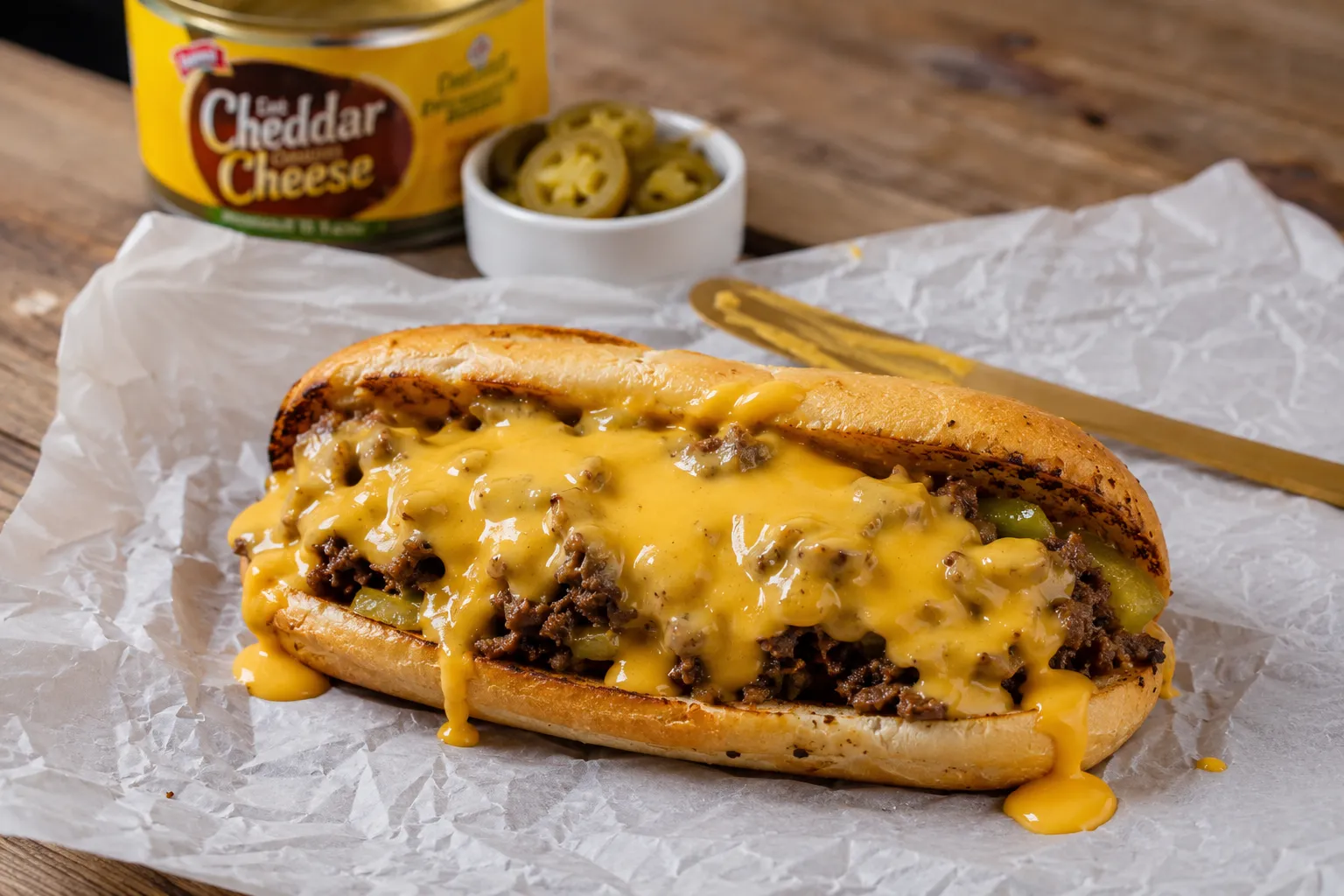
Finally, pouring a hot, thinned-out liquid cheese sauce over the top completely seals the deal.
This double-cheese method creates a rich, fatty barrier that coats the toasted bread and prevents it from turning soggy.
Four Crucial Components for Sandwich Perfection
Choosing the right foundational ingredients guarantees your homemade sandwiches taste like they came from a professional deli.
Ribeye Steak: This specific cut is absolutely non-negotiable because of its incredible, rich fat marbling. The fat rapidly renders out on the hot griddle, frying the meat in its own juices for maximum beef flavor.
Yellow Onion and Green Bell Pepper: These classic aromatics provide a necessary, sweet crunch that cuts right through the heavy dairy and fatty beef. Cooking them just until they soften slightly maintains their bright vegetal snap.
Provolone Cheese: You need a mild, highly meltable sliced cheese to bind the loose meat and vegetables together on the flat top. It creates an essential structural web that holds the filling inside the bread when you pick it up.
Condensed Cheese Sauce: We use a canned cheddar base thinned with hot chicken broth to create a perfectly pourable, luxurious liquid topping. The chicken broth adds a savory depth that water simply cannot provide to the creamy sauce.
Simple Swaps and Dietary Tweaks
This highly adaptable griddle recipe is incredibly easy to customize based on what you already have sitting in the fridge.
If you cannot find a well-marbled ribeye, a thinly sliced top sirloin or flank steak will also work beautifully.
Need to skip the heavy red meat entirely?
You can easily substitute the beef with shaved chicken breast to create a fantastic, lighter chicken cheesesteak.
If you want to introduce a spicy, acidic kick to wake up your palate, toss a handful of pickled jalapeños onto the griddle.
You can also swap the mild provolone for a sharp white cheddar or traditional Cheez Whiz if you prefer a sharper dairy bite.
For a gluten-free household, simply serve the hot meat and cheese mixture directly over a bed of crispy french fries or a baked potato.
Foolproof Techniques for a Flawless Sear
Following a few strict stovetop rules will guarantee your meat sears perfectly instead of boiling in its own juices.
Freeze the Meat: You absolutely must place your steak in the freezer for about thirty minutes before you attempt to slice it. The semi-frozen, firm texture allows your chef’s knife to glide cleanly, yielding those paper-thin shavings required for a fast sear.
Use the Steam Trick: Do not skip tossing a tiny splash of water onto the griddle right before covering your cheese-topped meat. This trapped steam instantly melts the sliced cheese into every single crevice of the beef without overcooking the steak.
Toast the Bread: You must heavily butter the inside of your hoagie rolls and toast them face-down on the hot cooking surface. This creates a sturdy, crispy crust that prevents the liquid cheese and meat juices from immediately dissolving the soft bread.
Storing and Reheating Your Leftovers
While these massive sandwiches are truly best enjoyed piping hot right off the griddle, you can certainly save the filling for later.
Store any leftover, un-bunned meat and vegetable mixture in an airtight container in the coldest part of your refrigerator.
When properly sealed, the savory filling will stay incredibly fresh and delicious for up to three days.
Always store the liquid cheese sauce in a separate, sealed container so it does not turn the meat into a greasy block.
We strongly advise against freezing the cooked peppers and onions, as they will turn completely to mush when thawed.
When you are ready to reheat, strictly avoid the microwave if you want to keep the beef tender and juicy.
ADVERTISEMENT
