ADVERTISEMENT
9. Support the main stem by avoiding unnecessary pruning
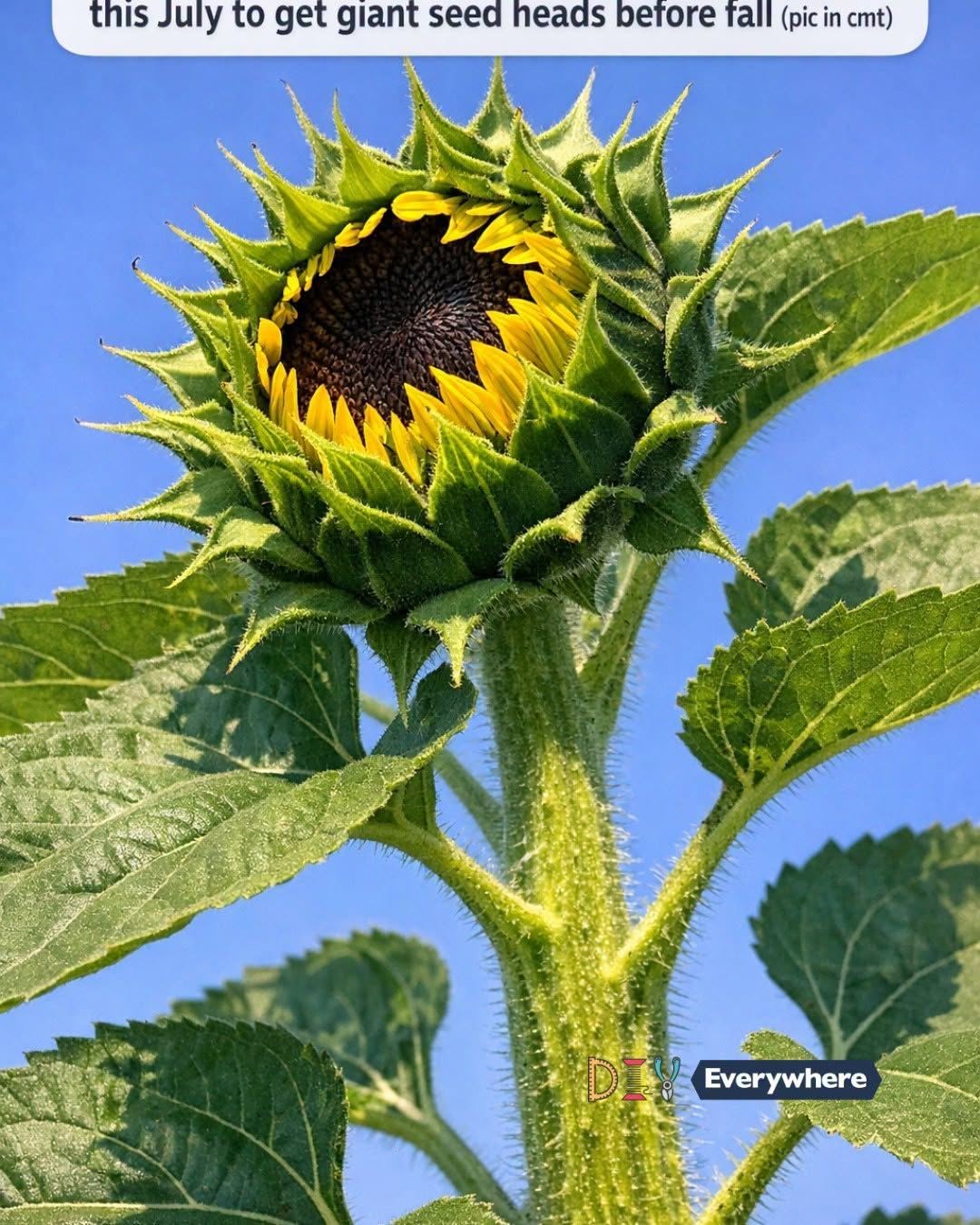
If your goal is a giant central seed head, don’t prune the main stem or pinch the growing tip on single-stem varieties. That tip is where the major flower head is forming, and damaging it will reduce size or force the plant into side branching. Many gardeners pinch other ornamentals in early summer, so it’s worth saying plainly: giant sunflowers are not the crop to pinch if you want one enormous head.
You can remove yellowing lower leaves if they’re spent or diseased, but keep as much healthy foliage as possible. Those broad leaves are the plant’s energy factories. The bigger and healthier the leaf canopy in July, the more resources the plant can channel into a thick stalk, a larger bloom disk, and eventually a fuller seed set.
10. Monitor bud development and adjust care as the head forms
Once you see the flower bud beginning to swell at the top of the stem, shift from general summer maintenance to more focused support. This is when uneven watering can lead to stress, and stress can mean smaller heads or patchier seed fill later. Don’t let the soil swing from bone dry to soggy. Try to keep moisture consistent week to week.
At this stage, I also check ties, stake height, and stem straightness every few days. A sunflower head can gain surprising weight as it enlarges. If the stem starts to bend, add support before it kinks. Small interventions in July often prevent major disappointment in August and September.
11. Protect pollinators so the seed head fills properly
A giant sunflower head is only impressive if it fills in well, and that depends in large part on pollination. Bees, especially native bees and bumblebees, do a tremendous amount of work on sunflower disks. Avoid spraying insecticides on open blooms, and if you’re managing pests nearby on other plants, be mindful of drift.
If you have room, a shallow water source with pebbles, or nearby herbs such as basil, dill, or oregano in bloom, can help keep pollinators active in the garden. I notice better seed fill when the whole yard functions as a pollinator-friendly space rather than a collection of isolated plants. Even in a compact urban garden, that makes a difference.
12. Plan ahead for bird pressure before seeds begin to mature
It may feel early in July, but if your sunflowers are progressing quickly, now is the time to think about blackbirds, finches, squirrels, and other seed thieves. Once the petals fade and seeds start to firm up, wildlife can strip a head much faster than many gardeners expect. Giant heads are especially conspicuous.
I don’t cover plants while they’re actively flowering because pollinators still need access, but I do gather supplies in advance. Mesh produce bags, paper bags with ventilation holes, or lightweight garden netting can be used later when the backs of the flower heads turn yellow and the seeds begin to plump. Planning now means you won’t be scrambling when the birds discover your best sunflower first.
13. Know the signs that your July care is working
Healthy sunflowers in midsummer should have thick, upright stems; broad, mostly unblemished leaves; steady height growth; and a visible bud or developing head appropriate to the variety. Leaves should be medium to deep green, not pale lemon or scorched bronze except perhaps at the very bottom on older growth. The plant should feel anchored and not wobble excessively in the soil.
If you’re seeing thin stems, rapid wilting by noon that doesn’t recover by evening, tiny buds, or yellowing spreading upward from the base, reassess quickly. Usually the problem comes back to one of four issues: too little water, root competition, nutrient imbalance, or pest pressure. July gives you a narrow but important window to correct those problems before the final head size is set.
14. Match expectations to the variety you planted
Not every sunflower is bred to produce a giant seed head, and this is something I remind friends of every year. Pollenless florist types, dwarf patio varieties, and branching ornamental cultivars often produce multiple flowers rather than one huge disk. They’re beautiful, but they won’t suddenly become county-fair giants no matter how carefully you water them.
If you planted a true giant variety, a large mature head might measure 10 to 16 inches across, and sometimes more under excellent conditions. If you planted a branching cultivar, you may get several 4- to 8-inch heads instead. Good July care still matters enormously, but understanding the genetics of your variety helps you judge progress realistically and avoid chasing results the plant was never meant to deliver.
ADVERTISEMENT
