ADVERTISEMENT
When the Rainbow Isn’t Enough
Iridescence doesn’t guarantee safety. Spoilage can still occur alongside the shimmer, and ignoring other warning signs is risky. Deli meats can harbor pathogens like Listeria monocytogenes, which thrive in refrigerated environments. Unlike the rainbow, spoilage is caused by chemical and biological changes.
How to Judge Freshness
- Texture: Fresh ham should be firm and slightly moist. Sliminess, tackiness, or a stringy film indicates spoilage.
- Smell: Mild, salty, or smoky aromas are normal. Sharp, sour, or sulfur-like odors signal bacterial growth. Trust your nose.
- Color: Iridescence shifts with light, but true spoilage leaves permanent changes. Gray, brown, or fuzzy mold patches mean the meat has gone bad.
- Time: Even ham that looks fine has limits. The USDA recommends eating opened deli meats within 3–5 days. Listeria can grow silently, making this guideline essential.
Storage Matters
Wrap ham tightly in foil or plastic, then place it in an airtight container. The fridge’s meat drawer—slightly cooler than the rest—helps preserve texture and flavor. Remember: proper storage extends freshness, not safety.
The Bottom Line
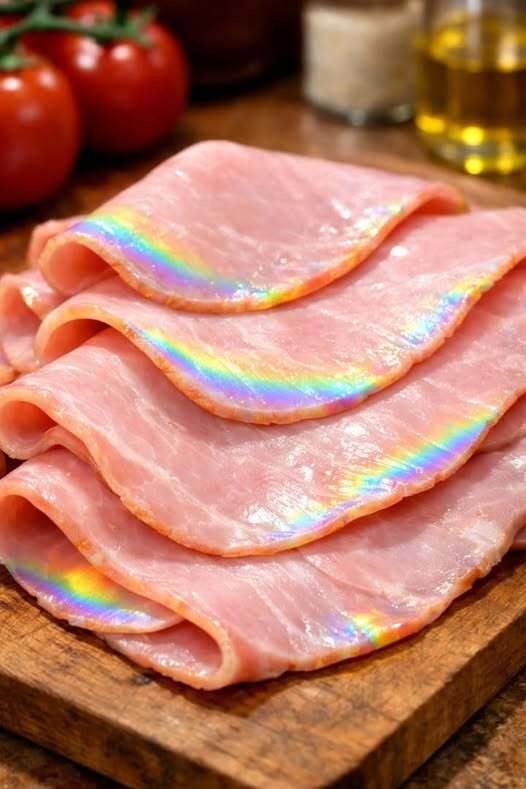
That shimmering rainbow? Just a quirk of physics, not a toxic warning. It’s muscle fibers bending light, not bacteria at work. But don’t let the glow distract you from real spoilage: if your ham is slimy, smells sour, or is past its prime, it’s unsafe. By combining scientific understanding with sensory checks, you can enjoy your sandwich confidently—feeding yourself, not microbes.
ADVERTISEMENT
