ADVERTISEMENT
2. Honey – Antifungal Protector and Energy Booster
Raw honey contains natural enzymes, sugars, and antibacterial compounds (e.g., hydrogen peroxide from glucose oxidase). It prevents rot on cuttings while providing a mild energy source for the healing process.
Preparation and Use
- Mix 1-2 tablespoons raw, organic honey in 1-2 cups warm (not boiling) water.
- Let cool.
- Dip the cut end of the cutting in the solution for a few seconds to hours (longer soaks for tougher stems).
- Some gardeners dip in honey, let dry slightly, then dust with cinnamon for double protection.
- Plant in moist soil or water.
Best For
Most cuttings, especially prone to rot: succulents, roses, lavender, woody herbs.
Pros
Excellent antifungal; widely available; combines well with other methods.
Cons
Not a true hormone; pure honey can be too concentrated and harm tissues — always dilute.
3. Cinnamon – Natural Antifungal Powder
Cinnamon (especially true Ceylon) has strong antifungal properties from compounds like cinnamaldehyde. It doesn’t contain rooting hormones but prevents damping-off and rot, allowing the cutting’s natural auxins to work.
Preparation and Use
- Use ground cinnamon (organic if possible).
- Dip the moist cut end directly into powder, or sprinkle into the planting hole.
- For extra boost: Dip in honey/water first, then cinnamon.
- Plant immediately in soil (preferred over water for this method).
Best For
Fungus-prone cuttings: orchids, succulents, houseplants like monstera or philodendron.
Pros
Simple, cheap, immediate protection.
Cons
No direct hormone stimulation; grocery cinnamon may vary in potency.
4. Aloe Vera Gel – Healing Gel with Mild Hormones
Fresh aloe vera gel contains salicylic acid, gibberellins, and other compounds that promote healing and mild root stimulation, plus moisturizing properties.
Preparation and Use
- Cut a fresh aloe leaf, scoop out the clear gel.
- Mash or blend into a smooth consistency (add a little water if thick).
- Dip the cutting end directly in the gel.
- Plant in soil or water.
Best For
Tender or succulent cuttings: begonias, African violets, herbs.
Pros
Soothing, moisturizing; natural healing.
Cons
Milder effect; gel spoils quickly (use fresh).
Combining Methods and Best Practices for Maximum Success
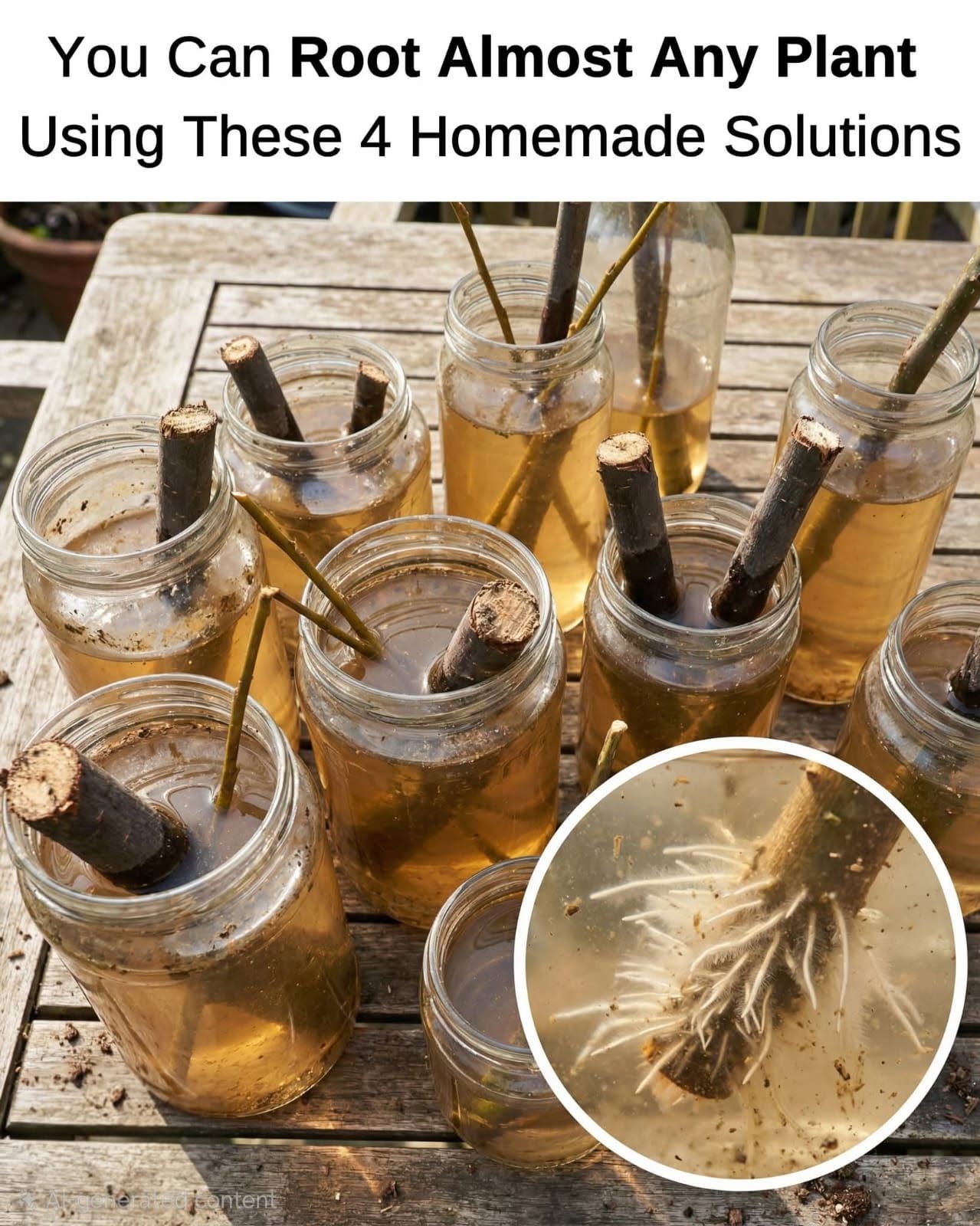
For stubborn cuttings, layer approaches: Soak in willow water, dip in honey, dust with cinnamon. Maintain high humidity (plastic bag dome), indirect light, and consistent moisture without sogginess. Take cuttings in morning from healthy plants, cut at 45° angle below a node, remove lower leaves.
Water vs. Soil: Water is faster and more visual (great for beginners), but transition roots to soil before they get too long to avoid shock. Soil roots are typically stronger.
Patience is key — roots can take 2-8 weeks. Track experiments with controls (untreated cuttings) to see what works best in your conditions.
With these four solutions, you’ll propagate more plants successfully and sustainably. Happy gardening — turn one plant into dozens!
ADVERTISEMENT
