ADVERTISEMENT
In our fast-paced world, it’s easy to overlook the regular maintenance and replacement of everyday items. However, failing to replace certain items in a timely manner can lead to inefficiencies, health risks, and even safety hazards. Understanding the lifespan of common household and personal items can help you maintain a healthier and more efficient lifestyle.
From toothbrushes to car tires, each item has a recommended replacement schedule that ensures optimal performance and hygiene. In this article, we will explore the recommended timelines for replacing various items and the reasons why adhering to these schedules is crucial. By staying informed, you can avoid common pitfalls and ensure that your possessions serve you well.
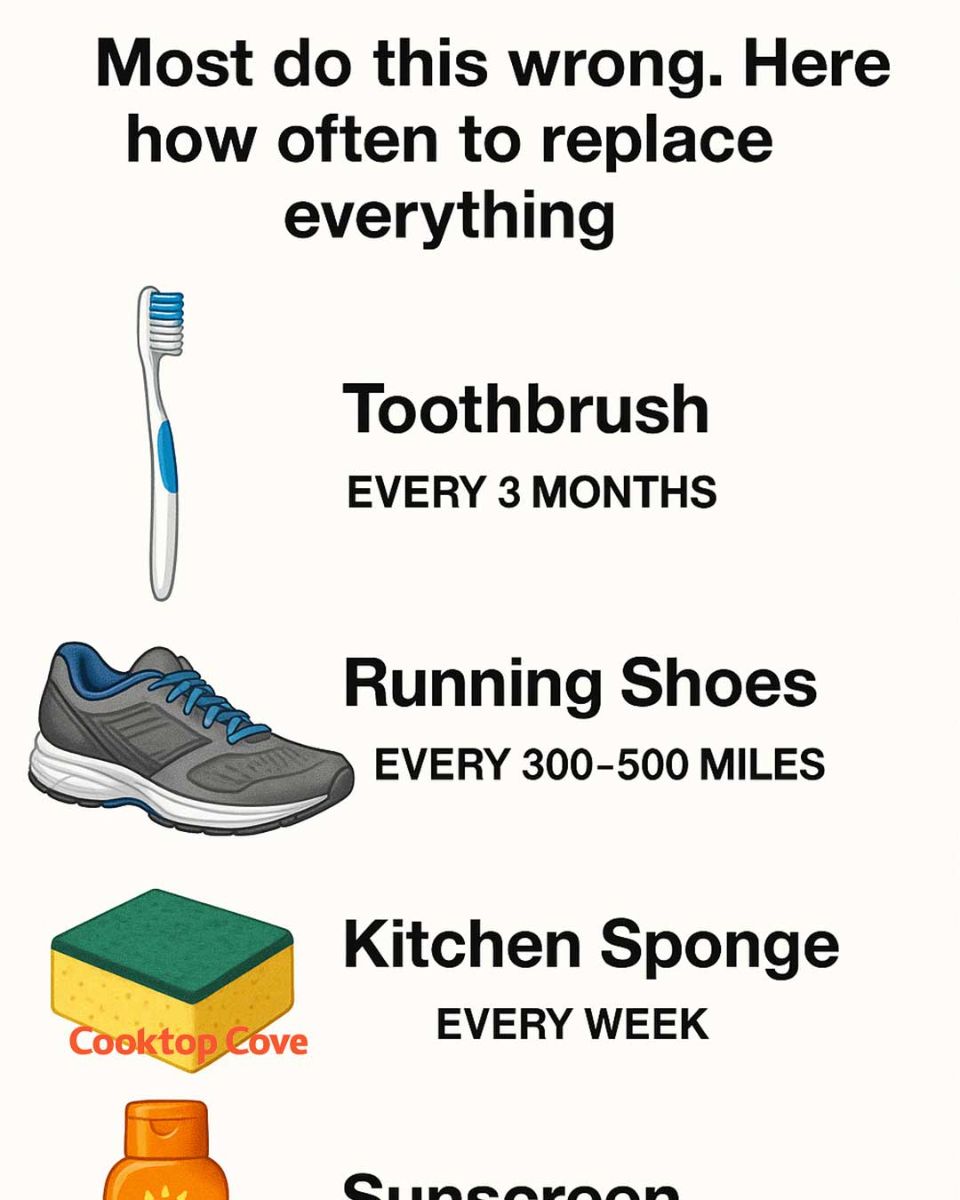
1. Toothbrush: Replace Every 3 Months
Dentists recommend replacing your toothbrush every three months to maintain optimal oral hygiene. Over time, toothbrush bristles become frayed and less effective at removing plaque and debris from your teeth and gums. A worn-out toothbrush can also harbor bacteria, which may lead to oral infections.
To ensure you remember to replace your toothbrush regularly, consider setting a reminder on your phone or marking the date on your calendar. Additionally, if you have been sick, it’s wise to replace your toothbrush sooner to prevent reinfection.
2. Running Shoes: Replace Every 300-500 Miles
Running shoes are designed to provide support and cushioning, but they lose their effectiveness after 300 to 500 miles of use. The exact mileage can vary depending on factors such as your running style, weight, and the surfaces you run on. Worn-out shoes can lead to discomfort and increase the risk of injury.
To track the mileage on your running shoes, consider using a running app or keeping a log of your runs. Pay attention to signs of wear, such as thinning soles or uneven tread, which indicate it’s time for a new pair.
3. Kitchen Sponge: Replace Every Week
Kitchen sponges are notorious for harboring bacteria due to their moist and porous nature. To minimize the risk of spreading germs, it’s recommended to replace your kitchen sponge every week. Even with regular cleaning, sponges can become breeding grounds for harmful bacteria.
To extend the life of your sponge between replacements, you can sanitize it by microwaving it for one minute or soaking it in a bleach solution. However, these methods do not eliminate the need for regular replacement.
4. Sunscreen: Replace Every Year
Sunscreen is essential for protecting your skin from harmful UV rays, but it loses its effectiveness over time. Most sunscreens have an expiration date printed on the bottle, typically around three years from the manufacturing date. However, once opened, it’s best to replace sunscreen every year.
Exposure to heat and sunlight can degrade the active ingredients in sunscreen, reducing its protective capabilities. To ensure your sunscreen is effective, store it in a cool, dry place and check for changes in texture or smell, which can indicate spoilage.
5. Pillows: Replace Every 1-2 Years
see next page
ADVERTISEMENT
ADVERTISEMENT
