ADVERTISEMENT
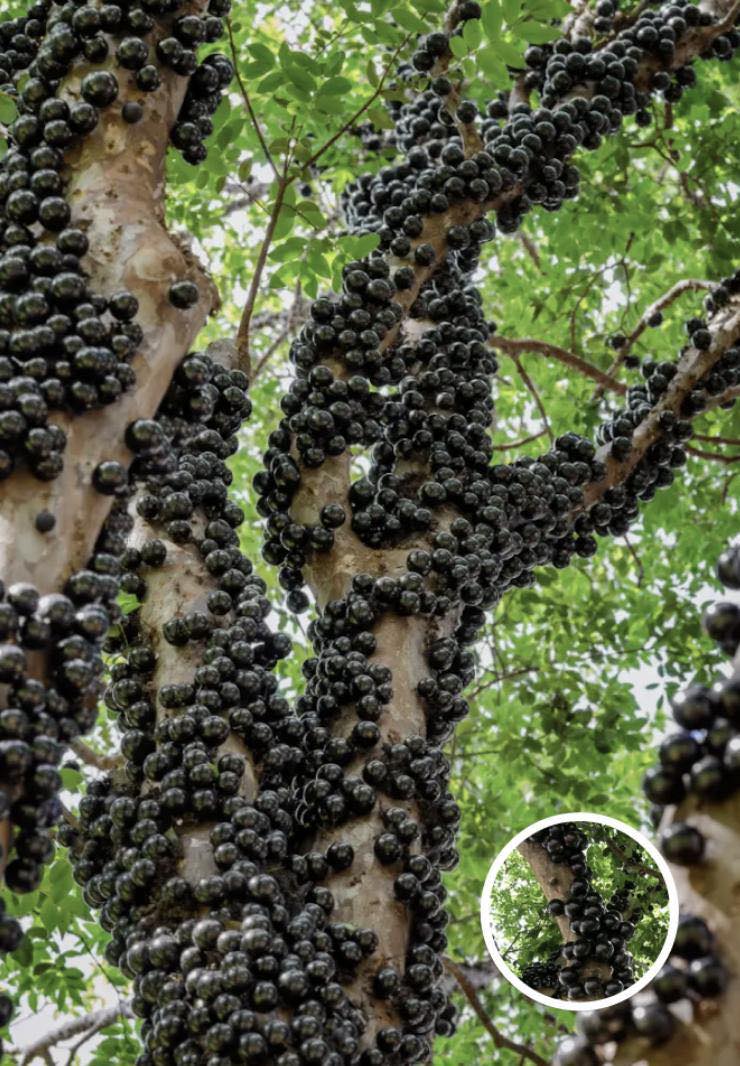
In a world where nature never ceases to amaze, there exists a tree so curious, so magical, that it seems plucked from the pages of a fairytale. Imagine a thick, rugged trunk completely studded with clusters of plump, glossy, purple fruits—grape-like in appearance, but unlike any grape you’ve ever tasted. This is the jabuticaba tree, one of South America’s most fascinating botanical wonders.
While much of the Western world is only now discovering this marvel, the jabuticaba (pronounced zha-boo-chee-KAH-bah) has been enchanting locals in Brazil for centuries. And once you learn more about it, you may find yourself just as mesmerized.
A Fruit That Grows Where You Least Expect It
What sets the jabuticaba tree apart isn’t just the taste of its fruit—though that’s certainly something to savor. The real showstopper is where the fruit grows. Unlike typical fruit trees that produce on branches or stems, the jabuticaba bears its fruit directly on its trunk and larger branches.
Clusters of deep purple, glossy orbs emerge straight from the bark like something out of science fiction—or perhaps a Dr. Seuss illustration. This unusual botanical trait is called cauliflory, a rare flowering and fruiting behavior in which plants produce blooms and fruits directly on their main woody structures.
Cauliflory is extremely rare, seen in only a handful of plant species worldwide. But the jabuticaba takes it to another level—its trunk can become so densely packed with fruit that the bark underneath is barely visible.
A Taste of the Tropics
The jabuticaba is native to Brazil, where it thrives in warm, humid conditions. It also grows in parts of Paraguay, Argentina, and Bolivia. The fruit itself is about the size of a large marble, with a rich purple-black skin and a translucent white pulp inside.
Described by locals as having a flavor somewhere between grapes, lychees, and plums, the fruit is sweet, tart, and incredibly juicy. It’s most commonly eaten fresh off the tree, but locals also use it to make everything from homemade jams and jellies to juices, liqueurs, and even wine.
Like grapes, jabuticaba fruits ferment quickly, often within just a few days of ripening. That makes them difficult to export, which is one reason the fruit—and the tree—remains relatively obscure outside South America.
But in the regions where it grows, the jabuticaba is more than just a plant. It’s a cultural staple, a centerpiece of gardens, and a beloved backyard treat shared with friends and family.
What’s in a Name?
The name “jabuticaba” originates from the Tupi language, spoken by Indigenous peoples of Brazil. It roughly translates to “place of tortoises”—a nod, some believe, to the turtle-like appearance of the tree when laden with fruit, or perhaps to its habitat, which was often shared with native tortoise populations.
Adding to the imagery, the white flesh of the fruit is sometimes affectionately referred to as “turtle fat”, a nickname that reflects its color and creamy texture.
From Salmon to Forest Green: The Tree’s Changing Leaves
The jabuticaba tree isn’t just known for its fruit. It’s also admired for its ornamental beauty. New leaves emerge in striking salmon-pink hues, slowly deepening into rich, glossy green as they mature. In full bloom, the tree produces delicate white flowers, which sprout directly from the trunk just before the fruit appears.
The tree’s fruiting cycle is quick—with ripe fruit typically appearing within 20 to 25 days of flowering. This rapid transformation makes it a thrilling plant to observe, especially for children or garden enthusiasts who enjoy watching a plant come to life.
see next page
ADVERTISEMENT
