ADVERTISEMENT
The Subtle Clue You’ve Been Ignoring on Your Own Hand
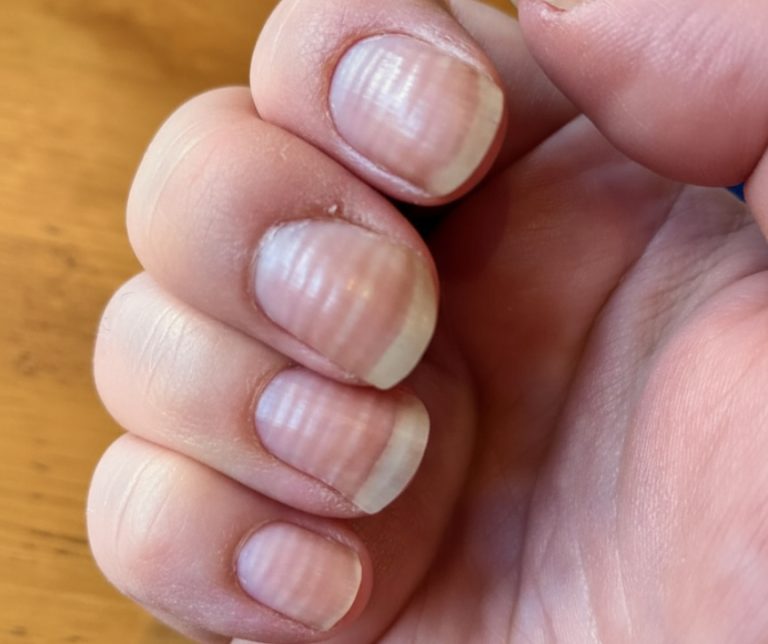
Look down at your hands. If you’re like most people, you’ll notice tiny, raised lines running along the surface of your fingernails. Perhaps you’ve worried about them, thinking they signify a serious internal problem, or maybe you’ve just dismissed them as an annoying cosmetic flaw.
Those tiny grooves are far more common than you think. And while they usually hold a reassuring, simple answer, sometimes, they are the first, quiet signal your body sends when something is fundamentally wrong inside.
our nails are often seen as just keratin—a tough material for scratching and opening cans. But they are actually a continuous diagnostic window. The appearance of your nails—their color, their strength, and their texture—can reflect changes in your health long before other symptoms appear.
This is your guide to decoding the subtle language of your nails: understanding the difference between normal, harmless “nail wrinkles” and the urgent, visible signs of internal stress or disease.
Vertical vs. Horizontal: Understanding the Two Faces of a Ridge
Nail ridges are grooves or lines that appear on the nail plate. To decode their meaning, you first need to determine their direction:
Vertical Ridges (Longitudinal): Lines running from the cuticle (base) toward the tip of the nail. These are by far the most common type and, almost universally, are harmless.
Horizontal Ridges (Transverse): Lines running across the nail, from side to side. These are significantly less common and require more careful attention, as they often signal a physical event or systemic pause in growth.
If you are worried about lines on your nails, breathe a sigh of relief: Statistically, you have the harmless kind.
The Comforting Truth: Why Vertical Ridges Are Just “Nail Wrinkles”
If your nail lines run lengthwise—from the base to the tip—they are typically just a natural part of being a living, aging human. Think of them as the wrinkles of your nails:
1. The Natural Timeline of Aging
As the body ages, the production of keratin—the protein that makes up the nail plate—becomes less uniform. This uneven deposition results in subtle grooves. Just as wrinkles appear on the skin, these ridges appear on the nails. They are simply a sign of time and maturity.
2. The Dehydration Drain
The nail plate is porous and highly sensitive to moisture levels. When your body or your nails lack proper hydration, the ridges become far more visible and prominent. Common culprits for this dehydration include:
Excessive use of harsh soaps and frequent handwashing.
The dry, cold air of winter.
ADVERTISEMENT
