ADVERTISEMENT
The envelope appeared on a Tuesday morning in October, pushed under my apartment door while I was still asleep.
My name was written across the cream-colored paper in handwriting I did not know. But the return address made my stomach tighten before I even opened it.
Riverside Memorial Hospital.
Inside was a short note that reached straight through the distance I had spent three months building.
“Mr. Davidson, your ex-wife Rebecca listed you as her emergency contact. She has been admitted and is asking for you.”
Three months.
That was how long it had been since the divorce became final. Three months since I walked out of the courthouse believing I had finally escaped a marriage that had slowly exhausted both of us.
Rebecca and I had spent our final year together like two strangers sharing the same roof. We spoke through lawyers, through cold discussions about bills, furniture, bank accounts, and which pieces of our life each of us would take away.
But the drive to the hospital felt like driving backward through time.
Every mile brought something back.
Rebecca laughing on our first date. Rebecca waking me up with coffee and terrible singing. Rebecca standing barefoot in the kitchen before our home turned quiet. Before silence settled over everything like dust on furniture no one touched anymore.
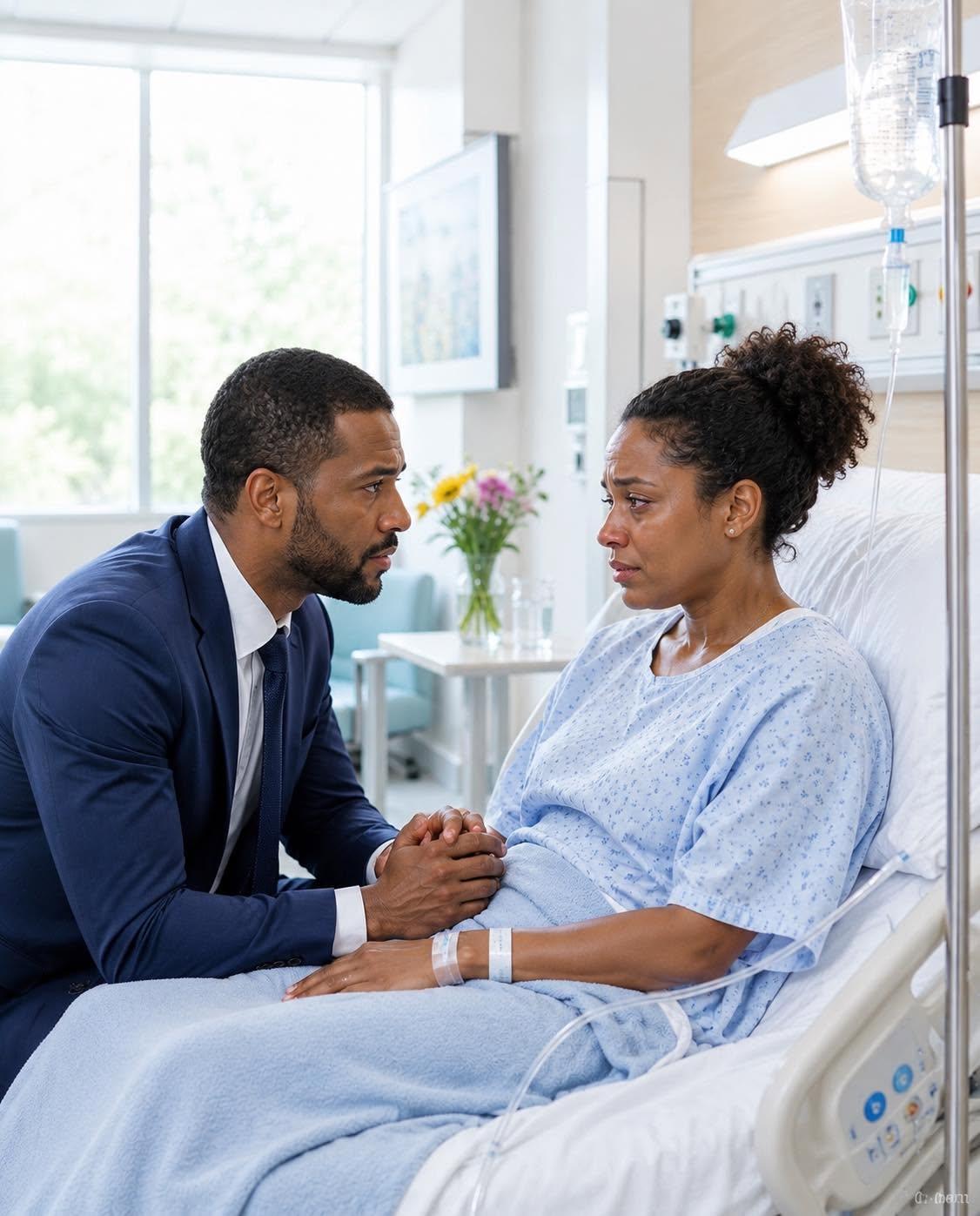
I found her in the cardiac unit.
She was sitting near the window in a hospital gown that made her look smaller than I remembered. Her dark hair, once always neatly styled, hung loose around her shoulders. The confidence that had drawn me to her seven years earlier was gone. In its place was someone fragile, tired, and unsure of whether she had the right to ask me for anything.
“You came,” she said when she saw me in the doorway.
There was surprise in her voice.
And relief.
“The hospital contacted me,” I said. “They said you were asking for me.”
I stayed near the door, not knowing if I was still allowed to come closer.
Rebecca nodded and twisted the edge of her blanket between her fingers.
“I didn’t know who else to put down as an emergency contact,” she said. “My parents are gone. My sister lives across the country. I guess some habits outlive the marriage.”
The awkwardness stretched between us.
We had once shared a bed, a home, a future.
Now even a simple conversation felt like crossing broken glass.
“What happened?” I asked, finally stepping closer.
For a long moment, she said nothing.
Then her voice dropped to a whisper.
“My heart stopped, David. I collapsed at work. The doctors think it had something to do with how I’d been using my prescriptions.”
The words stayed in the air between us.
“What prescriptions?”
She turned toward the window instead of answering directly.
“Different ones,” she said. “Too many. They’re still trying to sort everything out.”
Over the next hour, Rebecca began giving me pieces of a life I had lived beside but never truly seen.
At first, she spoke carefully, as if each sentence had to be dragged out from somewhere painful. Then the words came faster, as though they had been locked inside her for years.
She told me about anxiety that had started in college and slowly tightened its grip over time. She told me about panic attacks at work, nights without sleep, mornings when her mind was already exhausted before the day even began.
She told me how she had looked for help at first.
Then how help had slowly turned into dependence when fear became louder than reason.
“At first, it worked,” she said. “Then the fear came back. And every time something stopped helping, I went looking for another answer.”
I listened in stunned silence as she described how alone she had been.
Different doctors.
Different prescriptions.
Different versions of the truth hidden from different people.
ADVERTISEMENT
