ADVERTISEMENT
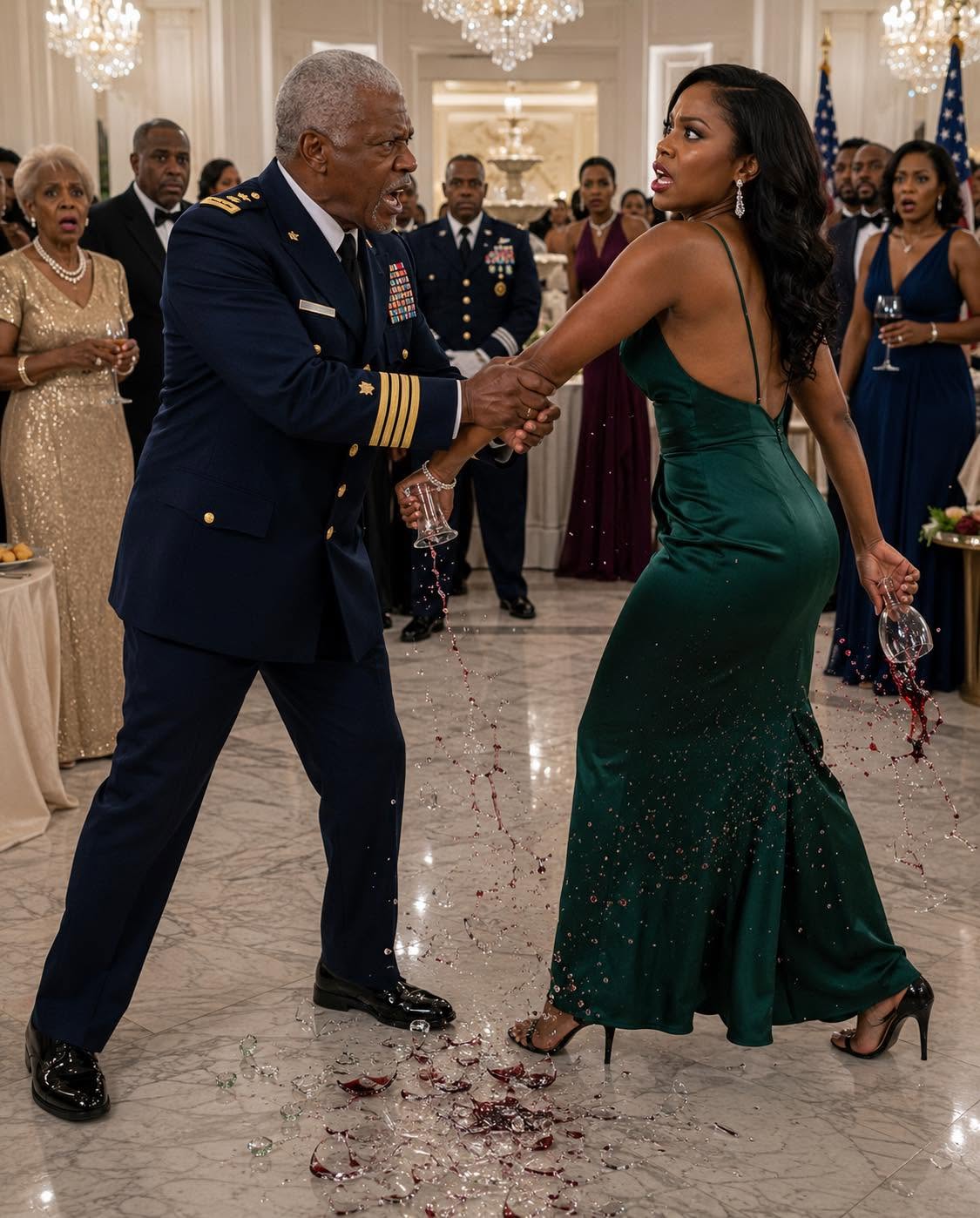
A voice came through clear enough for the first row to hear, and before he could lower my hand, the room heard the first word.
“Stand down.”
Admiral Hawthorne froze.
Not paused.
Froze.
His fingers loosened around my wrist as if someone had cut the strings holding his authority together.
The voice in his earpiece continued, calm and absolute.
“Release Ms. Caldwell immediately. The Secretary wants her escorted to the dais.”
The ballroom did not breathe.
Hawthorne let go of me.
The mark of his hand remained around my wrist, red against my skin.
I looked down at it once.
Then I looked back at him.
“You were warned,” I said softly.
His face had gone pale beneath the careful tan.
“Miss Caldwell,” he began, suddenly remembering manners, “there appears to have been a misunderstanding.”
“No,” I said. “There appears to have been a witness.”
At the edge of the dance floor, Bryce’s smile disappeared.
Victoria stopped pretending to look bored.
For the first time that evening, my half brother looked exactly like what he was.
A man who had planned a public humiliation and forgotten public rooms have doors he did not control.
Two uniformed aides appeared near the stage.
Behind them came Rear Admiral Lena Ortiz, the Secretary’s chief of staff, silver hair pinned tight, face unreadable.
She crossed the marble floor without rushing.
People moved before she reached them.
Not because she asked.
Because real authority has gravity.
She stopped beside us and looked at my wrist.
Then at Hawthorne.
“Admiral,” she said, “you will accompany Commander Price to the side conference room.”
His jaw tightened.
“Admiral Ortiz, I was acting on a security concern.”
She did not blink.
“Then you should have contacted security.”
Bryce took one step back.
Small.
Almost invisible.
I saw it.
So did Ortiz.
Her eyes moved to him for half a second, then returned to Hawthorne.
Commander Price, a broad man in dress blues, appeared at Hawthorne’s shoulder.
“Sir.”
Hawthorne stared at me like I had personally stolen the floor from under him.
Then he turned and walked away under escort.
No one clapped.
No one whispered.
No one knew what was safe yet.
That was always the funny thing about powerful rooms.
They did not follow morality.
They followed temperature.
Rear Admiral Ortiz faced me.
“Ms. Caldwell, the Secretary apologizes for the delay. Please come with me.”
I bent down and picked up the broken champagne flute stem.
Ortiz’s eyebrow lifted slightly.
“Evidence,” I said.
Her mouth almost smiled.
“Wise.”
I placed it on a folded napkin and handed it to the nearest protocol aide.
“Please preserve this.”
The aide looked terrified but nodded.
As I walked beside Ortiz toward the dais, the ballroom parted.
Three hundred people suddenly discovered my name mattered.
Some recognized it.
Some remembered my father.
Some finally began asking themselves why Bryce Caldwell looked like a man watching a safe crack open from the inside.
The Secretary of the Navy stood near the center table.
Margaret Vale was smaller than television made her look.
Sharper too.
She wore dark blue silk, no unnecessary jewelry, and the expression of a woman who had spent a lifetime letting louder people underestimate her.
When I reached her, she took my uninjured hand.
“Evelyn Caldwell,” she said, loud enough for the nearest tables to hear, “your father trusted your judgment. So do I.”
A murmur passed through the room.
Bryce’s face turned gray.
Victoria’s hand flew to her diamonds.
The Secretary turned toward the microphone.
The quartet stayed silent.
The ice sculpture dripped beside the seafood table.
The banner above us still read HONOR ABOVE ALL.
Secretary Vale tapped the microphone once.
“Ladies and gentlemen, before tonight’s program continues, we must correct a serious breach of protocol and conduct.”
No one moved.
“Ms. Evelyn Caldwell is not an uninvited guest. She is the duly appointed interim trustee and independent review officer of the Caldwell Naval Heritage Foundation.”
The words rolled across the ballroom like thunder.
I watched Bryce absorb them.
Interim trustee.
Independent review officer.
Not grieving daughter.
Not inconvenient sister.
Not woman in a blue dress.
Review officer.
The Secretary continued.
“Her invitation was confirmed through my office, the protocol office, and the foundation’s legal counsel.”
She paused.
“Any claim otherwise was false.”
Victoria closed her eyes.
Bryce looked toward the nearest exit.
Commander Price was already standing there.
Good.
Some exits should be decorative only.
Secretary Vale turned slightly toward me.
“Ms. Caldwell, would you like to speak now or after the formal dinner?”
I looked across the room.
At Bryce.
At Victoria.
At the table of donors whose checks had built scholarships meant for children of sailors who never came home.
At the smiling banners, the polished centerpieces, the expensive gowns, the medals.
Then I looked at my wrist.
“Now,” I said.
The Secretary stepped aside.
I moved to the microphone.
My hand did not shake.
That surprised me.
Or maybe it did not.
Grief had been shaking for me for months.
“My father, Admiral Stephen Caldwell, founded the Caldwell Naval Heritage Foundation twenty-one years ago,” I began.
The room softened at his name.
My father had been beloved in the way public men often are.
But he had also been private, exacting, and stubborn enough to write protections into every structure he built.
That stubbornness had saved me.
“He believed memory was not decoration,” I said. “He believed legacy had to do work.”
I opened my clutch and removed the cream folder.
Bryce stared at it.
He knew that folder.
He had tried to take it from my father’s study three days earlier.
“He left instructions before his death,” I continued. “Those
ADVERTISEMENT
