ADVERTISEMENT
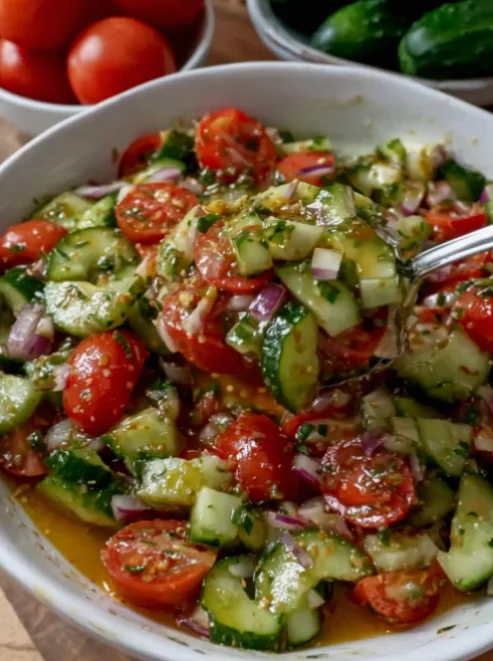
As the temperature rises and summer days become longer, there is nothing quite as refreshing as a Fresh Cucumber and Tomato Salad. This vibrant salad not only bursts with color but also celebrates the simplicity of fresh, seasonal ingredients. Known for its lightness and zest, this salad is a staple in many Mediterranean households, where it is often served as a side dish or a light meal during warm weather. The combination of crisp cucumbers and juicy tomatoes creates a delightful crunch, while the dressing adds a tangy finish that complements the vegetables beautifully. Perfect for picnics, barbecues, or a quick lunch, this salad is a go-to for anyone looking to enjoy healthy, uncomplicated dishes that embrace the flavors of summer.
Ingredients
- For the Salad:
- 4 cups of fresh cucumbers, diced (about 2 large cucumbers)
- 3 cups of ripe tomatoes, diced (about 4 medium tomatoes)
- 1 cup of red onion, thinly sliced
- 1 cup of bell pepper, diced (any color, for added flavor)
- 1/4 cup of fresh parsley, chopped
- 1/4 cup of fresh basil, chopped
- For the Dressing:
- 1/4 cup of extra virgin olive oil
- 2 tablespoons of red wine vinegar (adjust to taste)
- 1 teaspoon of Dijon mustard
- 1 clove of garlic, minced (optional, for a punch of flavor)
- Salt and pepper to taste
When selecting your vegetables, opt for the freshest produce available. Organic cucumbers and tomatoes are particularly flavorful and offer the best crunch and juiciness. If you prefer, you can also use cherry tomatoes for an extra burst of sweetness.
Steps / Instructions
- Prepare the Vegetables: Start by washing all your vegetables thoroughly under cold running water to remove any dirt. Peel the cucumbers if desired, then chop them into bite-sized pieces. Dice the tomatoes, ensuring to remove any excess seeds to prevent the salad from being watery.
- Slice the Onion and Pepper: Thinly slice the red onion and dice the bell pepper. The onion should be thin enough to blend seamlessly with the other ingredients, while the bell pepper adds a nice crunch.
- Chop the Herbs: Finely chop the fresh parsley and basil. These herbs will elevate the flavor profile of your Fresh Cucumber and Tomato Salad and provide a refreshing aroma.
- Mix the Salad: In a large mixing bowl, combine the diced cucumbers, tomatoes, sliced onion, bell pepper, and chopped herbs. Toss gently to ensure an even distribution of the ingredients.
- Prepare the Dressing: In a small bowl, whisk together the olive oil, red wine vinegar, Dijon mustard, and minced garlic (if using). Season with salt and pepper to taste. Adjust the vinegar or mustard according to your preference for tanginess.
- Dress the Salad: Pour the dressing over the salad mixture. Gently toss the salad again to coat all the ingredients with the dressing evenly. Allow the salad to sit for about 10-15 minutes at room temperature to let the flavors meld together.
- Serve and Enjoy: Serve the salad chilled or at room temperature. It’s great on its own or as an accompaniment to grilled meats or fish.
Tips & Tricks
To ensure your Fresh Cucumber and Tomato Salad remains crisp and fresh, avoid dressing it too far in advance; dress it just before serving or shortly before. If you have leftovers, store them in an airtight container in the refrigerator for up to 2 days. Note that the vegetables may soften over time, so it’s best enjoyed fresh. Check out our related guide for more tips.
For a make-ahead option, chop the vegetables and prepare the dressing separately. Combine them just before serving for the best texture. If you’re looking to add a crunchy element, consider topping your salad with toasted nuts, such as pine nuts or slivered almonds, or even crumbled feta cheese for a Mediterranean twist.
Variations
Feel free to customize this salad to suit your tastes! You can add avocado for creaminess, substitute cherry tomatoes for diced tomatoes for a sweeter flavor, or incorporate olives for a briny note. To make it vegan, ensure that any additional ingredients, like cheese, are omitted or replaced with vegan alternatives.
If you’re looking to spice things up, consider adding diced jalapeños or a sprinkle of red pepper flakes for a kick. Explore the world of Mediterranean salad recipes for inspiration on how to diversify your salads.
ADVERTISEMENT
