ADVERTISEMENT
The Science of “Cold” Potatoes
Taking the time to understand exactly how temperature affects starch is critical for this specific baking technique.
You absolutely MUST use leftover potatoes that are thoroughly cold straight from your refrigerator.
When potatoes sit in the cold fridge, they undergo a chemical process called starch retrogradation.
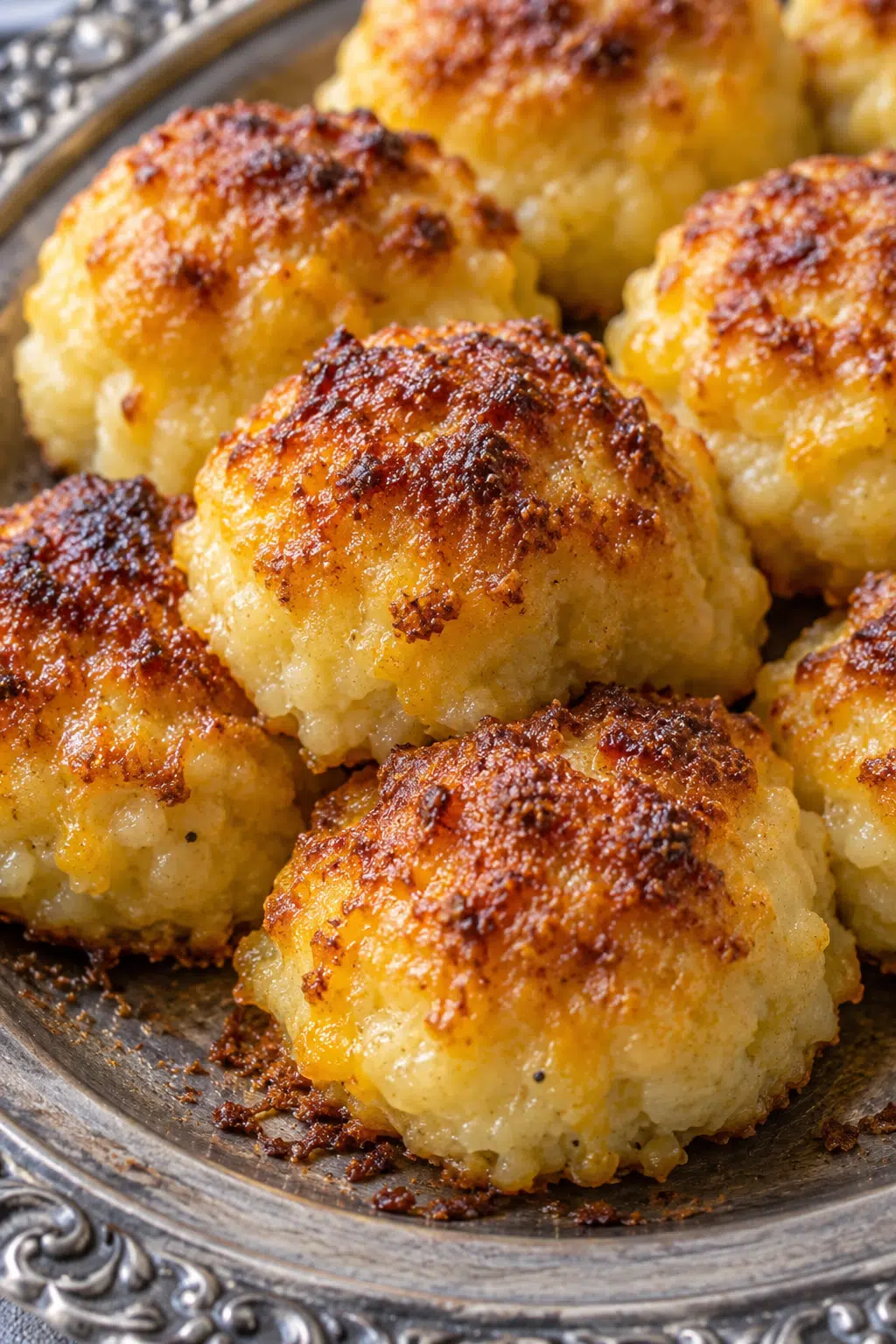
This cooling process radically firms up the potato structure, allowing them to actually hold their shape as tall puffs in the oven.
If you attempt to use warm, freshly mashed potatoes, you will instantly create a soupy, ruined batter.
Mixing raw eggs into warm potatoes will also prematurely scramble the delicate egg proteins before they ever reach the hot oven.
Ingredient Spotlight: The “Firmness” Factor
The structural integrity of your baked potato bites relies entirely on how you originally prepared the mash.
If your original potatoes were heavily loaded with a ton of milk and butter, they will be extremely runny.
Runny, wet potatoes will immediately collapse and deflate as soon as they start to bake.
Dense, firm, and highly starchy potatoes work the absolute best for this leftover mashed potato recipe.
We also strictly require two large eggs to act as the crucial protein binder in the cold batter.
As the eggs bake, the proteins trap steam and physically force the dense potato mixture to puff up beautifully.
see continuation on next page
ADVERTISEMENT
