ADVERTISEMENT
6. Pinch or trim runaway vine tips strategically
This is the July task a lot of gardeners skip because it feels scary. I get it. When a vine is finally thriving, cutting anything off seems wrong. But if one or two stems are racing 2 to 3 feet beyond the rest, pinching back the tip by 1 to 2 inches can encourage branching. More side shoots often means more flowering points.
I do not shear the whole plant. I only trim the most aggressive tips and any growth that is heading somewhere impossible, like into the downspout or across the walkway. Use clean scissors or pruners, and do it in the morning or evening, not in the hottest part of the day. Think of it as directing the plant’s energy, not punishing it.
7. Inspect buds and leaves for Japanese beetles, aphids, and spider mites
July is prime pest month where I live, and moonflowers can get hit just when they should be blooming. Japanese beetles chew leaves and petals, aphids cluster on tender growth and buds, and spider mites show up during hot, dry spells, often leaving faint stippling or a dusty look on leaves.
I check the plant every evening or early morning for 3 to 5 minutes. Beetles are easy to hand-pick into a jar of soapy water. Aphids can often be knocked off with a strong spray from the hose. Spider mites respond best when caught early with repeated rinsing of leaf undersides and improved moisture around the plant, though not soggy soil. Catching pests early is a lot easier than trying to rescue a stressed vine later in the month.
8. Remove faded blooms and yellowing foliage to keep the plant productive
Moonflowers are beautiful, but they can look a little messy if you leave old blooms hanging and yellow leaves tucked inside the vine. In July, I tidy mine once or twice a week. I remove spent flowers, snip yellowed leaves, and pull out any damaged growth that is clearly not recovering.
This cleanup improves airflow and helps me spot new buds faster. It also keeps the plant from putting too much energy into seed production if I want continued blooming. If you hope to save seed later, you can leave a few healthy flowers to develop pods toward the end of the season, but in peak July bloom mode, regular deadheading usually keeps the show going stronger.
9. Watch nighttime conditions because bloom timing depends on evening comfort too
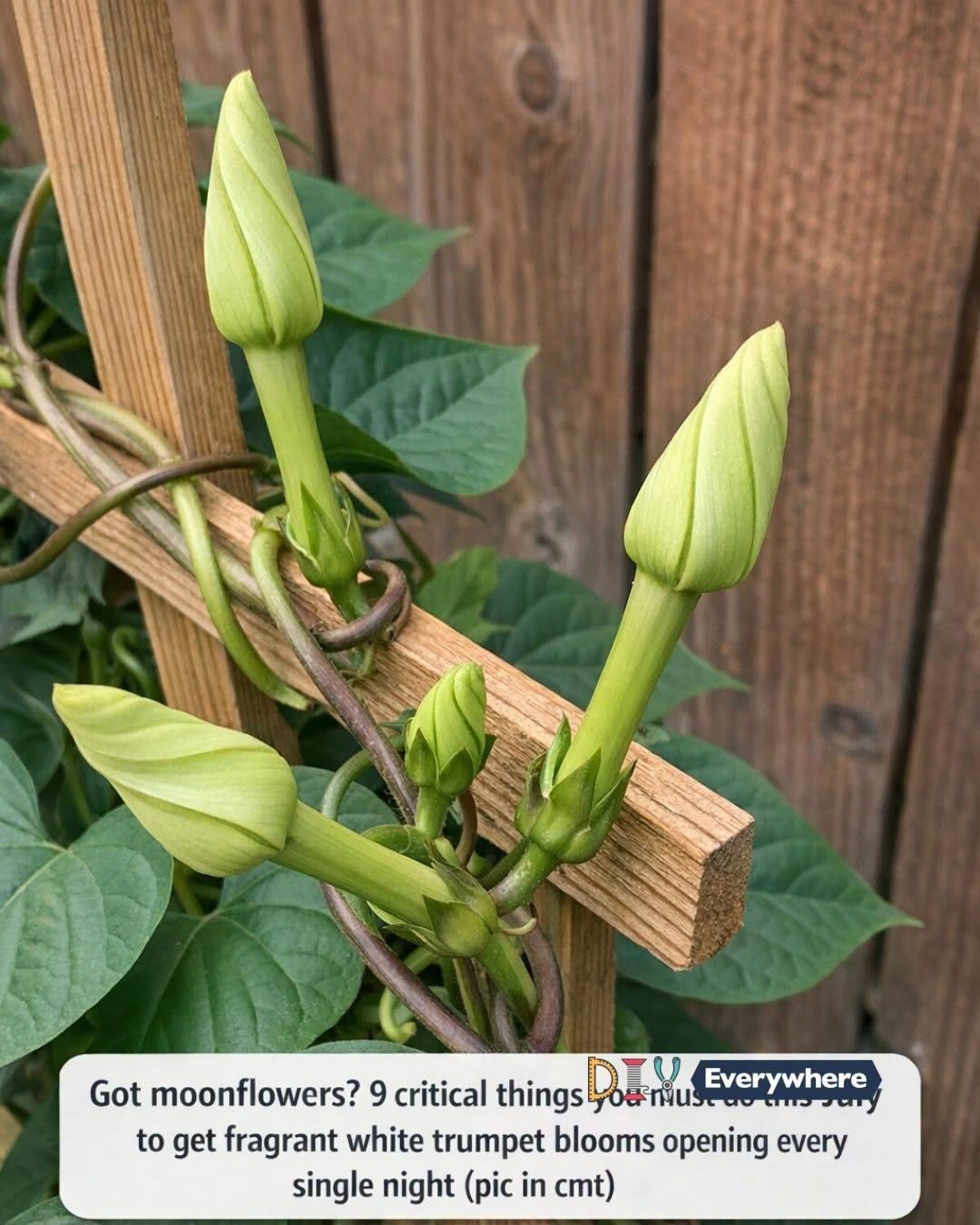
One thing I love about moonflowers is that they make me slow down at dusk. They typically begin opening in the evening, often between 7:30 and 9:30 p.m. depending on your local sunset, temperature, and cloud cover. Warm evenings in the 70s or low 80s often bring the best opening and fragrance in my experience.
If buds are forming but not opening well, look at the pattern. Extreme stress from hot, dry afternoons, inconsistent watering, or poor light can interfere. So can a sudden cool snap or stormy weather. I always tell people to judge moonflowers over a full 7- to 10-day stretch, not one odd evening. Sometimes the plant is doing exactly what it should, just on its own nightly rhythm.
10. Feed container-grown moonflowers more carefully than in-ground plants
Moonflowers in pots are gorgeous on patios, but they are also more demanding in July. A 14- to 18-inch container is the minimum size I recommend for one vigorous plant, and bigger is better. Small pots dry out too quickly and heat up too much, which can lead to bud drop and sluggish blooming.
Container plants lose nutrients faster because of frequent watering, so I use a diluted liquid fertilizer made for flowering plants every 10 to 14 days, usually at half strength. I also check that drainage holes are open and the potting mix has not compacted. If water sits on top for more than 30 seconds before soaking in, the mix may need loosening at the surface or replacement later in the season.
11. Make sure the soil drains well and is not staying soggy
Moonflowers like consistent moisture, but they do not want wet feet. If the soil stays saturated for days after rain, roots can struggle, leaves can yellow, and bloom production can drop. In clay-heavy Midwestern soil, this can be a real issue after a week of summer thunderstorms.
I check drainage by watering and then digging a small test hole 4 to 6 inches deep nearby the next day. If the soil is still sticky and soupy, drainage may be slowing the plant down. Long term, amending with compost helps, and raised beds are even better. Short term, reduce extra watering and make sure mulch is not piled too thickly over already-wet ground.
12. Give the plant evening attention so you can catch problems before they cost you blooms
Moonflowers are one of those plants that reward a quick nightly walk-by. Since the flowers open in the evening, that is also when you will notice which buds are swelling, which leaves are wilting, and whether pests are active. I usually step out after dinner for 5 minutes with a pair of snips and a glass of iced tea, and honestly, it is one of my favorite parts of summer.
This habit has saved me more than once. I have caught thirsty container plants before a 92-degree day, spotted aphids before they covered a whole tip, and noticed a trellis tie cutting into a stem before it caused damage. The more consistently you observe your moonflower in July, the easier it is to keep those white blooms coming every single night.
ADVERTISEMENT
