ADVERTISEMENT
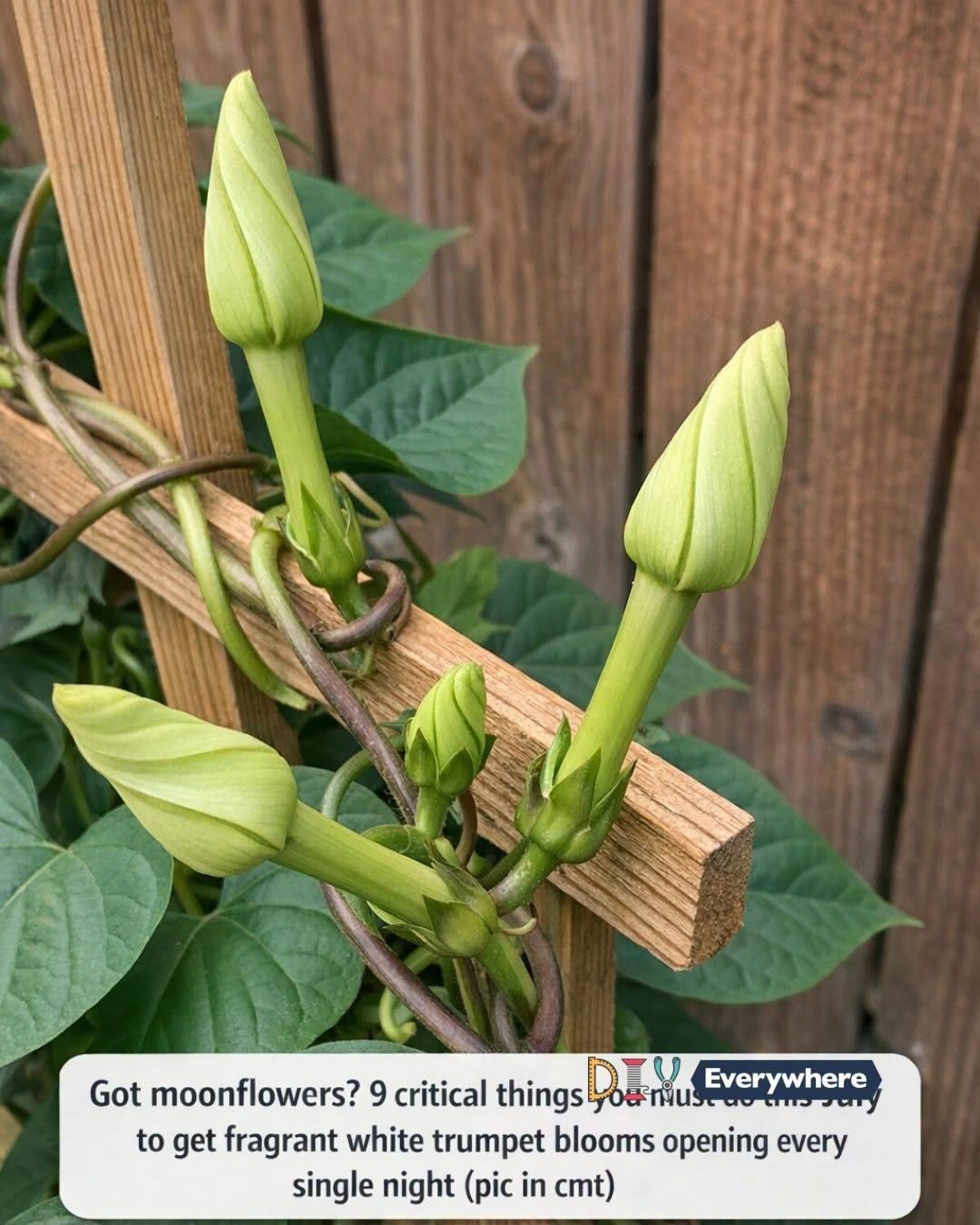
If you grow moonflowers, July is the month when everything either clicks into place or gets frustrating fast. I’ve learned that the hard way in my own Midwest backyard, usually sometime after a hot workday when I head outside with a watering can, hoping for those huge white blooms by dusk and instead finding lots of leafy vine with very little show. Moonflowers can be absolutely spectacular in midsummer, but they do need the right kind of attention right now if you want those fragrant white trumpets opening night after night.
The good news is that July care is wonderfully practical. You do not need fancy products or a master gardener certificate. You need a few smart habits: steady moisture, the right feeding, better support, regular checking for pests, and a little strategic pruning. I’m going to walk you through the exact things I do in July to keep moonflowers growing hard, setting buds, and opening when the evening air finally cools down.
1. Check that your moonflowers are getting a full 6 to 8 hours of direct sun
Moonflowers will climb and survive in partial shade, but if you want abundant blooms, July is the time to be honest about light. I aim for at least 6 hours of direct sun, and 8 is even better. Morning sun plus bright afternoon light works well in my yard, but a spot shaded after lunch by a fence or maple tree usually gives me more leaves than flowers.
If your plant is in a container, move it now rather than waiting. A large pot on a patio can often be shifted 3 to 6 feet into a brighter position and make a real difference within 2 weeks. If it is planted in the ground and heavily shaded, focus on maximizing everything else on this list, because sunlight is often the limiting factor when bloom production stalls.
2. Water deeply instead of sprinkling lightly
July heat can dry out moonflowers faster than people expect, especially when vines are actively climbing and setting buds. I water deeply 2 to 3 times per week in average summer weather, enough to moisten the soil about 6 to 8 inches down. In a heat wave with temperatures in the upper 80s to mid-90s, I check daily and often water containers every day.
For in-ground plants, a good target is roughly 1 to 1.5 inches of water per week total, including rain. For containers, I water until it runs from the drainage holes, then empty saucers if they stay full. Shallow watering encourages shallow roots, and those roots stress out fast. Deep watering helps keep growth even, which supports more buds and better flower opening at night.
3. Mulch the root zone to hold moisture and cool the soil
One of the simplest July jobs is adding a 2- to 3-inch layer of mulch around the base of the plant. I usually use shredded bark, clean straw, or chopped leaves. I keep the mulch about 1 to 2 inches away from the stem so it does not stay constantly wet right at the base.
This matters more than it sounds. On hot suburban lots, reflected heat from siding, concrete, and fencing can bake the soil by late afternoon. Mulch helps reduce evaporation, keeps root temperatures steadier, and cuts down on how often you need to drag out the hose after work. In my garden, mulched moonflowers always look less stressed by the end of the day than unmulched ones.
4. Stop pushing high-nitrogen fertilizer and switch to bloom support
If your moonflower is huge and leafy but not blooming well, too much nitrogen is a common reason. Lawn fertilizer drift, frequent feeding with general-purpose plant food, or rich composted manure can all push vine growth over flower production. In July, I stop anything heavy on nitrogen and use a fertilizer with a lower first number and a higher middle or last number, such as 5-10-10 or 10-15-10.
I apply it at half the label rate if the plant already looks vigorous, because overfeeding can backfire in summer heat. Usually one light feeding in early to mid-July is enough. For containers, a diluted liquid bloom fertilizer every 10 to 14 days can work well. Just avoid the instinct to “feed more for more flowers.” With moonflowers, too much fertilizer often means more vine to manage and fewer blooms to enjoy.
5. Give the vines a sturdy support that is at least 6 to 8 feet tall
Moonflowers are fast growers, and July is when they can turn a flimsy support into a tangled mess. I like a strong trellis, cattle panel, porch column with garden twine, or an arbor that is at least 6 feet tall, though 8 feet is even better. The vines can easily stretch 10 to 15 feet in a season under good conditions.
If the support is too short or weak, the plant spends energy twisting around itself, shading its own buds, and becoming harder to water and inspect. I gently guide new growth every few days, especially after rain, when stems are flexible. Soft plant ties, jute twine, or simple clips help keep the vine spread out so air and light reach the whole plant. Better structure usually leads to better bud set.
6. Pinch or trim runaway vine tips strategically
see continuation on next page
ADVERTISEMENT
