ADVERTISEMENT
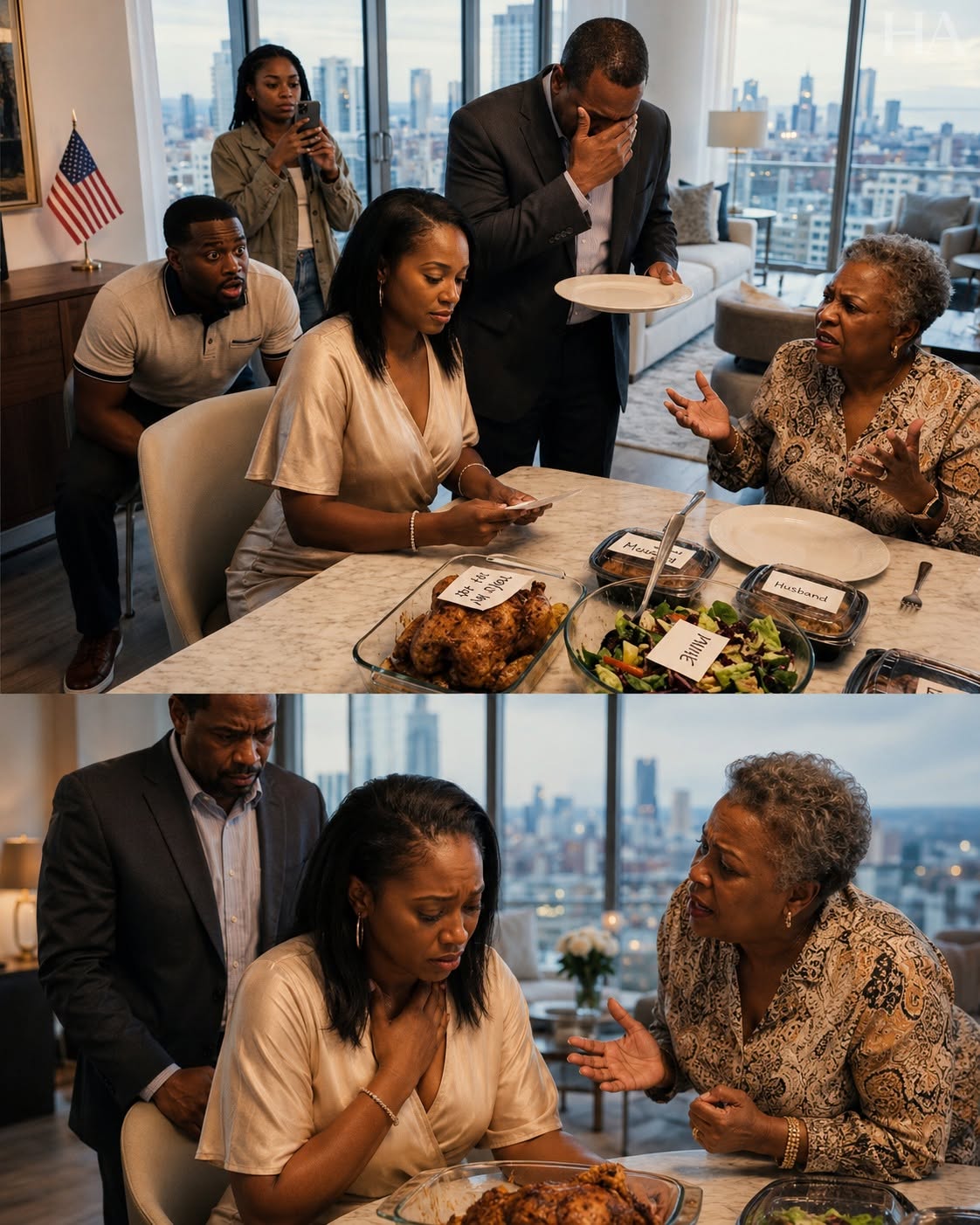
Raul brought smoked chicken he was wildly proud of, though it was a little dry. Martha brought salad, rolls, and juice boxes for the kids. Elvira arrived with homemade flan and no containers. She walked into the kitchen, looked at Paola seasoning vegetables beside Diego, and seemed to wrestle with herself for several seconds.
Then she said, “It smells good.”
Paola waited for the “but.”
It did not come.
Diego noticed too.
He looked at his mother, then at Paola, and smiled with cautious hope.
Dinner that night was not extravagant. There were no endless trays of food, no expensive shrimp, no week’s worth of leftovers disappearing into someone else’s car. There was enough for everyone, and everyone helped. Raul washed the grill tools. Martha loaded the dishwasher. The kids cleared napkins. Elvira wrapped only two small pieces of flan after Paola offered them.
Near the end of the night, Diego stood in the kitchen holding a trash bag while Paola wiped the counter.
He looked at the refrigerator.
No pink labels.
No blue labels.
Just a small whiteboard with the week’s shared grocery list written in both their handwriting.
He leaned against the counter and said, “I still think about that first Saturday.”
Paola smiled without looking up. “The brisket tragedy?”
He laughed softly. “The financial awakening.”
She rinsed the cloth. “It was educational.”
“It was embarrassing.”
“It was supposed to be.”
He nodded. “I deserved it.”
Paola looked at him then. “You deserved a lesson. Not destruction.”
That was the difference he had come to understand. She had not tried to ruin him. She had simply removed the cushion under his arrogance and let him land on reality. It hurt, but it did not destroy him. In some ways, it saved him from becoming the kind of husband who only recognized a woman’s value after she was gone.
Later that night, after everyone left, Diego found one last container on the counter.
For one sharp second, old irritation flashed through him.
Then he saw the note on top.
It was from Elvira.
For Paola. Thank you for dinner. No “but.”
Diego handed it to his wife.
Paola read it twice.
Her eyes did not fill with tears. She was not that easy to soften anymore. But she smiled, small and real, because sometimes accountability did not arrive as a grand speech. Sometimes it arrived as a plastic container with two pieces of flan and four words a woman had waited years to hear.
Thank you for dinner.
No criticism.
No entitlement.
No hidden demand.
Just thanks.
The next morning, Diego made breakfast.
Eggs with spinach, sourdough toast, avocado, and fresh coffee.
Two plates.
Two mugs.
No labels.
He placed Paola’s plate in front of her and sat across the table.
She looked down at the food, then up at him.
“Who paid for the eggs?” she asked.
Diego grinned. “Household account.”
“The coffee?”
“Household account.”
“The avocado?”
He sighed dramatically. “Also household account, although I now understand why people complain about inflation.”
Paola laughed.
It was not a loud laugh, not the kind that erased everything. It was better than that. It was the laugh of a woman who had stopped carrying a marriage alone and found, at last, that the person across from her had picked up his side.
Diego reached for his fork, then paused.
“I’m sorry,” he said again, quietly.
Paola held his gaze.
“I know,” she said.
And this time, she believed he did.
Because love was not proven by who shouted the loudest, who earned the most, or who acted like sacrifice was automatic. Love was proven in the grocery receipt, the dirty pan, the defended boundary, the shared bill, the washed dish, the changed habit, and the courage to admit when comfort had made someone careless.
Diego once thought separating money would show Paola how much he supported her.
Instead, it showed everyone the truth.
She had not been living off him.
They had been living off her silence.
And the day she labeled everything she paid for was the day the whole family finally learned the cost of taking a good woman for granted.
