ADVERTISEMENT
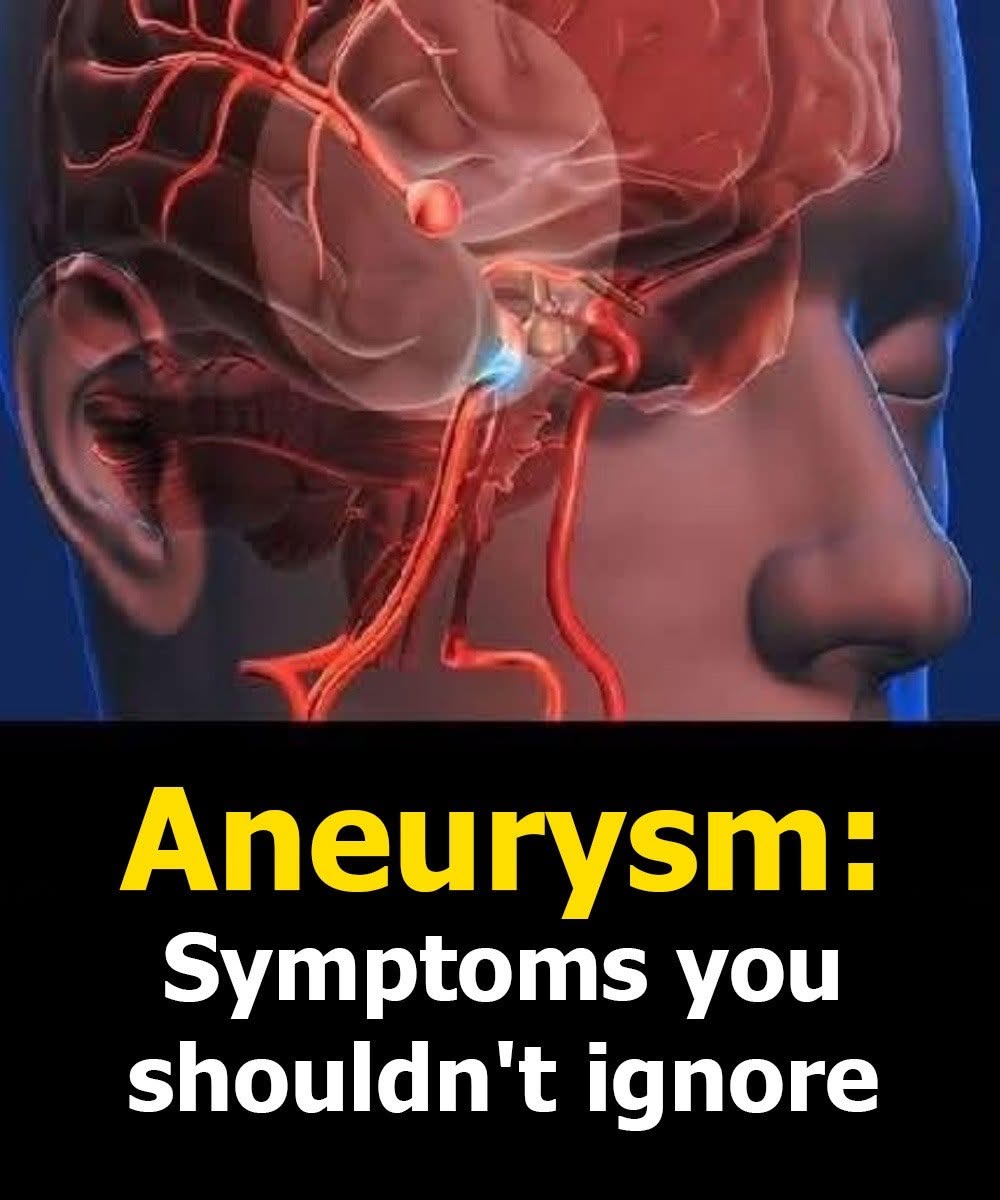
Aneurysm: Signs You Shouldn’t Ignore
Even though many aneurysms are silent, some do produce subtle warning signs—especially when they begin to grow or leak.
1. Sudden, Severe Headache
Often described as:
“The worst headache of my life”
This is one of the most classic signs of a ruptured brain aneurysm.
It may indicate bleeding in the brain, particularly Subarachnoid Hemorrhage.
2. Vision Problems
Blurry vision, double vision, or loss of vision can occur if an aneurysm presses on nerves near the eyes.
You might notice:
- Difficulty focusing
- Drooping eyelid
- Sensitivity to light
3. Pain Around or Behind the Eye
This type of pain is often persistent and localized.
It can feel like:
- Pressure behind the eye
- Sharp or throbbing pain
4. Numbness or Weakness
If an aneurysm presses on nerves, it may cause:
- Weakness on one side of the face or body
- Numbness or tingling
- Difficulty speaking
These symptoms can resemble a stroke and should be treated as an emergency.
5. Neck Pain and Stiffness
Especially common in brain aneurysm rupture.
It may be accompanied by:
- Difficulty bending the neck
- Sensitivity to light
- Nausea
6. Sudden Confusion or Loss of Consciousness
When an aneurysm ruptures, oxygen supply to the brain can be disrupted, leading to:
- Confusion
- Disorientation
- Fainting or unconsciousness
Symptoms of an Unruptured Aneurysm
Large aneurysms that have not yet ruptured may still cause symptoms, such as:
- Persistent headache
- Dilated pupil
- Difficulty concentrating
- Facial pain
However, many remain completely silent.
Aortic Aneurysm: Different Signs
An aneurysm in the aorta presents differently depending on its location.
Abdominal Aortic Aneurysm (AAA)
Symptoms may include:
- Deep, constant pain in the abdomen or side
- Pulsating sensation near the navel
- Back pain
Thoracic Aortic Aneurysm
Symptoms may include:
- Chest pain
- Shortness of breath
- Difficulty swallowing
- Hoarseness
According to the Mayo Clinic, these symptoms often appear when the aneurysm is large or pressing on surrounding structures.
What Causes an Aneurysm?
Several factors can weaken blood vessel walls over time:
- High blood pressure
- Smoking
- Atherosclerosis (plaque buildup)
- Genetic conditions
- Trauma or injury
- Age-related changes
Family history also plays a major role.
Who Is at Risk?
You may be at higher risk if you:
- Are over 40 years old
- Smoke or have smoked in the past
- Have high blood pressure
- Have a family history of aneurysms
- Have connective tissue disorders
When to Seek Emergency Help
Continued on the next page
