ADVERTISEMENT
2. High Cholesterol
Cholesterol itself is not harmful. The body needs it to build cells and produce hormones.
Problems arise when LDL cholesterol levels become too high.
Excess cholesterol can accumulate inside artery walls, forming plaques that narrow blood vessels and reduce blood flow.
If a plaque ruptures, a blood clot may form and suddenly block circulation, causing a heart attack or stroke.
3. High Blood Sugar and Diabetes
Elevated blood sugar can gradually damage blood vessels and nerves throughout the body.
People with diabetes face a significantly higher risk of:
- Heart attacks
- Strokes
- Kidney disease
- Circulation problems
Maintaining healthy blood sugar levels is one of the most important strategies for long-term cardiovascular protection.
4. Tobacco Use
Smoking remains one of the most damaging habits for cardiovascular health.
Tobacco use:
- Damages artery walls
- Raises blood pressure
- Reduces oxygen delivery
- Promotes blood clot formation
- Accelerates plaque buildup
Even former smokers may carry some increased cardiovascular risk for years, although quitting dramatically improves long-term health outcomes.
Why Prevention Matters
One of the most important messages from the study is that heart attacks and strokes often develop over many years.
This means there is usually a window of opportunity to intervene before a serious event occurs.
Small improvements made consistently over time can significantly reduce risk.
Simple Steps to Protect Your Heart
- Check blood pressure regularly
- Monitor cholesterol levels
- Maintain healthy blood sugar
- Avoid tobacco products
- Exercise regularly
- Maintain a healthy weight
- Eat more fruits and vegetables
- Limit highly processed foods
- Reduce excess sodium intake
- Follow medical advice for existing conditions
Who Should Pay Attention?
Everyone can benefit from cardiovascular screening, even younger adults who feel healthy.
The study found that many individuals who experienced heart attacks or strokes had risk factors present long before symptoms appeared.
Women, men, younger adults, and older adults all showed elevated risk when these factors were not well controlled.
Final Thoughts
This large study highlights a hopeful reality: most major cardiovascular events are not completely random.
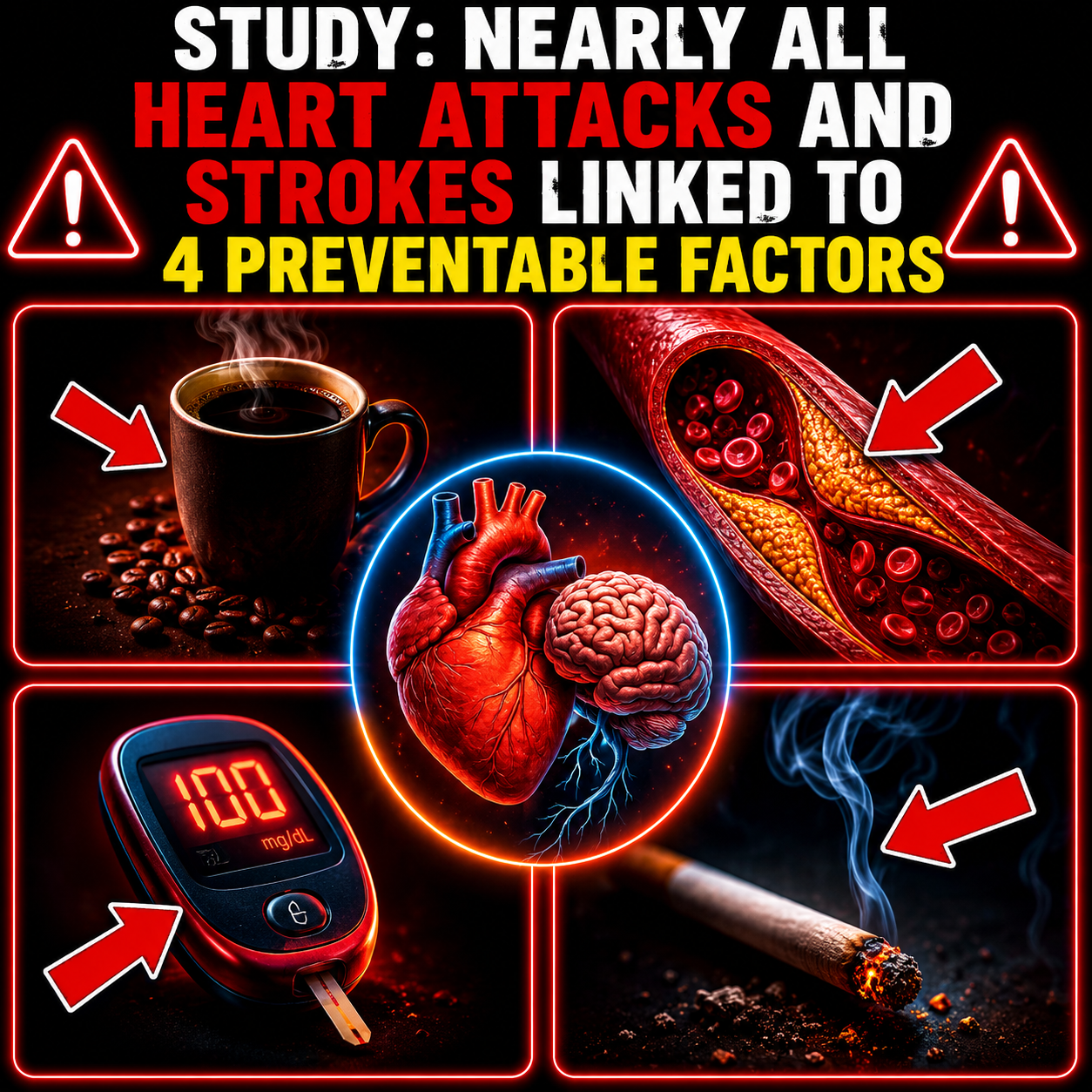
High blood pressure, high cholesterol, elevated blood sugar, and tobacco use were present in nearly all people who later experienced heart attacks, strokes, or heart failure.
By identifying and managing these factors early, individuals may significantly reduce their risk and improve long-term heart health.
Sometimes the most powerful medical treatment is prevention—and prevention often begins with knowing your numbers before problems arise.
ADVERTISEMENT
