ADVERTISEMENT
How to Observe a Solar Eclipse Without Glasses: Safe Solutions to Enjoy the Spectacle
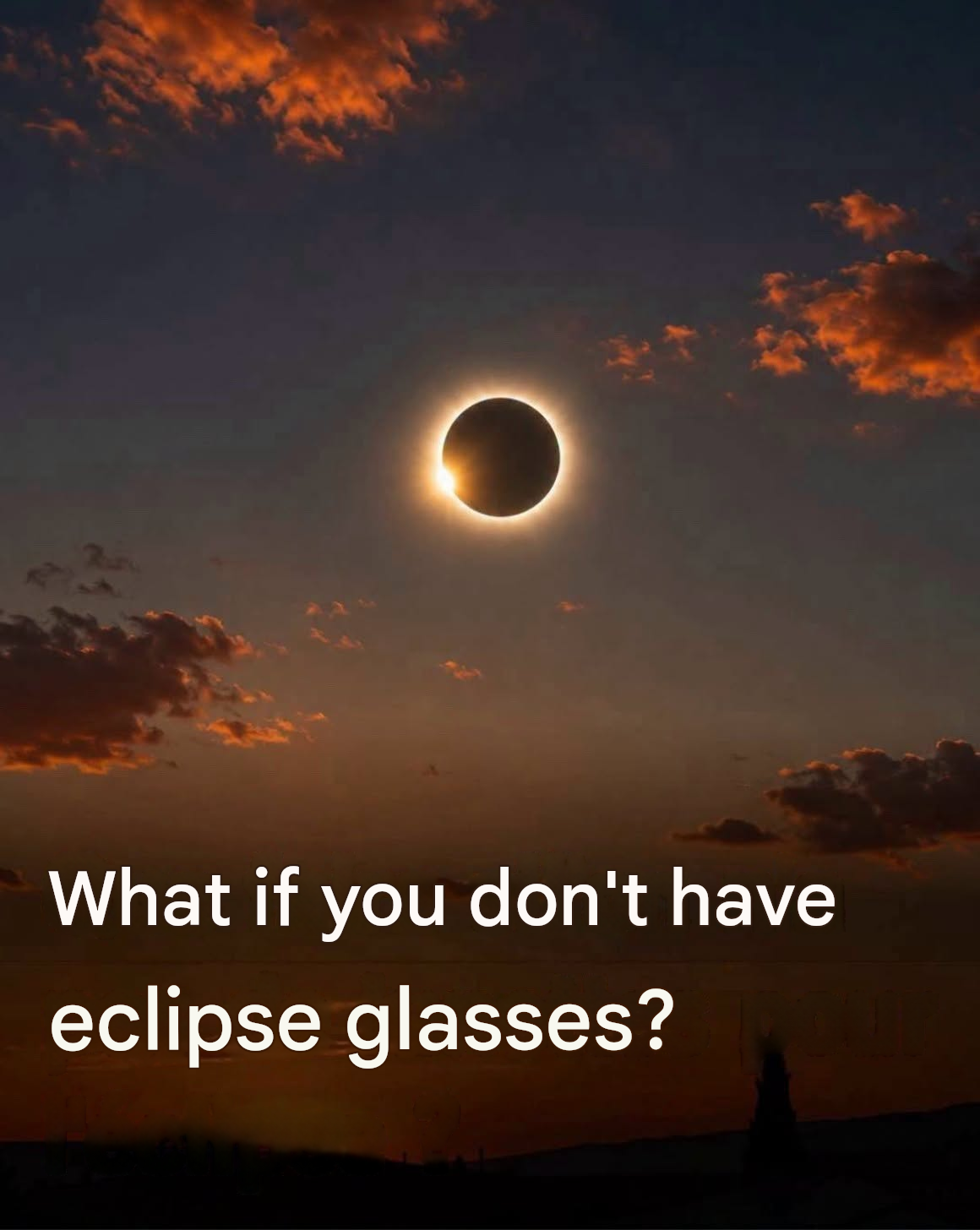
A solar eclipse is always a breathtaking moment. The day darkens, the temperature drops, and nature seems to hold its breath. Yet, rushing outside to contemplate the shrinking solar disk without any preparation can transform this moment of wonder into irreversible tragedy. Many people are unaware that just a few seconds of exposure to concentrated sunlight is enough to permanently burn the retina, without causing any immediate pain. So, what should you do when the event is imminent, the weather forecast promises perfect skies, but you don’t have certified eclipse glasses? This guide explores accessible tips for everyone, from indirect viewing methods to live broadcasts, while also highlighting the pitfalls to avoid. Because protecting your eyesight remains the top priority, it’s also an opportunity to reflect on the importance of good vision insurance so you’re never caught unprepared in the face of such a phenomenon.
The Invisible Dangers of Direct Observation
Staring at the sun during a partial solar eclipse doesn’t trigger any immediate warning signs. The pupil, dilated by the surrounding darkness, allows in a flow of radiation far exceeding what the eye can withstand. The retina, the fragile membrane lining the back of the eye, lacks pain receptors. As a result, the photochemical burn, known as solar retinopathy, occurs almost unnoticed. The first symptoms—a blurred spot in the center of the visual field, distorted lines, and sensitivity to light—may not appear until several hours after exposure, often upon waking the following morning.
Ophthalmologists regularly remind us that there is no miracle cure for this condition. In most cases, visual acuity never fully recovers. Children and teenagers are particularly vulnerable because their lenses, being more transparent, allow more ultraviolet radiation to pass through. Even a simple pair of sunglasses, even high-end ones, does not filter out the harmful radiation sufficiently. Hence the need to know about alternative methods that allow us to follow the eclipse without ever looking directly at the celestial body.
The Pinhole Projector: A Simple Trick Using Everyday Objects
Pinhole projection remains the most reliable technique for those without certified protective equipment. Its principle is based on the most basic optics: a small hole allows a thin beam of light to pass through, reproducing, in miniature and inverted, the image of the Sun on a flat surface. The major advantage is that you have your back to the sun throughout the observation.
Make your own device in two minutes
Take two sheets of cardstock or two pieces of stiff cardboard. With a needle, a pin, or the point of a compass, pierce a tiny hole in the center of the first piece. Stand with your back to the sun, and hold this perforated piece of cardboard over your shoulder or to the side to catch the sunlight. With your other hand, hold the second piece of white paper about 50 centimeters to one meter behind the first. You will see a clear, bright circle appear: this is a reduced image of the sun. The smaller and more regular the hole, the sharper the image will be, although it will be slightly less bright.
This method offers a stunning spectacle: as the Moon moves across the sky, the projected image transforms into an increasingly thin crescent. To amplify the effect, you can add more holes to the first piece of cardboard to create a series of tiny projections. Children love to participate in making them and can safely observe the eclipse’s evolution on the white paper. Some schools even use kitchen skimmers, whose multiple perforations act as miniature cameras.
Trees and Nature: A Giant Open-Air Spotlight
If you are lucky enough to be near a tree with lush foliage, nature offers an even more magical solution. During a partial solar eclipse, the spaces between the leaves act like a myriad of pinhole cameras. The shadows cast on the ground are no longer uniform: the ground is covered with hundreds of tiny luminous crescents that dance gently in the breeze.
Settle down in the shade of a tree, on a light-colored sidewalk, a concrete patio, or a white tablecloth, and look down at the ground, never towards the sun. This often-photographed phenomenon produces striking images and offers a poetic way to experience the eclipse. The most experienced observers even position sun hats or perforated cardboard to project clear images onto the ground in their garden, without leaving their deck chairs.
Continued on the next page
ADVERTISEMENT
